
Do Hair Transplants Work on Afro Hair?
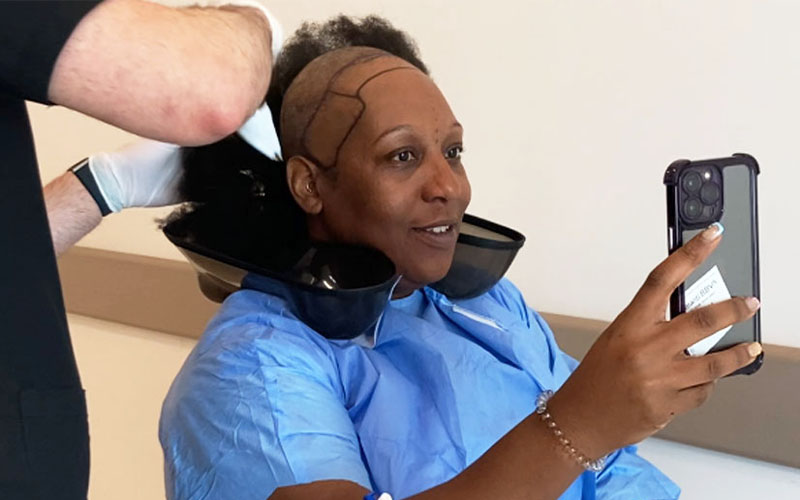
Although the kinky, Afro-textured hair may make the surgery a little more challenging, Afro hair transplants can be done quite successfully with long-lasting, natural-looking results.
Afro hair has unique characteristics – it can curl both above and below the skin’s surface, forming different shapes from J to C or even a complete O. It makes a hair transplant relatively trickier because the tools used to extract such hair can damage or cut through it (known as transection).
An experienced practitioner can, however, carefully accommodate the hair curl and effectively perform this surgery for both men and women.
How Much Does an Afro Hair Transplant Cost?
The cost of an Afro hair transplant can vary significantly depending on the clinic’s location. In Turkey, the procedure costs around £2,000 on average, while in the UK prices typically start from £3,000 and above. Beyond location, the final cost is influenced by the experience of the medical team, the standard of the facility, and the technique used such as FUE or Sapphire FUE, both of which are commonly adapted for Afro-textured hair.
Many people choose to travel abroad for their Afro hair transplant, as comprehensive treatment plans in countries like Turkey offer a more cost-effective option while independent clinicians operate to recognised clinical standards — individual results vary. Clinics experienced in Afro hair characteristics can carefully apply advanced FUE or Sapphire FUE techniques, ensuring the natural curl pattern and follicle structure are respected, while keeping overall costs lower than in the UK.
You can explore how Afro hair transplant costs vary internationally on our Average Cost of Hair Transplant in Turkey and Hair Transplant Cost Comparison by Country pages.
Want a personalised Hair Transplant estimate?
Use our Price Calculator to get an estimate of how much your hair transplant, or any other treatments you’re interested in might cost. This quick tool helps you plan your treatment and budget with confidence before booking a consultation.
Select your treatment location
Select your treatment
Estimated Cost
All prices are estimates. Final cost may vary.
What’s included
DISCLAIMER
This is a price estimate only for budgeting purposes however it cannot be used as a substitute for a formal price quote that can only be given after a consultation with a qualified medical professional.
Optional additional treatments
Let's Turn Your Estimate Into a Plan
Complete the form and our team will reach out with everything you need to move forward.
Get a Free Hair Transplant Consultation
Fill out the form to receive a callback and book a consultation to receive your Free, no-obligation hair transplant treatment plan tailored specifically for your hair loss requirements.
Who Is a Good Candidate for an Afro Hair Transplant?
Hair transplant surgery is possible in the following cases if you have a healthy and stable donor area, a permanent patch of hair on the back and sides of your scalp.
For people of African descent, it’s also important to consider the risk of certain types of scars, such as keloids (which grow beyond the initial wound) or hypertrophic scars (which are thick and wide), before proceeding with surgery to ensure suitability.
Moreover, it’s crucial for people undergoing this procedure to have realistic expectations about the outcome. A hair transplant involves redistributing existing hair from the back of the scalp to the front, so there are limitations to what can be achieved.
Understanding Pattern Baldness
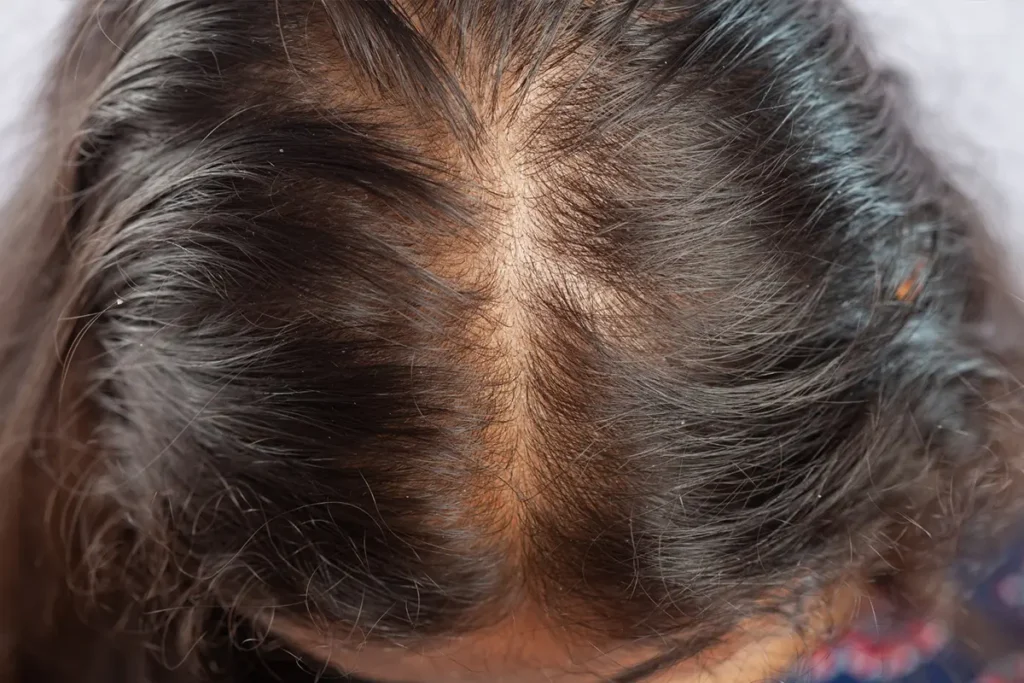
Also known as pattern baldness, it is the most common cause of hair loss, which can affect the front and crown areas of the scalp.
Frontal Fibrosing Alopecia Explained
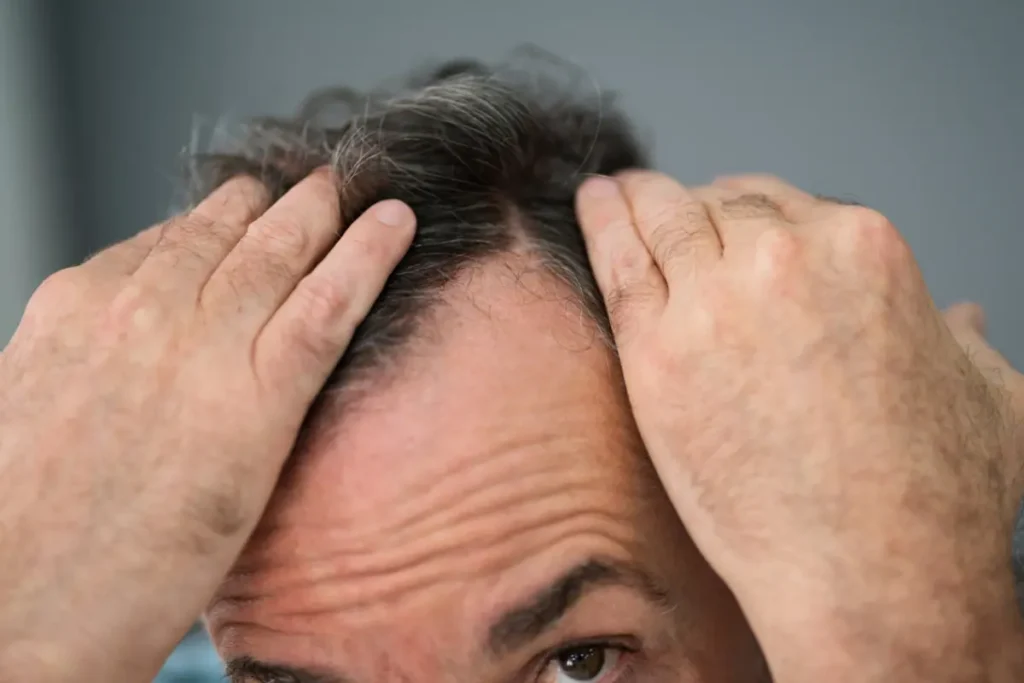
Frontal fibrosing alopecia is a type of scarring hair loss that can affect women, forming a band-like pattern in the front part of the scalp.

What Is CCCA Hair Loss?
Central centrifugal cicatricial alopecia is another type of scarring hair loss that commonly affects women of African descent and can permanently destroy the hair follicles.
Recognising Traction Alopecia
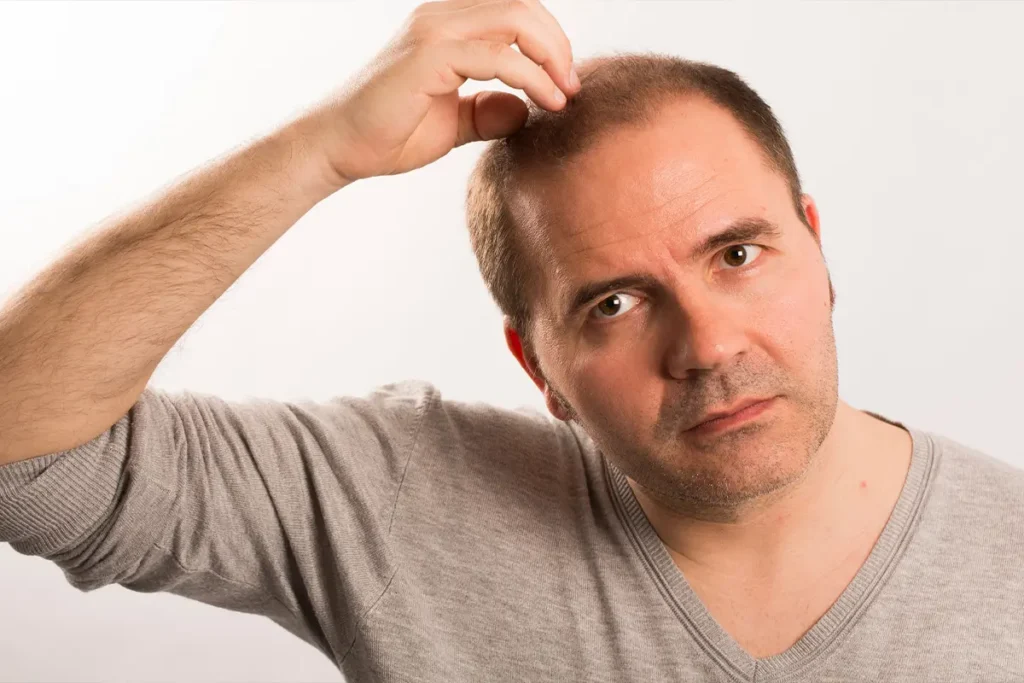
Traction alopecia affects one-third of black women and can result from tight protective hairstyles (braids, knots, locs), as well as chemical relaxation and heat straightening.
Understanding the FOX Test for Afro Hair Transplants
To determine whether or not a hair transplant on Afro hair can be performed successfully, you will need to undergo a FOX test (FOX being another term for the follicular unit extraction technique).
The curvature of the follicle underneath the skin can vary between individuals, and the more curly the hair is, the more difficult it becomes for the straight-shaped punch tool to work around the curl and safely extract it.
Therefore, in a FOX test, a small patch of the donor hair – the area at the back of the scalp from where the hair is extracted – is shaved and anaesthetised to extract about 25 grafts for evaluation. It’s graded into 5 categories.
Those who fall in FOX grades 1-2 and possibly even 3 can undergo the FUE surgery. Unfortunately, it is not considered viable for those who get a score of 4 or 5 because the transection rate of the hair follicles is so high that the surgery would end up giving significantly poor results.
While the test can be understandably inconvenient for the patient, the surgeon has to think about the long-term success of the procedure, which is why this test needs to be conducted first.
Grafts Fully Intact and Easily Extracted
The hair grafts come out unharmed, completely intact and with ease.
Intact Grafts with Minimal Fat Loss
Almost all of the graft comes out intact, but a lot of fat is lost around the lower part (less than 20% of it gets amputated).
Neutral Outcome with Difficult Extraction Angles
The angle at which the hair emerges from the skin is considered difficult, but the grade is considered “neutral.”
High Follicle Damage During Extraction
A considerable amount of fat is separated, with many distal follicles getting amputated.
Severely Damaged Grafts, Not Suitable for Surgery
Almost all of the grafts end up getting damaged.
How Afro Hair Transplant Works: A Brief Overview
Afro hair transplants involve specialised techniques to address the unique texture and curl pattern of afro-textured hair. The process typically uses FUE (Follicular Unit Extraction) or, depending on the person’s needs, DHI (Direct Hair Implantation) methods to ensure natural, long-lasting results. A thorough consultation is essential to tailor the procedure to individual needs, focusing on creating a hairline that complements the natural growth pattern of afro hair.
How Are Hair Grafts Planned in An Afro Hair Transplant?
Graft planning in Afro hair transplantation can be influenced by two features of the graft: the curliness of the hair and its colour contrast with the scalp.
Afro hair typically has the smallest diameter among different ethnicities, around 55-60 micrometres. Despite this, its natural curl pattern creates the appearance of thickness, which allows for achieving a denser look with fewer grafts.
Regarding density (grafts per cm2), Afro hair faces a disadvantage with the lowest count compared to other ethnicities. However, Afro grafts typically contain more hairs per unit, further aiding in creating the illusion of fuller density.
Moreover, the reduced colour contrast between Afro hair and scalp skin benefits the transplant results, as the colours blend with each other. Conversely, individuals with very dark hair and pale skin may have more noticeable scalp visibility.
Other factors considered in calculating the total number of grafts include the size of the recipient area, the desired density, the size of the donor area at the back of the scalp and the number of follicular units per cm2 in the donor area.
A stylised illustration of a person with a split-design face, one side lighter, the other darker; wearing a collared teal shirt, no visible background.
How Is A Hairline Designed For Afro Patients?
Ethnic sensitivity is crucial in hairline design for Afro patients because their hairline differs significantly from those of Caucasians and Asians.
One of the most distinguishing features of an Afro hairline is that it is generally very straight, lacking any zigzag pattern or irregularities in graft placement at the front.
Notably, there is no frontotemporal recession, which forms the typical M-shaped hairline in men. The anterior hairline meets the temporal at a sharp, nearly 90-degree angle with no visible rounding at the edges (though slight recession may be present in some cases).
For the design, the centre of the hairline is determined in line with the centre of the nose. You will also have to raise your eyebrows during hairline design so grafts are placed above your forehead muscles. A laser device is used to make sure that the line between the eyes and the forehead is straight.
It’s important to note that hairline design can vary based on the:
- Age of the individual (hair loss can progress with time, so the hairline should not be unnaturally low)
- Face shape
- Facial muscles
- Original hairline pattern
As a result, hairline designs are unique and tailored specifically to the individual by the surgeon.
Choi Pen Vs Metal Blades: Which Is Better?
In Afro patients, recipient sites can be made either with a blade or a Choi pen. With the Choi pen, the site-making and graft insertion are done simultaneously, and there’s no need to shave the entire scalp.
But whether or not DHI might be a good option for Afro hair comes down to the degree of hair curliness (determined through the FOX test). If the graft is excessively curly, it can have the potential of being damaged by the Choi pen, in which case a regular FUE will likely be recommended.
What Type of Anaesthesia Is Used For Afro Hair Transplants?
Hair transplants typically take place under local anaesthesia, but sedation can also be given to ensure more comfort during surgery.
Anaesthesia injections themselves may result in some pain at first – lidocaine (lignocaine) can cause a burning sensation. But your scalp will eventually numb.
If pain is a significant concern for you, you will have the option to have needle-free anaesthesia, in which the drug is first administered using a pressure gun. Anaesthesia with the needle is administered once the scalp is numbed.
The anaesthetic is administered to both donor and recipient sites separately during the extraction and incision processes, so you will feel minimal pain.
How Are Grafts Extracted In Afro Hair Transplants?
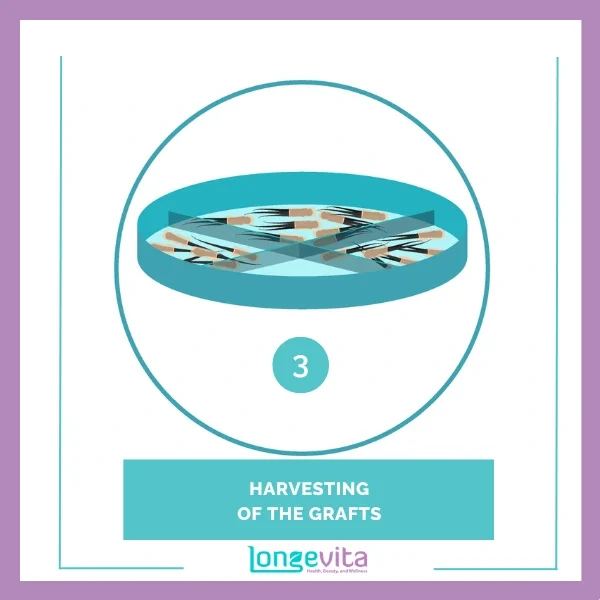
In follicular unit extraction, grafts are directly extracted from the safe donor area located at the back of the scalp. The area is delineated during the consultation, with its upper border determined by the extent of crown hair loss and its lower margin, typically around the bony bump at the back of the scalp (occipital protuberance).
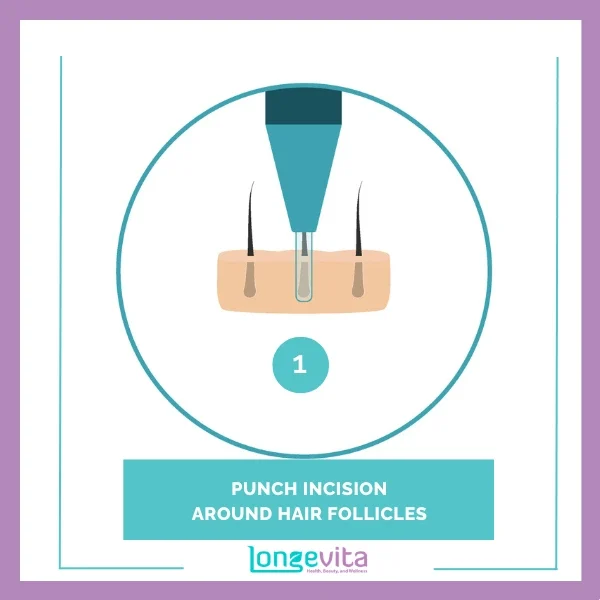
Once the donor area is determined, the grafts are extracted with the help of a punch tool. Due to the risk of transection with Afro hair grafts, the punch diameter is kept relatively large, around 0.95 to 1.05 mm.
It is still not too large, as that would leave prominent scars on the back of the head. An experienced surgeon is knowledgeable of the trade-off and, hence, careful about adjusting the punch size accordingly.
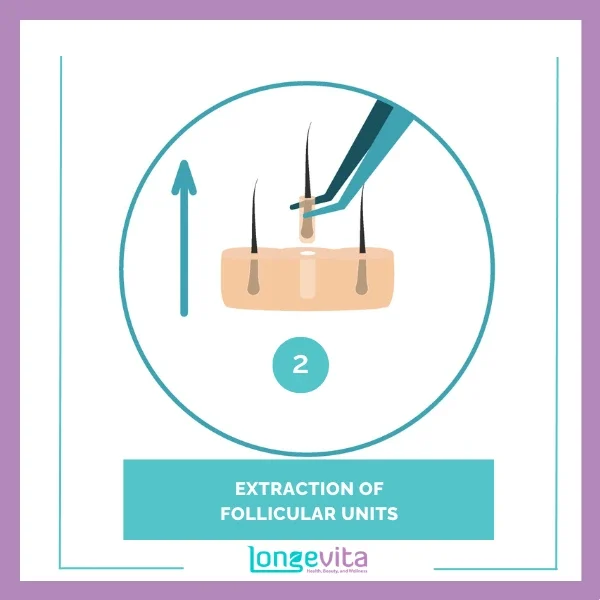
The punch tool is usually angled in the direction in which the hair is emerging from the scalp, and the depth of penetration can vary from 2 to 3.5 mm. The goal is to free the graft from its surrounding attachments so that it naturally pops out, after which it can be extracted using a tweezer.
How Are Grafts Inserted In Afro Hair Transplants?
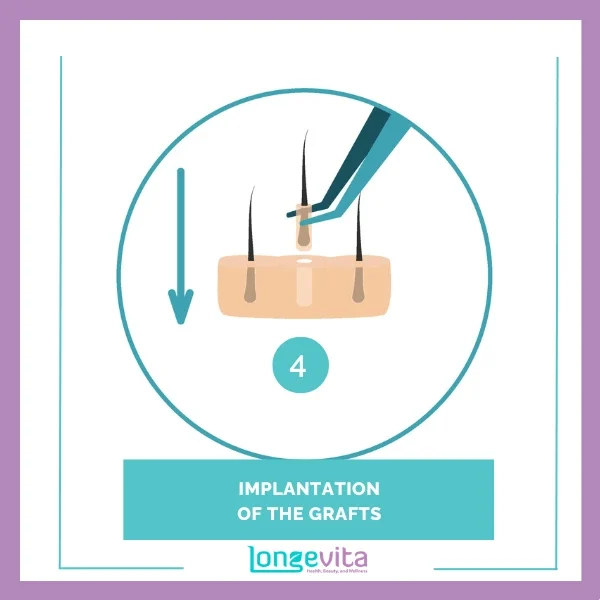
After all the sites have been created by the surgeon, the grafts are inserted into them by trained technicians using tweezers. Single hair grafts are placed at the front, with their size increasing gradually as we move towards the back of the scalp, as mentioned earlier.
During placement, care is also taken to avoid damaging the grafts with tweezers or due to dehydration, as these factors can impact their growth after surgery.
Do You Need To Shave Before an Afro Hair Transplant?
More often than not, Afro hair transplants require people to shave their entire heads down to 1-2 mm. The donor area is always shaved because the grafts need to be clearly visible during extraction. If you are, however, considered a suitable candidate for a DHI hair transplant, you can have the surgery without having to shave your recipient areas.
How Are Incisions Made In Afro Hair Transplants?
Site making is another crucial part of hair restoration surgery, and since it can significantly influence how the final results look – the direction in which the hair grows, density in each area, snug-fitting of grafts, division of grafts based on the number of hairs – these incisions are only made by the surgeon.
Along the hairline, where 1-2 hair grafts are used to create a natural look, a smaller blade is used. However, larger incisions are made in the central forelock of the scalp, where grafts with 3-4 hairs are used to create the appearance of density. Incision sizes can vary from 0.7 to 1 mm and go up to 2 mm, depending on how curly the hair is.
The depth of these incisions is determined by the length of the grafts themselves, but they can be around 4 mm deep. The incisions should not be too deep because the grafts can sink in, and they should not be too shallow either because they can then look bumpy (a problem called cobblestoning).
Angulation of these incisions can also change regionally and is determined with the help of the existing miniaturised hair on the scalp. Incisions can be oriented in two ways: sagittal (front to back), coronal (sideways) or both. Sagittal incisions are used in the frontal area, but where the focus is on creating an illusion of density with fewer grafts, coronal incisions are used.
Another consideration during recipient-site making is how closely should the incisions be packed. In Afro hair, since the characteristic curl of the hair provides good coverage as well as low colour contrast and more hairs/follicular units, the recipient density might be as low as 20 grafts/cm2. It is generally higher at the front, however, and can decrease going backwards.
How Long Does It Take To Recover From an Afro Hair Transplant?
Following the aftercare instructions is critical to the success of your hair transplant. Our team are available to help support you through the hair transplantation recovery process.
You can contact them at support@longevita.co.uk. Virtual consultations and in-person consultations in London are also available.
Some notable aspects of recovery can include:
Downtime
There may be a 1-week downtime, but this can vary depending on the nature of your occupation.
Common side effects
Swelling, pain, redness, itchiness, dryness, and numbness – they should get better with time. To manage ingrown hair, consult your doctor.
Shock loss
It is a temporary shedding of the hair that can affect both the recipient and donor areas. Shock loss can occur 2-3 weeks after the surgery (although it can happen later as well), but it does not affect the final outcome.
Hair tying
Since traction alopecia is a common cause of hair loss in women of African descent, they’re advised against tying their hair too tightly after the surgery, especially in the first 6 months.
Hair growth
Usually starts after 3 months, but it can take 6-8 months for you to see a notable improvement, and the final results become visible after 1-1.5 years.
Platelet-rich plasma (PRP) injections
To accelerate the growth of transplanted hair, you may be recommended PRP injections for hair regrowth. They contain proteins and growth factors and can help your hair become thicker and healthier.
Afro Hair Transplant Before-and-After Photos
Final results become visible after 12-18 months, but outcomes can vary between individuals according to donor density, the extent of baldness, type of grafts, scalp condition, overall health, etc.
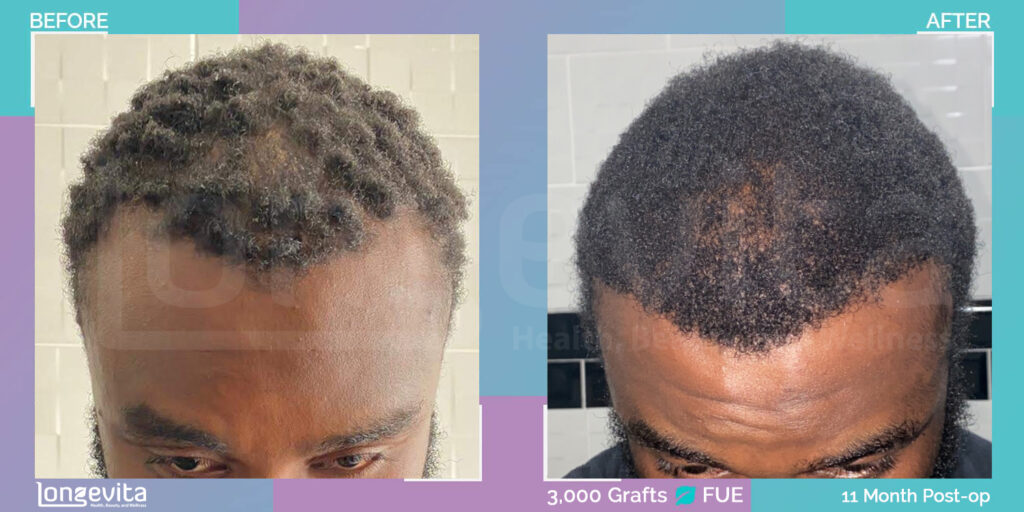
- Age: 31
- FUE
- 3,000 grafts
- 11 Months
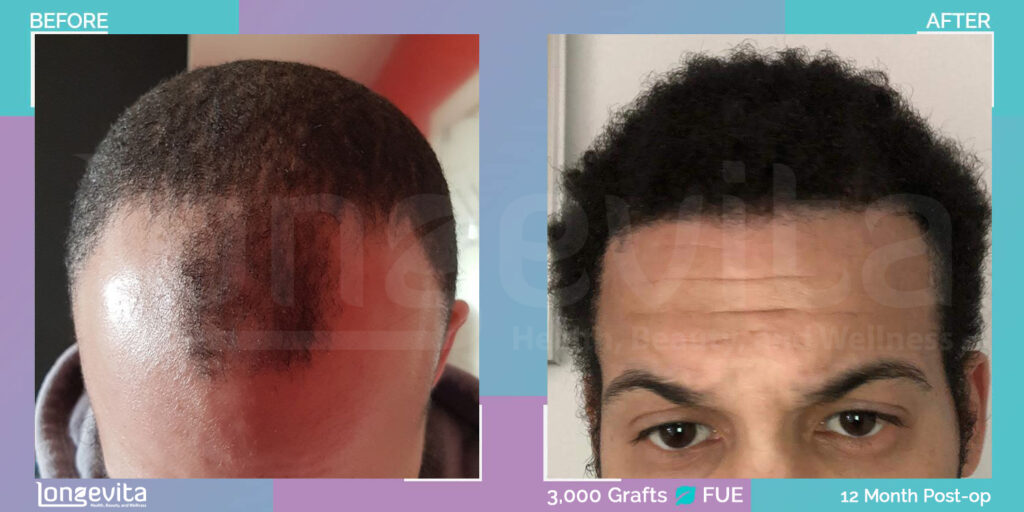
- Age: 31
- FUE
- 3,000 grafts
- 12 Months
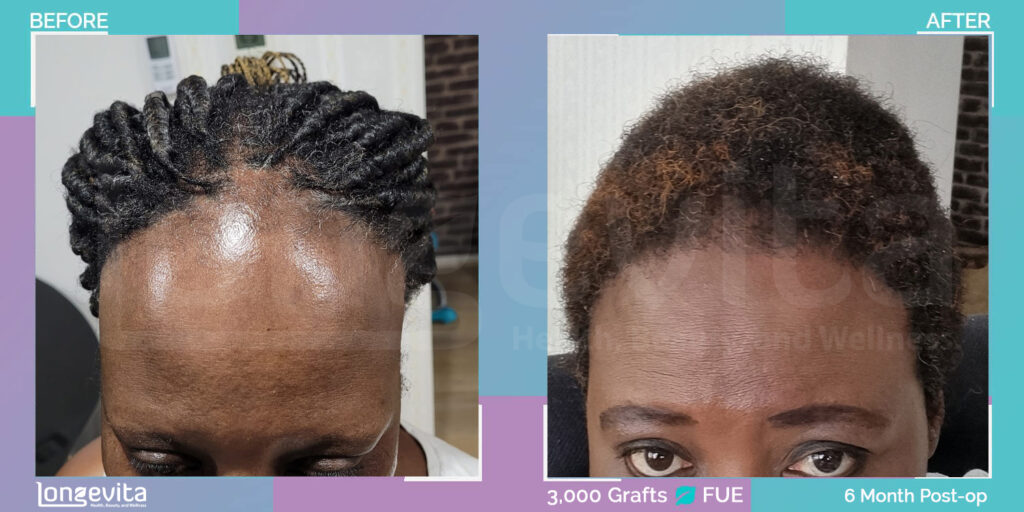
- Age: 45
- FUE
- 3,000 grafts
- 6 Months
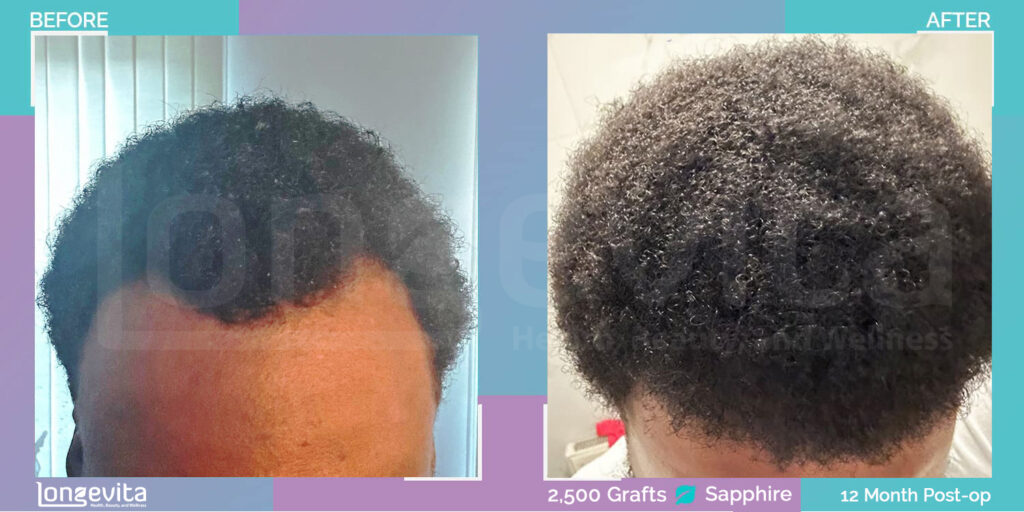
- Age: 27
- Sapphire FUE
- 2,500 grafts
- 12 Months
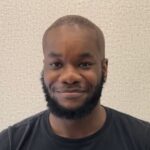
Ely's Afro Hair Transplant Journey
Patient Journey
1:25
0:54
0:43
0:41
Is FUE Better for an Afro Hair Transplant?
Follicular unit extraction surgery can have the following benefits for those with Afro hair:
- Potentially less risk of keloid scarring than in follicular unit transplantation (FUT).
- Allows people to wear shorter hairstyles as pinpoint scars are randomly distributed compared to the patterned linear scar of FUT, which can be easily visible.
- The pinpoint scarring left by FUE can be easily concealed by the hair curl.
Afro Hair Transplant Reviews
See what clients have to say about their experiences getting Afro hair transplants arranged by Longevita!
Ready to start your Hair Transplant Journey in Turkey?
Fill out the form to receive a callback and book a consultation to receive your Free, no-obligation hair transplant treatment plan tailored specifically for your hair loss requirements.
Frequently asked questions about Afro Hair Transplants
A hair transplant involves transferring your own hair from the back of your head to areas experiencing hair loss. This process will not alter the type or texture of your hair; your transplanted hair will match your existing hair.
Both DHI and traditional FUE can be used to successfully perform an Afro hair transplant. Ultimately, the choice depends on how curly the individual’s hair is. If it’s very curly, classic FUE would be preferred over DHI to avoid any potential damage to the grafts.
There is a possibility of performing a 5,000-graft transplant on Afro hair in two sessions, but it greatly depends on the condition of the donor site. The surgeon has to be careful about not extracting too many grafts from the back of the scalp, as it can leave that area permanently patchy.
The incision part, which is the most important step in an Afro hair transplant, will be performed by the independent clinician. Other than that, surgical assistants will help with some other parts of the surgery.
The independent clinician will be insured against malpractice. Therefore, you can have the surgery with complete peace of mind.
You will have to spend 2 nights in Turkey after your Afro hair transplant before you can go back home.
Of course, we are more than happy to share the details of a prior Afro client for you to get in touch.
You will be communicated with in English for your Afro hair transplant. You will also be accompanied by a dedicated Client Coordinator/translator during your time in Turkey.

Dr Cagla earned her medical degree at Trakya University’s Faculty of Medicine in Bulgaria and has almost 6 years of hair transplantation experience. She is a specialist in FUE, DHI and Sapphire hair transplants of the scalp, eyebrows and beard and has performed over 6,000 surgeries. Dr Cagla is multilingual, with fluency in English, Bulgarian and Turkish.