Facelift In Turkey

What Is A Facelift?

Facelift, or rhytidectomy, is a type of cosmetic surgery used to restore youthfulness to the face. A facelift surgery can involve getting rid of excess skin, tightening underlying muscles and repositioning or removing facial fat to restore and tighten the entire contour.

It is important to understand that surgical facelifts are not a substitute for other facial surgeries. As an example, you will be recommended to undergo blepharoplasty if you wish to address excess skin, fat and loose muscles in your upper or lower eyelids. In the same way, a brow lift (or forehead lift) – targets forehead tissue to address drooping eyebrows and smooth wrinkles  – is separate from a surgical facelift, but these procedures can be combined. 

Another important thing to remember is that a facelift will not change the quality of your skin. In order to improve that, your doctor will likely recommend other non-surgical treatments like chemical peels or laser resurfacing. Botox, or botulinum neurotoxin injections, can also help reduce wrinkles and fine lines on the face caused by muscle movement, while dermal fillers can address volume loss as a result of ageing.

Who Is A Good Candidate For A Facelift?

You might be considered a good candidate for a surgical facelift in the following instances:

You want to get rid of your jowls (loose skin below the jaw).

Your skin is sagging, and you want to tighten it.

You would like to reduce the appearance of mildly loose, visible neck bands.

You have realistic expectations.

Who Is Not A Good Candidate For A Facelift?

You might be contraindicated for a facelift if:

  • You are a smoker.
  • You have a physical and/or mental health condition (e.g. body dysmorphic disorder, uncontrolled diabetes).
  • You are pregnant.
  • You are breastfeeding.

What Are The Different Types of Facelift?

Facelifts can be performed in different ways based on your aesthetic needs and concerns. There is no one-size-fits-all technique.

Skin-Only Facelift

Skin-only facelifts, as their name suggests, aim to remove surplus skin and reposition it without addressing the underlying structures that can contribute to facial ageing. 

While this type of facelift may be suitable for those with very little loose skin, it is rarely performed because it can give an unnatural (windswept) appearance. It is also possible for a skin-only facelift to result in bad scarring, and the results may not last for more than a few years. For these reasons, this type of facelift is generally not recommended. 

SMAS Facelift

SMAS facelifts are one of the most common types of facelifts. Going deeper than the skin-only facelift, they target the “superficial musculoaponeurotic system” – a layer of fascial tissue present underneath the skin – so that the results are more remarkable.

Depending on the technique used for lifting the SMAS, the type of facelift can vary. For instance, in a SMAS plication facelift, the tissue is folded onto itself and sutured, but in a SMAS imbrication facelift, a piece of the SMAS tissue is dissected, and the edges of the tissue are then overlapped before being sutured up. Additionally, there’s a lateral SMASectomy technique in which a piece of SMAS tissue is removed from the area overlying the top edge of the salivary gland.  

A SMAS facelift provides lasting and natural-looking results for those who suffer from moderate signs of ageing, such as jowls and skin laxity. However, a more dramatic result can be achieved with a high SMAS facelift, which can restore volume in the cheeks, lift the midface area, as well as lift the neck to improve its appearance. 

Deep Plane Facelift

Considered one of the most extensive and advanced facelift techniques, a deep plane facelift addresses not only the jowls, midface, nasolabial folds, marionette lines, and cheeks but also the neck area. 

It extends beyond the SMAS layer to release certain retaining ligaments, which allow the soft tissue to be moved upwards. 

This type of facelift is quite durable, as its results may last for 10 to 15 years (individual outcomes may vary). However, deep plane facelifts are not recommended for everyone – they might be most appropriate for those with severe signs of ageing. Regardless, it is best to get advice from ythe independent clinician on this matter.

What’s the difference between a mini facelift and a full facelift?

A mini facelift is appropriate for those with mild to moderate signs of ageing who want a subtle rejuvenation rather than a full facelift which addresses excess fat and sagging skin in the face and neck areas. Due to this, the results of a mini facelift are not as dramatic as those of a full facelift.

A full facelift is more extensive – its incision extends from the temples, wraps around the ear and descends slightly to the posterior hairline, while a mini facelift starts at the temple and extends halfway around the ear. Furthermore, a full facelift typically requires general anaesthesia and has a longer recovery time. In contrast, a mini facelift can be performed under local anaesthesia and requires relatively smaller incisions.

How Are Facelifts Performed?

Following a thorough consultation with the surgeon, during which they will address any questions or concerns you may have, you will be administered anaesthesia in the operating room to ensure a pain-free surgery.

Incisions will be made afterwards, depending on which type of facelift you have. A skin-only facelift usually involves making an incision in front of the ears, whereas a SMAS facelift can involve making incisions from the sideburns all the way to the back of the ears. 

On the other hand, in a deep plane facelift, the incision lines extend from the sideburn area, continue around the front and back of the ear and extend slightly along the posterior hairline. These incisions will be carefully placed to ensure that the resulting scars remain as inconspicuous as possible.

Once the skin is elevated, the facial tissues are addressed as needed. In a skin-only facelift, the excess skin is trimmed, and the incisions are then closed with sutures. In the SMAS facelift, loose skin is removed along with the tightening of the SMAS fascial tissue layers and platysma muscles and removal of the extra fat. 

However, a deep plane facelift goes a step further by releasing retaining ligaments below the SMAS as well as tightening and reattaching the SMAS using sutures. It also gets rid of excess skin and repositions facial fat for a more youthful look. 

The surgery can take anywhere from 2 to 3 hours; it can be inpatient or outpatient. You might be fitted with drains after the surgery, but they will be removed the next day.

How Long Does It Take To Recover From A Facelift?

Surgical facelifts can typically have downtime of 2-3 weeks, with full recovery for most people taking 6 to 12 months – recovery time differs for each individual.

Bruising, swelling, and tenderness are temporary side effects that peak during the first week following surgery. Numbness, tingling, and tightness can also be caused by swelling and bruising. However, it’s expected and shouldn’t be a cause for concern during recovery.

The bruising, swelling, and puckering around your incision sites will dramatically improve over the next few weeks, and approximately 60% of the swelling will subside. You may also experience residual swelling and sensations such as tingling or tightness for 1 to 2 months. However, they should get better with time. 

Aftercare instructions will be provided to you to ensure normal recovery. These may include:

Refraining from strenuous workouts

For at least 2 weeks, avoid strenuous exercise. It is recommended that you limit your activity to walking and very light tasks in the first few days in order to support the healing process.

Do not colour your hair for at least a month after your surgery.


Do not chew on hard foods or yawn/open your mouth wide for 2 weeks post-operatively.


You should not go out into direct sunlight for 1 month and make sure to wear sunscreen.

You should not go to any sauna or swimming pool for 1 month.

* Aftercare instructions can vary between surgeons, so make sure to follow the advice of ythe independent clinician. 

If you have any other questions or concerns during the recovery period, you can always reach out to us for support at support@longevita.co.uk

What Are The Potential Complications Of Facelift Surgery?

While generally considered safe in the hands of a board-certified plastic surgeon, facelifts, like all surgeries, carry certain risks. A few of them are as follows: 

  • Infection 
  • Seroma 
  • Hematoma 
  • Bleeding 
  • Hair loss 
  • Nerve injury 
  • Necrosis 
  • Scarring 

This list is not exhaustive. During your consultation with ythe independent clinician, you should be informed about all the possible risks that may accompany this procedure so you can make an informed decision.

A qualified and experienced surgeon will take every necessary precaution to minimise the risk of complications after surgery. With Longevita, you can feel confident knowing you will be connected with a highly experienced, board-certified independent plastic surgeon operating in a modern medical facility committed to delivering very high standards of care.

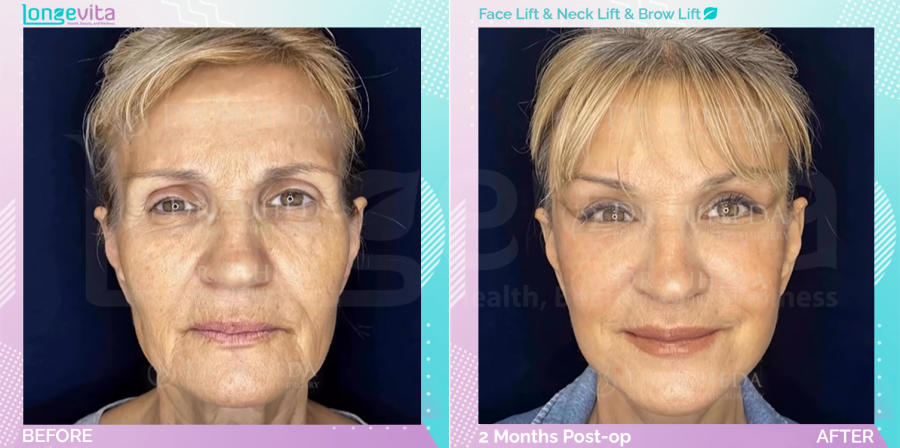
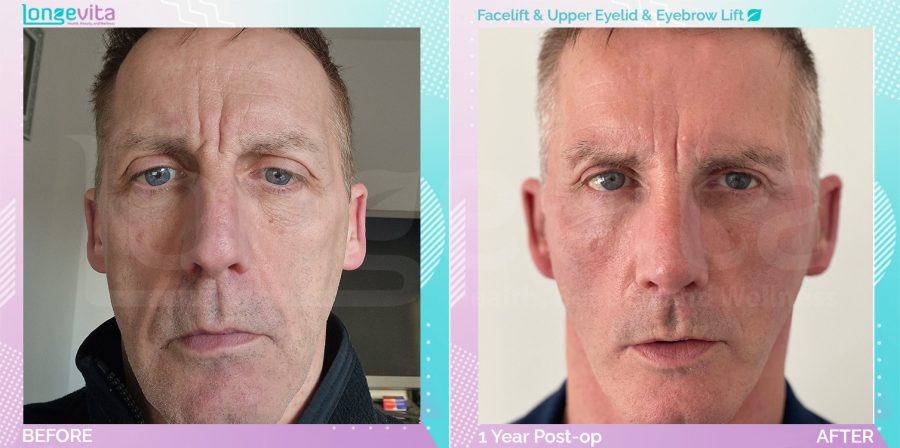
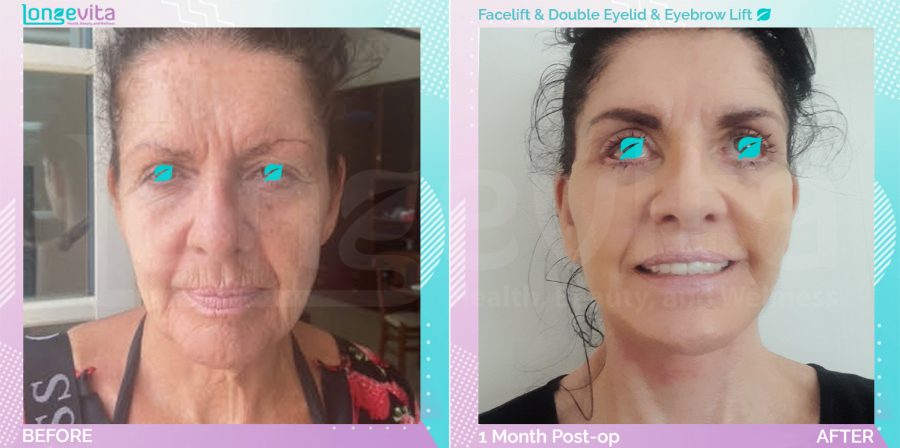
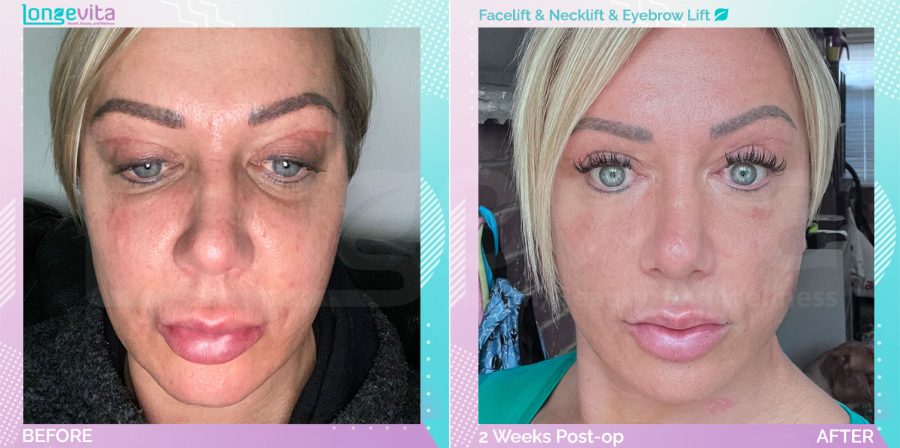
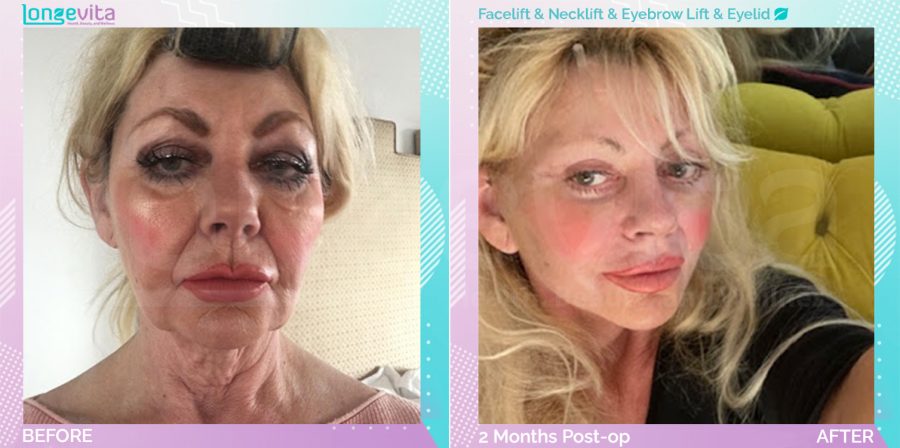
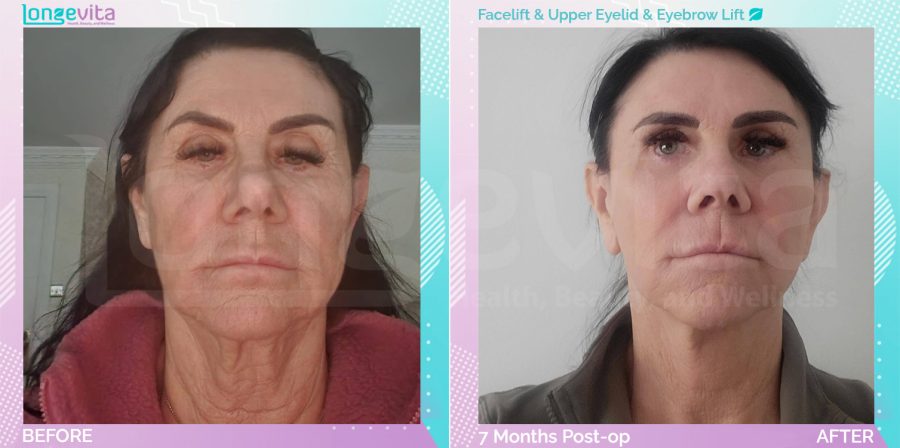
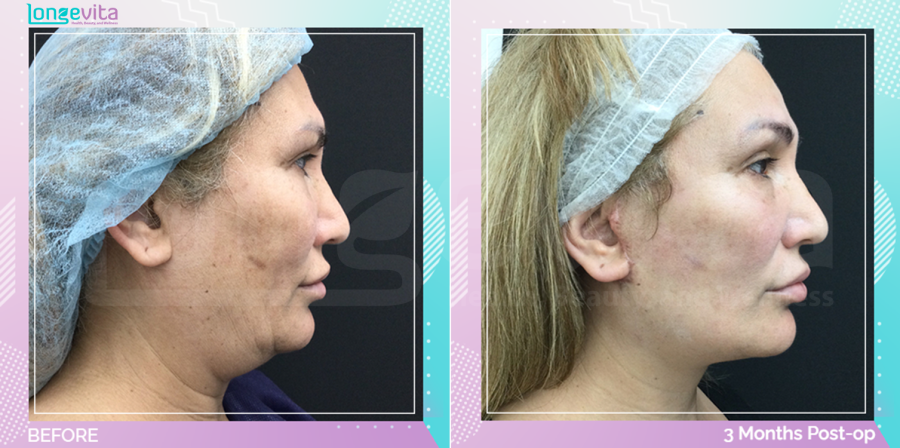
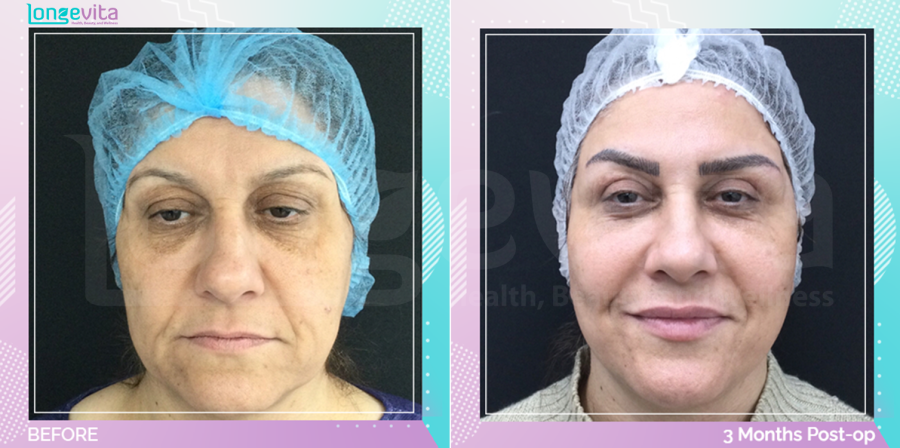
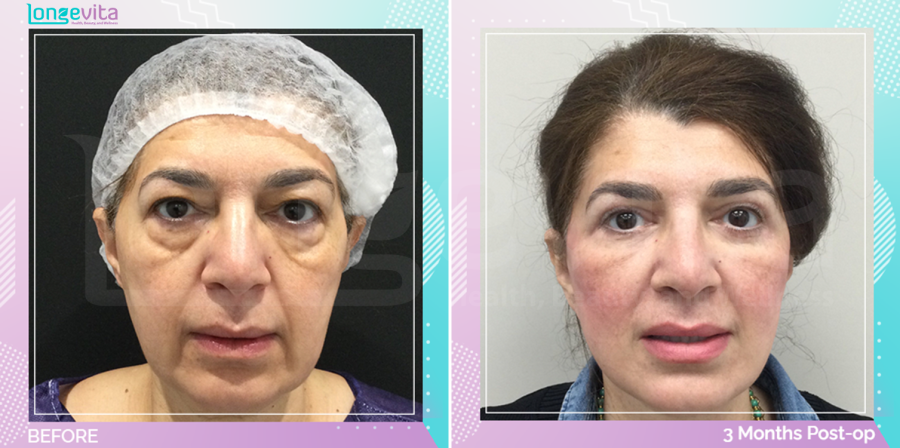
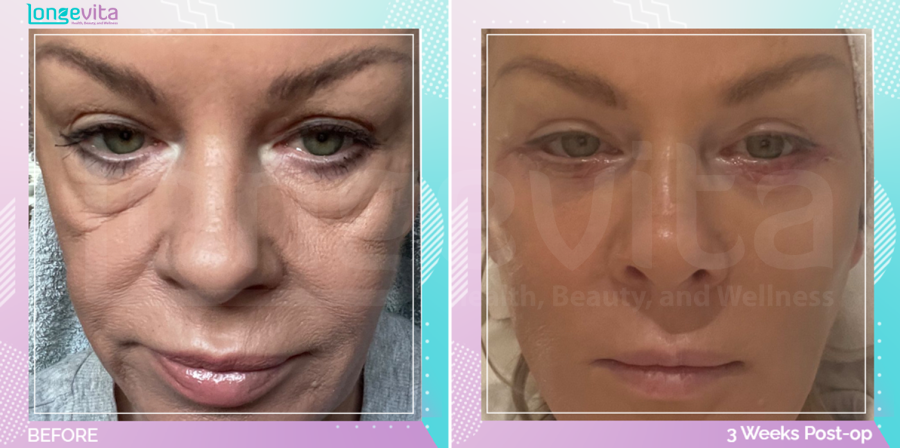
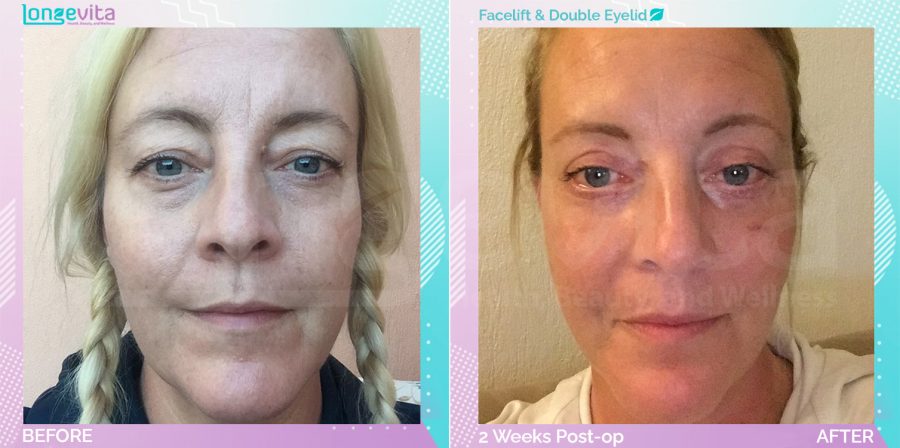
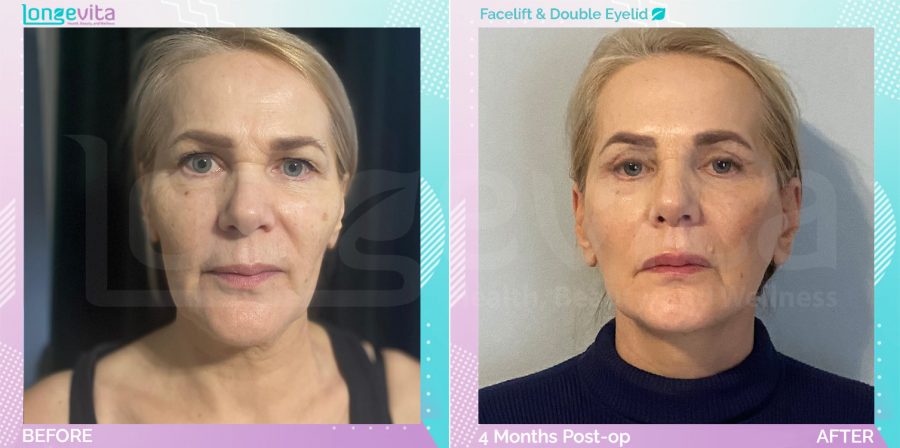
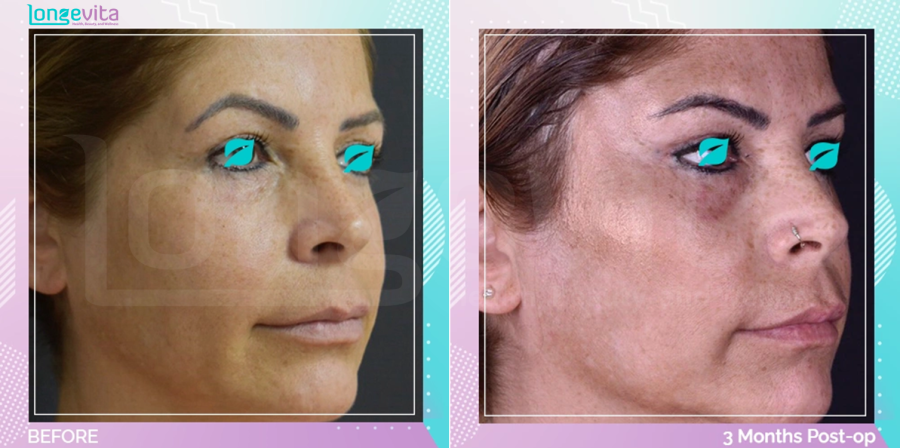
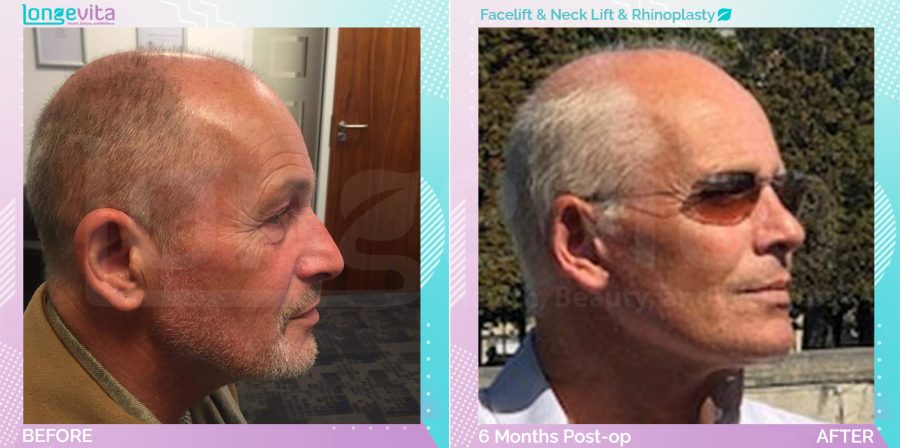
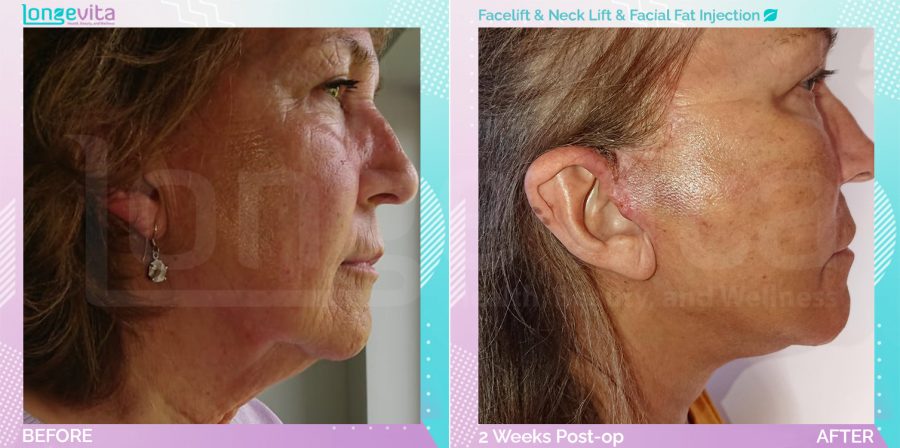
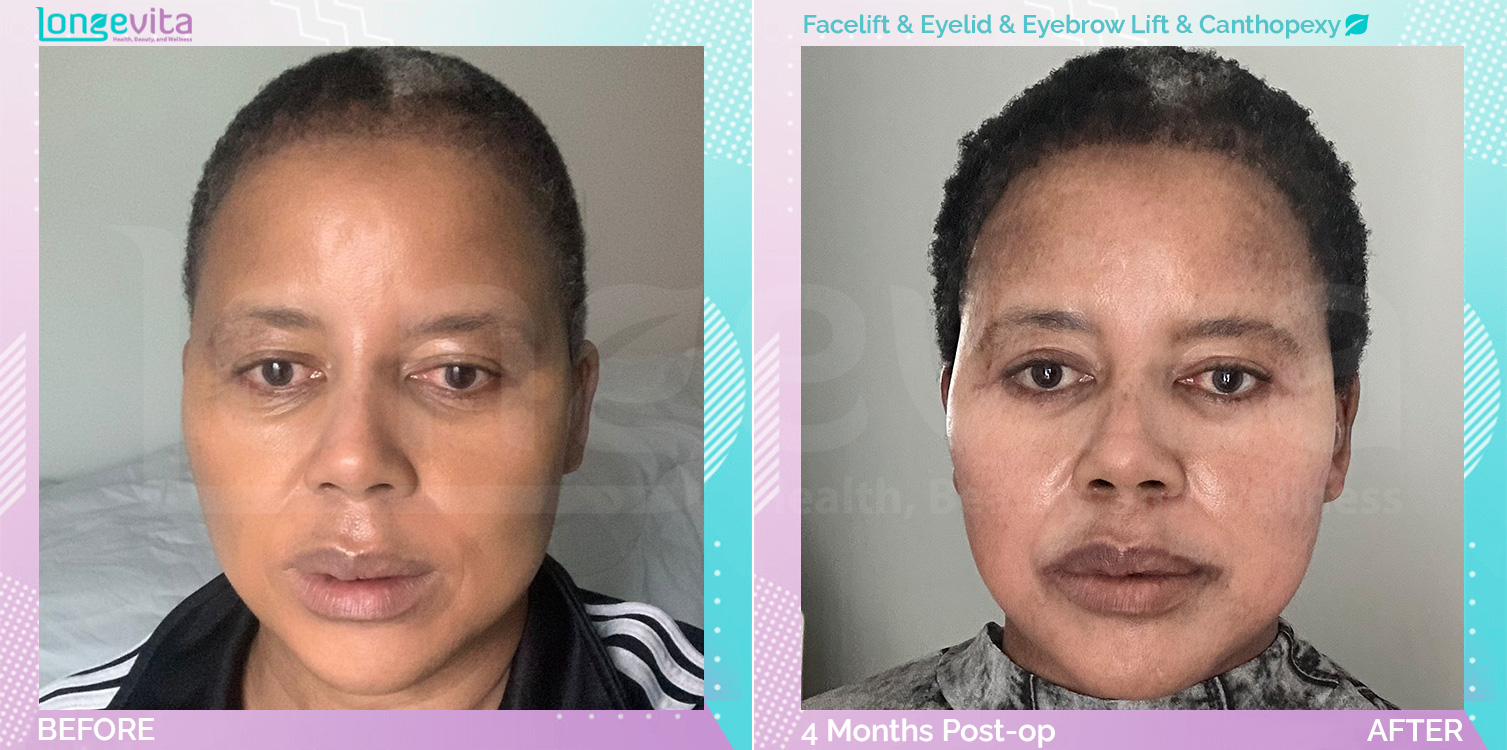
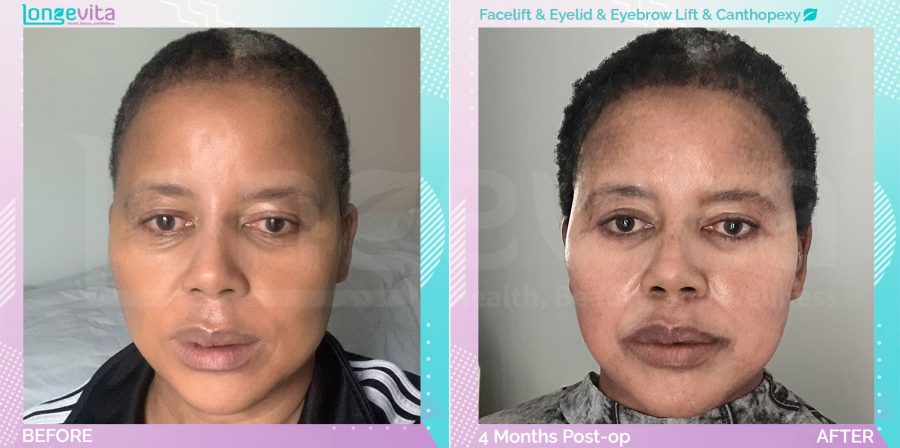
Facelift in Turkey Before and After Photos

A facelift can deliver long-lasting results, but its effects will naturally change over time as you continue to age. Factors like lifestyle, weight changes, and genetics can also influence the outcome. Even so, your face will appear more youthful and refreshed compared to if you hadn’t had the procedure.

What Is The Cost Of a Facelift In Turkey?

In Turkey, Longevita facilitates facelift surgery starting at £2,750. Prices vary depending on the type of facelift done.

What our Clients Say

Don’t take our word for it – see for yourself what people say about their experience! 

Natacha McManus
The results… Outstanding as usual, I am so very happy, thank you <3
I recently had the privilege of undergoing my fourth medical procedure arranged by Longevita, fifth if you include dental work. This time for Face, neck, eyebrow lift and Blepharoplasty, and I cannot express, once again, how impressed I am with the entire experience. From start to finish, the level of professionalism, care, and quality of service provided by this company exceeded all expectations. My experience with Longevita was nothing short of exceptional. Their commitment to patient support, the high standard of medical facilities, and the seamless coordination of every aspect of the trip left me with a sense of gratitude and satisfaction. I wholeheartedly recommend this company to anyone considering medical tourism in Turkey. It has been a truly transformative and unforgettable experience, one that I will cherish for a lifetime. Finally, the results… Outstanding as usual, I am so very happy, thank you <3
Kat
I look 15 years younger, or more!
Brilliant from start to finish! I had a facelift surgery and the team was friendly and welcoming. The hotel was very clean, drivers collected me from reception for all appointments, and the patient coordinators were really friendly, fun, and so lovely. The hospital was modern and clean. My surgery turned out so much better than I could have expected—I look 15 years younger, or more! The stitches are invisible. I’m so happy and wish I had done this sooner. I have no hesitation in coming back for more procedures! It was my first time in Turkey, and it won’t be the last. Everyone is so friendly, and the results speak for themselves!
Michelle
I am absolutely delighted with everything (not just because of all the compliments!)
I had a facelift in February 2022 and veneers, followed by breast augmentation last week. Dr. Fuat was the wonderful surgeon who performed my face and breast procedures—a very humble man. I am absolutely delighted with everything (not just because of all the compliments). The whole experience, from the very first point of contact, has been WONDERFUL! All the patient coordinators have been so kind. The drivers were also very helpful. The hotel experience was wonderful as well. I highly recommend Longevita and feel truly blessed and grateful to have had this experience.
Charmaine Porter
The service and results have been so good that I will be returning in December!
I traveled to Istanbul and had a face and neck lift arranged by Longevita. I can’t fault the service I received from my patient care advisor and the surgeon—it was above and beyond my expectations and truly excellent. The service and results have been so good that I will be returning in December for a breast reduction surgery and thigh lift. I am more than happy to chat with any potential patients seeking a recommendation. I have already referred a friend’s husband to Longevita for a hair transplant, and I must say, he is very happy with the results.

Frequently asked questions about A Facelift

Can a facelift be done without surgery?

While a traditional facelift requires surgery, there are non-surgical alternatives that can rejuvenate the face and give you a more youthful appearance. These treatments – often grouped under the term “non-surgical facelift” – can include botox, dermal fillers, laser resurfacing, chemical peels, ultrasound therapy, and microdermabrasion, among others. Though they can offer improvements with less downtime, the results are temporary and not as dramatic compared to those of a surgical facelift.

As a cosmetic procedure, a facelift is typically not available on the NHS. 

A surgical facelift can help you get rid of jowls, loose, sagging skin and excess fat. Depending on the type of facelift, it can also restore volume in the cheeks and help you achieve a more youthful-looking neck. Therefore, in the hands of the right plastic surgeon, a facelift can indeed be worth it.

Facelift scars can appear bright pink for a month or two after surgery. However, with time, the scars will become and become undetectable. It’s important that you have a good skincare routine to ensure your scars heal well. 

Reviewed and approved by:
Picture of Dr Fuat
Dr Fuat
Internationally recognised for his expertise in plastic surgery, Dr Fuat is a board-certified plastic surgeon and an active member of the International Society of Aesthetic Plastic Surgery (ISAPS). He has performed over 25,000 surgical procedures in his 34-year career. A number of his research articles have been published in well-reputed medical journals, and he has authored a book as well as written a book chapter. His expert opinion is also often sought after in the media. Dr Fuat can speak both English and Turkish fluently.