
Can Females Get Hair Transplants?
While most people undergoing surgical hair restoration are male, females can also have this procedure successfully.
Half the women in the world experience hair loss in their lifetime. By the time they’ve reached 50, 40% will have experienced the most common cause of hair loss – androgenetic alopecia or female pattern baldness. Fortunately, hair transplants are effective for female pattern baldness and other types of hair loss.
Female hair transplants are commonly done using the follicular unit extraction (FUE) technique, in which small groupings of hairs, known as grafts, are extracted from the back of the scalp and then redistributed to the balding areas. Results are long-lasting — individual outcomes vary.
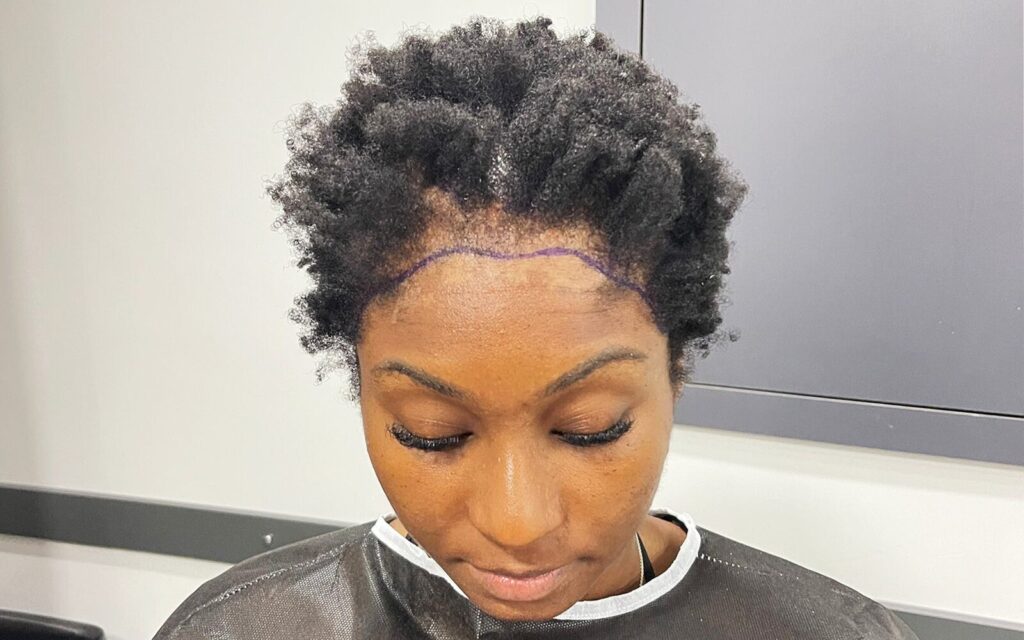
How Much Does a Female Hair Transplant Cost?
There can be significant variations in the cost of a female hair transplant depending on the location of the clinic as well as the type of procedure you’re undergoing.
In Turkey, a female hair transplant with regular FUE can cost £2,000, whereas the same can cost around £3,000 or so in the UK. Done with DHI or Sapphire, the price can go up to £2,500 in Turkey and £4,000-£5,000 in the UK.
You can explore how Afro hair transplant costs vary internationally on our Average Cost of Hair Transplant in Turkey and Hair Transplant Cost Comparison by Country pages.
Want a personalised Hair Transplant estimate?
Use our Price Calculator to get an estimate of how much your hair transplant, or any other treatments you’re interested in might cost. This quick tool helps you plan your treatment and budget with confidence before booking a consultation.
Select your treatment location
Select your treatment
Estimated Cost
All prices are estimates. Final cost may vary.
What’s included
DISCLAIMER
This is a price estimate only for budgeting purposes however it cannot be used as a substitute for a formal price quote that can only be given after a consultation with a qualified medical professional.
Optional additional treatments
Let's Turn Your Estimate Into a Plan
Complete the form and our team will reach out with everything you need to move forward.
Get a Free Hair Transplant Consultation
Fill out the form to receive a callback and book a consultation to receive your Free, no-obligation hair transplant treatment plan tailored specifically for your hair loss requirements.
Who Is A Good Candidate For A Female Hair Transplant?
If you have a strong and stable donor area – a permanent strip of hair at the back and sides of the scalp – hair transplant surgery is possible in the following cases:
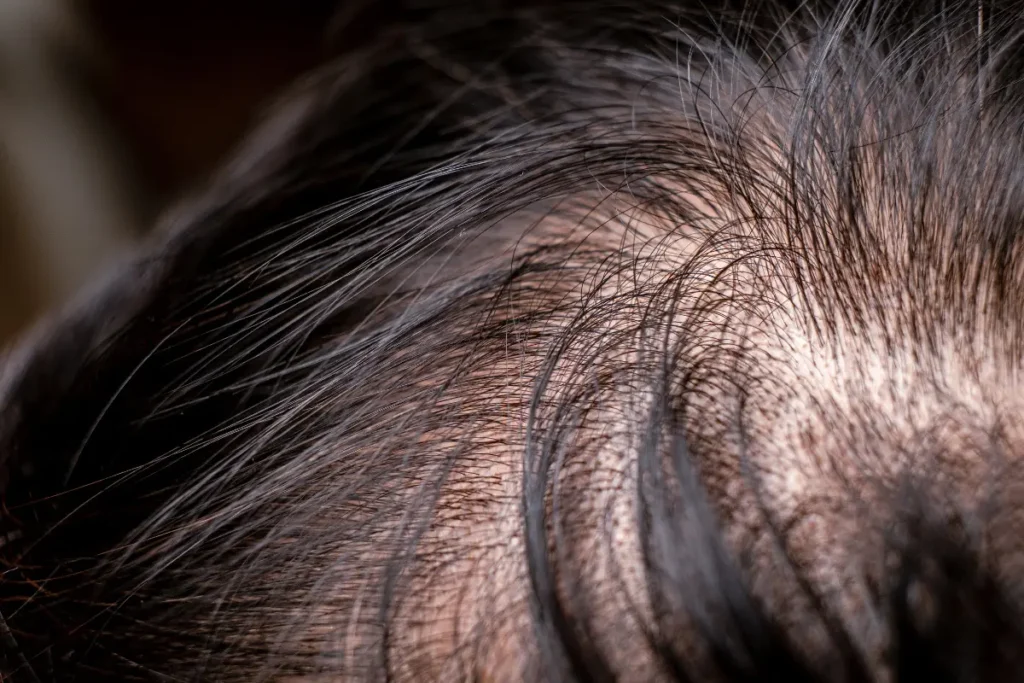
Stages of Female Hair Loss: The Ludwig Classification
Progression:
#1 thinning around the crown and middle part, with the latter widening slightly;
#2 hair gets thinner and less dense, with the scalp showing through; and
#3 extremely bald crown and top, but a frontal fringe is retained
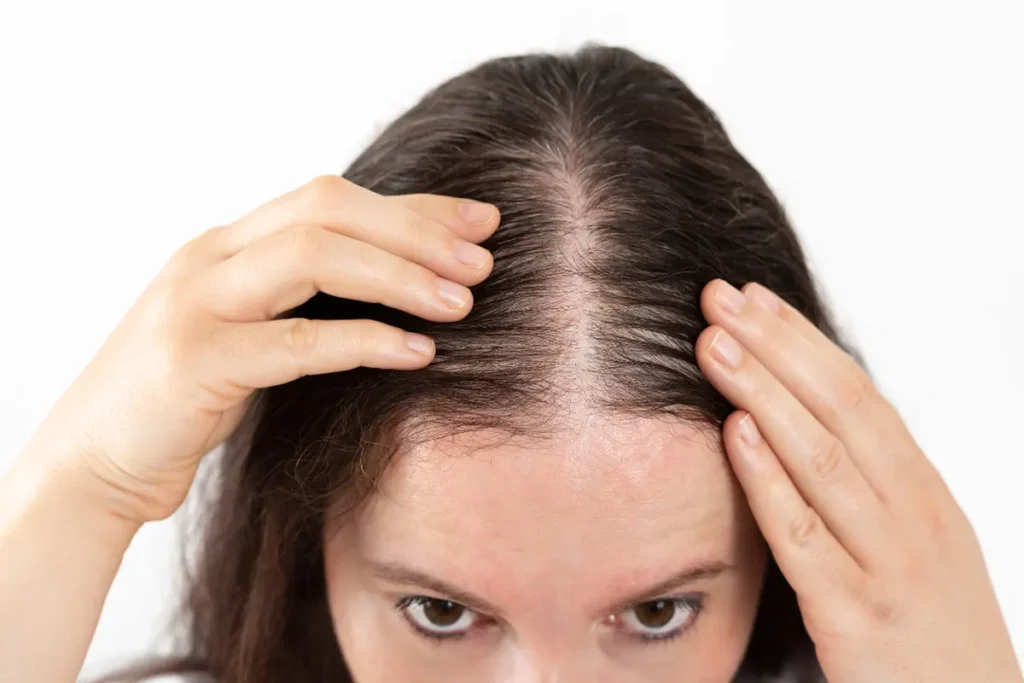
What Is the Christmas Tree Pattern of Hair Loss?
Appearance: Visible when hair is parted in the middle. Starting at the vertex (which forms the top of the tree), there is a gradual widening towards the front.
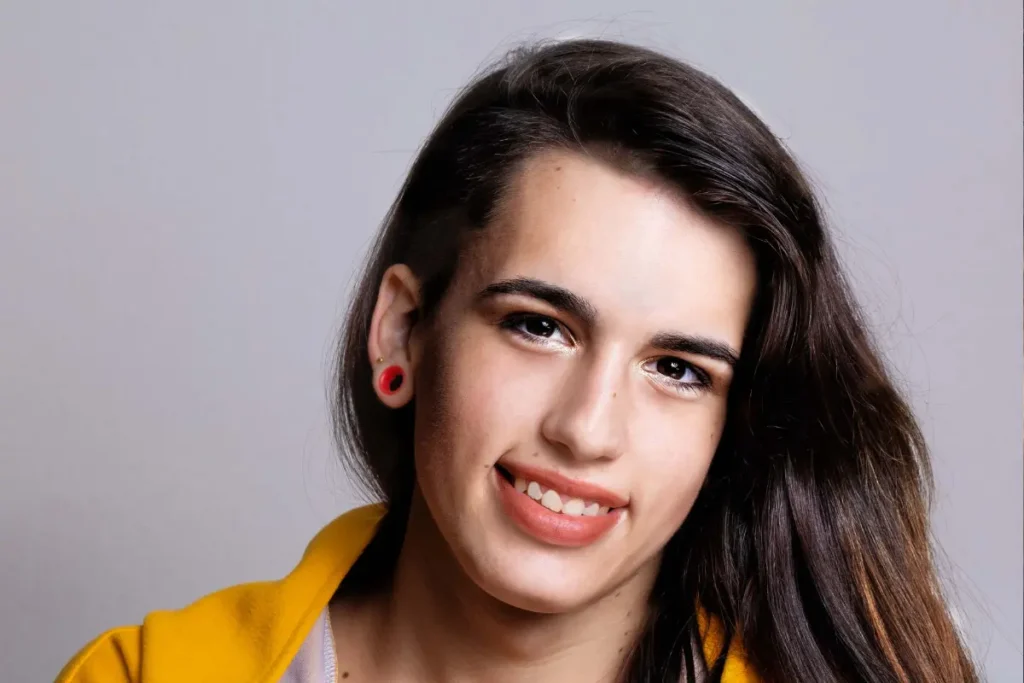
What Is Male-to-Female Hair Restoration?
For feminisation and lowering of the hairline.
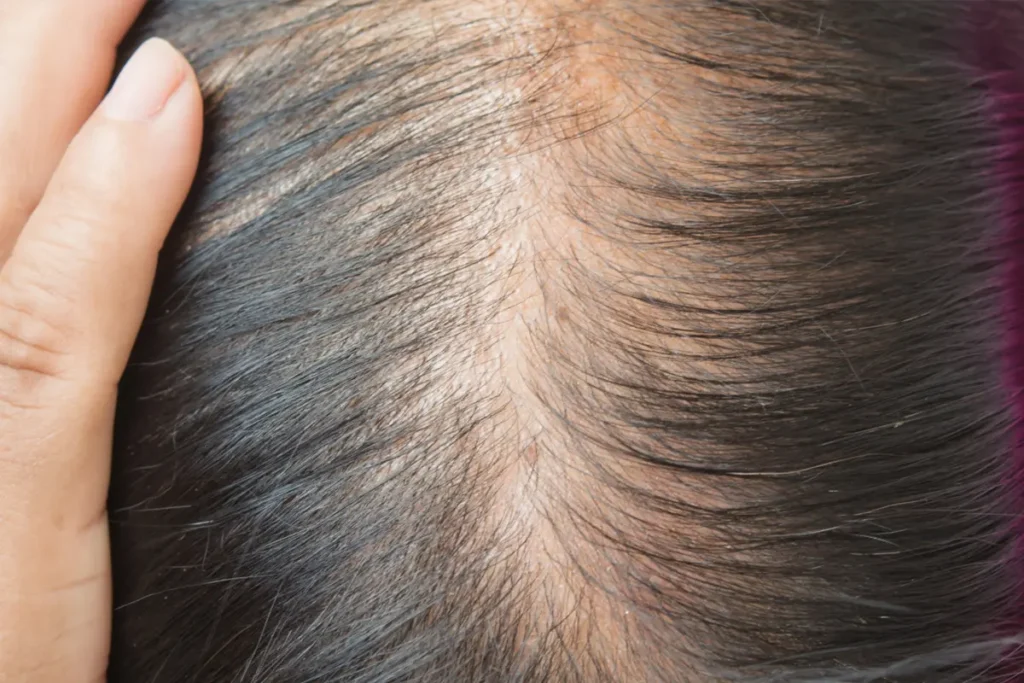
What Is the Male Pattern of Hair Loss?
Appearance: Hairline recession and crown hair loss.

What Other Conditions Can Hair Transplants Treat?
Traction alopecia, high forehead, congenital triangular alopecia, traumatic injury (e.g. burn scar), or camouflaging a surgery scar (e.g. facelift).
Who Is Not Suitable For A Female Hair Transplant?
There are some instances where a hair transplant surgery may not be indicated, such as:
Diffuse hair loss
If your hair loss affects your entire scalp, you won’t have a stable donor area to extract from (any hair extracted will be lost), in which case the surgery is not possible.
Temporary hair loss
Telogen effluvium is a type of temporary hair loss that can occur due to childbirth, hormonal imbalance, nutritional deficiency (like iron), hair dyes, crash diets, etc. If the hair loss is temporary, it does not require surgery.
Unpredictable hair loss
Alopecia areata is an autoimmune condition that can cause unpredictable and patchy hair loss. If a hair transplant is done in this case, your immune system can attack the transplanted hair, causing it to fall out.
Trichotillomania
It’s a hair pulling disorder. While such patients can undergo surgery for permanent hair loss, it is performed only after the condition has been treated to prevent compulsive hair pulling.
Active scarring alopecia
If you’re seeking a hair transplant after losing hair due to conditions such as frontal fibrosing alopecia, central centrifugal cicatricial alopecia, and lichen planopilaris, you need to wait for them to go into remission and stabilise.
Unrealistic expectations
It is essential for you to understand the limitations of what can be achieved through this surgery. People with body dysmorphic disorder often have unrealistic expectations, which is why a hair transplant is contraindicated for them.
How Is Graft Planning Done In Female Hair Transplants?
An essential consideration in female hair transplantation is meticulous planning regarding the number of grafts to extract. Women may face the challenge of having a limited supply of donor hair since the sides are often susceptible to thinning and not always suitable for extraction.
Therefore, to ensure efficient use of donor hairs, you should have a clear idea of the areas that concern you the most so that ythe independent clinician can focus on improving their density. These can include the frontal hairline, midline, temple areas, crown and/or a side part.
For instance, if you like to part your hair to one specific side, more grafts can be inserted in that area so it works well with your preferred hairstyle. Implanting hair across the entire scalp may result in lower overall density. Remember, the goal of a hair transplant is to create a satisfactory illusion of density.
Besides defining the areas you are concerned about, ythe independent clinician will assess how many grafts you need and how many can be extracted. One of the things to do in this regard is to measure the area of baldness, which can be done by approximating geometric shapes to your recipient area.
Graft planning also involves determining the density and size of the donor area. Keep in mind that 40-50% of follicular units per cm2 will be extracted, so if you have a very poor donor density, extraction can lead to permanent bald patches at the back of your head, which is why careful assessment of the donor area is necessary.
Additionally, the recipient density has to be determined. Generally, it can vary from 25 to 40 follicular units per cm2 or even more. However, some factors influencing this calculation include:
- Calibre/thickness of hair (thicker grafts achieve a better appearance of density even with fewer grafts)
- Number of hairs per graft
- Degree of curl
- Contrast between skin and hair colour (the less it is, the less see-through the scalp)
How Is The Hairline Designed In Female Hair Transplants?
A woman’s hairline is quite different from a man’s. The absence of frontotemporal recession is one of the most significant differences between male and female hairlines.
In males, the hairline is commonly M-shaped with a small triangular recess at each corner. However, a female hairline is typically round and curves at the corners (although there are other hairline shapes, for instance, oval, rectangle, and heart).
A closer look at the female hairline also reveals the presence of additional features, such as a cowlick in the centre, widow’s peak, and lateral mounds (small, subtle peaks).
To outline it, a central point is marked using the centre of the nose as a reference. The surgeon then draws a line between the eyes and the forehead, and a laser device is used to make it perfectly straight.
During hairline design, the surgeon may ask you to raise your eyebrows to ensure the hairline is positioned above your forehead muscles. The hair will move when you make certain facial expressions if it is implanted into these muscles, which looks unnatural. It is also a reason why your hairline cannot be too low.
From this central point, the lines on each side of the hairline can either be relatively straight or gently curved, depending on its shape. As the hairline bends downwards, there can be a small jutted area for the temporal peak, and then, with a slight curve, it can taper down to the sideburn.
Do They Shave Women's Hair For A Hair Transplant?
For many women, shaving their entire head for a hair transplant can be off-putting. Fortunately, it is not always necessary to do so.
If you need 3,000 grafts or fewer (women typically require fewer grafts as complete baldness is rare), you can opt for a unshaven direct hair implantation (DHI) procedure.
It’s important to note that while your recipient area remains unshaven, a small patch or window of your donor area will still be shaved for graft extraction. Even so, with long hair, you can easily conceal the bald patch until your donor hair grows back long.
How Does A Female Hair Transplant Work?
Once you arrive at the clinic, you’ll have a preoperative consultation, during which you’ll thoroughly discuss your treatment plan; your new hairline will be drawn, and, if needed, your entire scalp will be shaved. Following that, you’ll be headed to the operating theatre.
How Is Donor Hair Harvested In Female Hair Transplants?
Before the donor area is harvested, a “safe donor zone” is marked at the back of the scalp. It’s the area where permanent growth is expected, making it suitable for transplantation to balding regions. There, it can continue to grow without a change in its original characteristics – a concept called donor dominance.
The safe donor area is located slightly further down the perimeter of the crown area. If it is too close to it and crown hair loss progresses in the future, the grafts in that area would be lost, showing the FUE punches. This is why an experienced surgeon is careful and considers long-term implications when delineating this zone.
The inferior border of this safe donor area is usually around the bony bump at the lower back of the scalp. And as mentioned above, since temples in women can be susceptible to thinning, they’re usually spared.
After the safe donor zone has been determined during the consultation, it is operated on under local anaesthesia with the use of a 0.8-1 mm diameter punch tool and tweezers – one technician frees the grafts from the skin, and the other plucks them out using tweezers.
During harvesting, care is taken to ensure a uniform extraction, considering that removing too many grafts from the same area will leave a noticeable bald patch behind. Furthermore, care is taken to minimise damage to grafts during extraction. The punch tool is angled in the direction in which the hair exits from the scalp so the grafts are not cut.
The entire process can take a couple of hours, but it naturally depends on the number of grafts that need to be extracted. Once the planned number of grafts has been taken out, the donor area is bandaged.
How Are Incisions Made In Female Hair Transplants?
After the grafts have been taken out, the surgeon will use the sapphire blades to create the incisions in the balding areas – the extracted hair grafts will be placed into these incisions. The size of these slits can vary depending on the type of graft being used in a particular area of the scalp.
For instance, the hairline is filled with 1 and 2-hair grafts, and its incisions are the smallest. Their size can be bigger in the central area where generally grafts with 3-4 hairs are implanted to create an appearance of density, although the periphery might be filled with 2-hair grafts. In the crown, the graft size can become smaller towards the centre.
The surgeon is also careful in following the angulation of the existing hair so that the newly transplanted hair grows out in a similar, natural-looking fashion. The angles are generally lower at the front and temples but increase as we move backwards.
Furthermore, the slits can be oriented in one of two ways: sagittal (going from front to back) or coronal (going sideways). A combination of these can be used, with the latter being preferred for creating an illusion of density (which can be useful where fewer grafts are used).
The depth of the incision is also controlled by the surgeon and is decided in accordance with the length of the graft itself. And once the slit-making process is finished, trained and experienced technicians begin placing the grafts.
How Are Grafts Inserted In Female Hair Transplants?
Graft insertion is carefully performed by experienced technicians to achieve natural-looking results. This can take up to 2 hours as well.
First and foremost, thin 1-hair grafts are placed in the very front few rows to create a feathered hairline. This is followed by a transition to 2-hair grafts and then 3-4 hair grafts while going backwards on the scalp.
Careful handling is very important in this step of the surgery. Damage from the forceps, dehydration or other trauma can impact graft survival and, consequently, your results. Therefore, your medical team will exercise utmost diligence.
Kay's Journey
Patient Journey
0:41
1:25
How Long Does It Take To Recover From A Female Hair Transplant?
Your recovery will be followed up by our team, and you can also get in touch with them via support@longevita.co.uk for any support. You can also have a virtual consultation or an in-person one in London.
Some things of note during recovery can include:
Downtime
Typically 1 week, but it can depend on the nature of your work.
Common side effects
Common side effects are swelling, itchiness, scabbing, dryness, pimple formation, redness, pain, and sensitivity – all of them should get better with time.
Shock loss
Shock loss is a temporary hair loss which can affect both the donor and recipient areas. It can occur 2-3 weeks after your procedure but will not affect your results.
Platelet-rich plasma (PRP) therapy
Platelet-rich plasma (PRP) to stimulate hair growth are commonly recommended as they contain growth factors and proteins. It can speed up the recovery process.
Hair growth
Usually starts after 3 months with soft, fine hair. Thickness and density will improve with time, and final results become visible after 12 months (18 months for the crown because of slower blood circulation).
Female Hair Transplant Before-And-After Photos
Final results become visible after 1-1-5 years. However, since hair grows about 6 inches a year, it can be some time before you can see your results with long hair. Also, note that outcomes can vary between individuals.
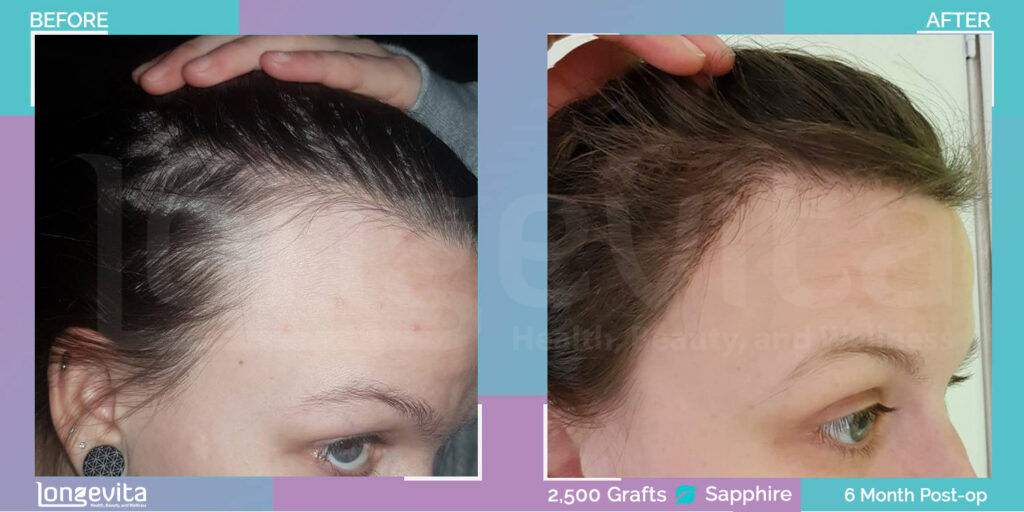
- Age: 24
- Sapphire FUE
- 2,500 grafts
- 6 Months
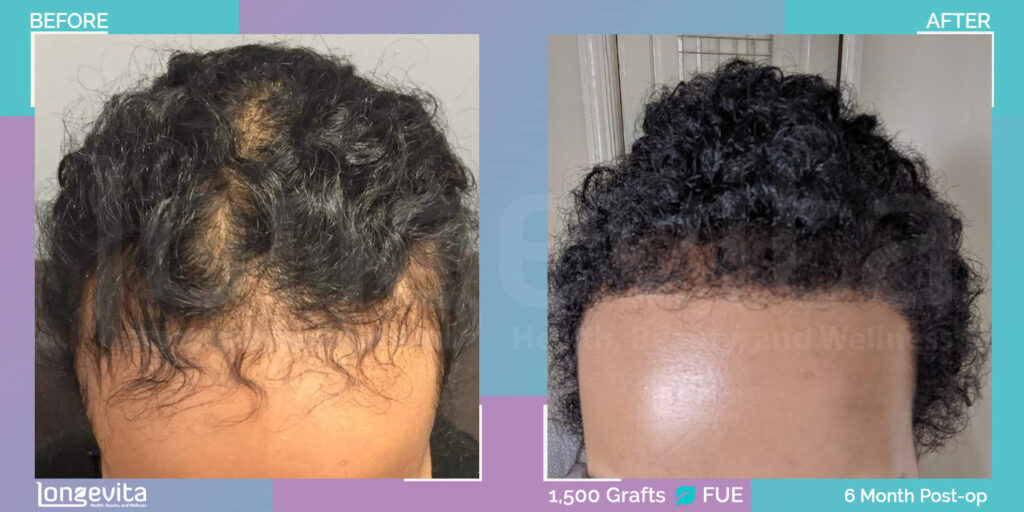
- Age: 24
- FUE
- 1,500 grafts
- 6 Months
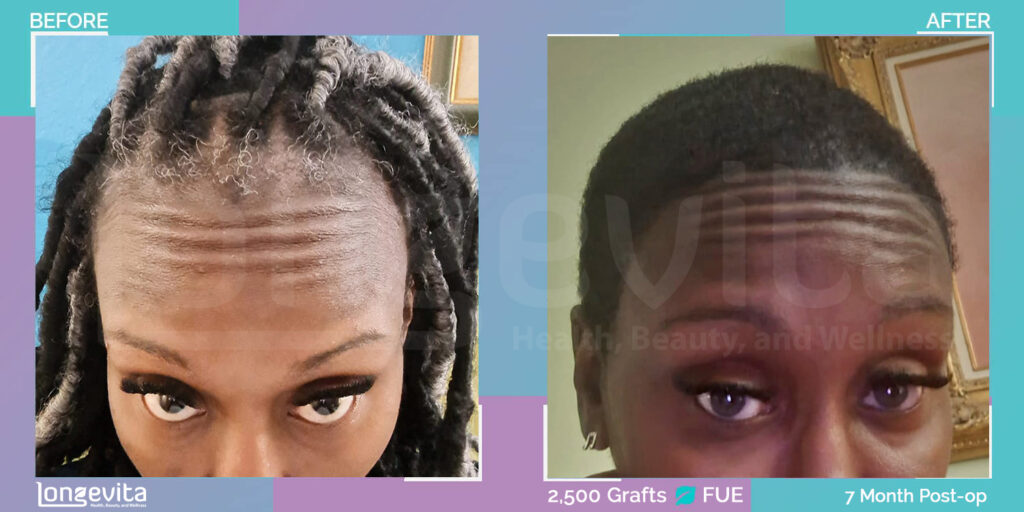
- Age: N/A
- FUE
- 2,500 grafts
- 7 Months
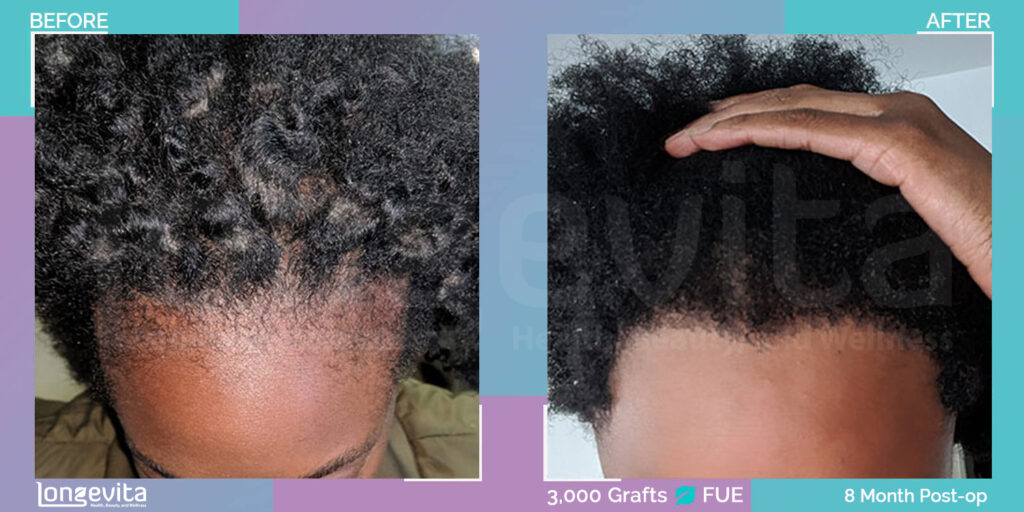
- Age: 34
- FUE
- 3,000 grafts
- 8 Months
Female Hair Transplant Reviews
Check out why so many women choose Longevita to arrange their hair transplants!
Ready to start your Hair Transplant Journey in Turkey?
Fill out the form to receive a callback and book a consultation to receive your Free, no-obligation hair transplant treatment plan tailored specifically for your hair loss requirements.
Frequently asked questions about Female Hair Transplants
Female hair transplants can deliver very positive outcomes and long-lasting results for many women. While this surgery is less common among women, when performed by an experienced clinician, it can help restore natural-looking hair — individual outcomes vary depending on the extent of hair loss, donor area characteristics, and the technique used.
Hair transplant is an effective treatment option for female pattern baldness. However, the presence of a strong and stable donor area is important for long-lasting results. In cases where thinning is present in the donor area (back and/or sides of the scalp), transplanted hair may not remain stable over time, and you may experience ongoing thinning — your clinician will assess your suitability during consultation.
The results of a female hair transplant are long-lasting. While you can experience temporary shock loss after your surgery, your hair should start to grow back after some time. Transplanted hair is meant to stay with you for many years to come.
Unlike over-the-counter products or hair systems, the results of a hair transplant are long-lasting. A single session of surgery is usually all people need to restore their hair, so this is also not a recurring expense. A female hair transplant can be quite worthwhile because of these reasons, as well as the fact that it gives natural-looking results.
Usually, a female hair transplant can take anywhere from 5-7 hours. Extraction, incisions and implantation can take about 2 hours each, but the overall duration can vary depending on the extent of hair loss.
It is understandable to want to hide your scalp after a hair transplant, however, you are recommended against covering your scalp as it can damage your hair grafts. If a fabric gets caught in your scabs, it can cause your grafts to fall prematurely. Nevertheless, you can consult the independent clinician before leaving the clinic for any other options.
Since females have narrower scalps, it’s often impossible to perform a 5,000-graft hair transplant due to a limited donor area. However, a patient’s willingness to shave also determines how many grafts can be extracted.
When a full shave is performed, more grafts can be extracted, but if a person wants their existing hair to cover the donor area, only a small window is shaved. Consequently, fewer grafts are extracted. The donor area of females usually allows the extraction of 3,000 grafts, although this can vary.

Dr Cagla earned her medical degree at Trakya University’s Faculty of Medicine in Bulgaria and has almost 6 years of hair transplantation experience. She is a specialist in FUE, DHI and Sapphire hair transplants of the scalp, eyebrows and beard and has performed over 6,000 surgeries. Dr Cagla is multilingual, with fluency in English, Bulgarian and Turkish.