
Hair Transplant Before and After Results
See real hair transplant before and after results from Longevita clients across a range of treatments – including FUE, DHI, Sapphire FUE, Afro, Beard, and Female hair transplants. Every transformation showcases the person’s age, graft count, treatment type, and recovery stage. These genuine cases demonstrate the skill of the independent service providers we work with, and the natural-looking outcomes achievable with modern techniques in Istanbul, Turkey and London, UK.
Longevita is a UK-registered company arranging treatments in internationally accredited hospitals. Clients benefit from UK contracts, transparent pricing, and aftercare support for complete peace of mind.
Results vary between people. The cases shown are real client outcomes and are not representative of guaranteed results.
Book a Free Consultation
FUE Hair Transplant Before and After Results
See how natural and full our clients’ results look after FUE (Follicular Unit Extraction) – one of the most popular and minimally invasive hair restoration methods. Each transformation below showcases real people of different ages, graft counts, and recovery stages, giving you a clear idea of how your own results may progress over time.
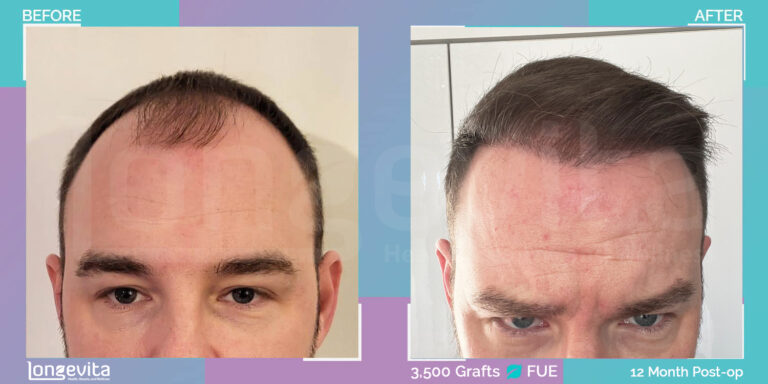
- Age: 39
- FUE
- 3,500 grafts
- 12 Months
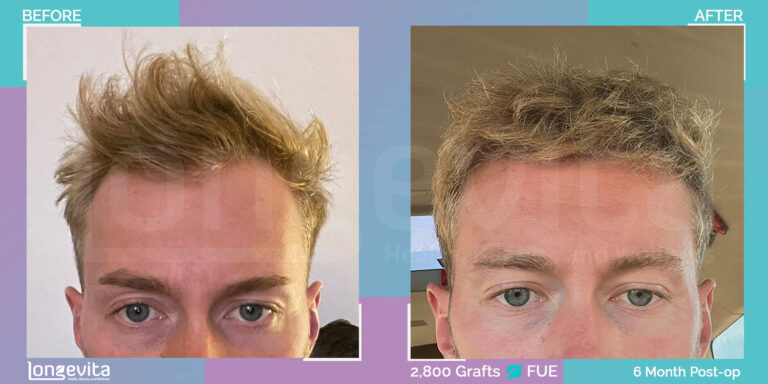
- Age: 26
- FUE
- 2,800 grafts
- 6 Months
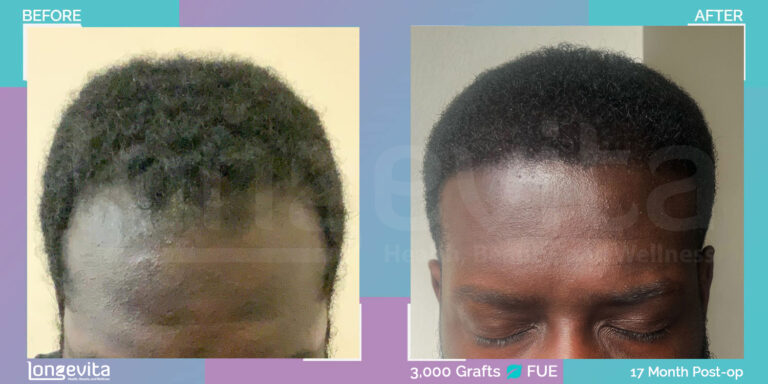
- Age: 29
- FUE
- 3,000 grafts
- 17 Months
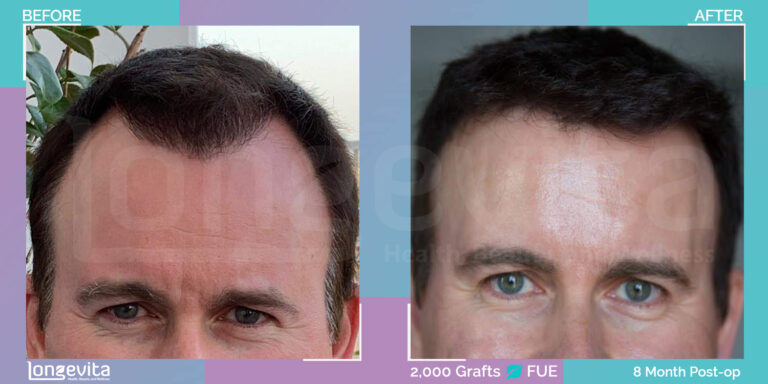
- Age: 51
- FUE
- 2,000 grafts
- 8 Months
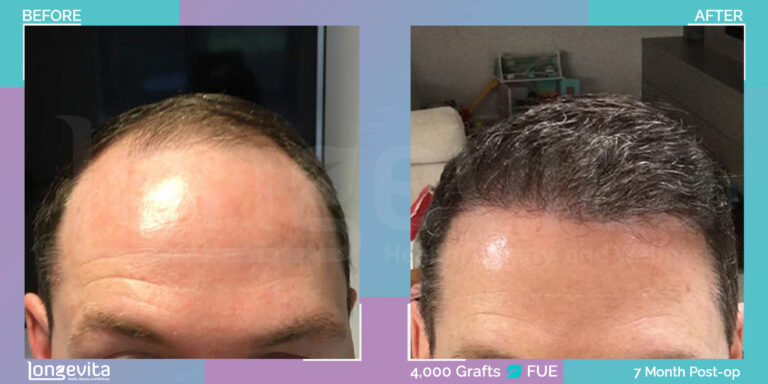
- Age: 36
- FUE
- 4,000 grafts
- 7 Months
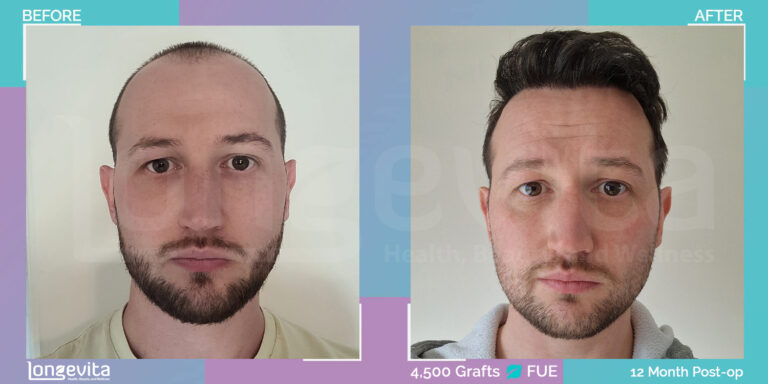
- Age: 35
- FUE
- 4,500 grafts
- 12 Months
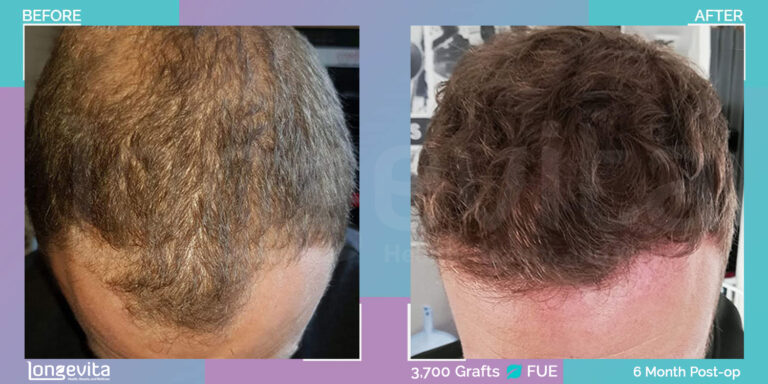
- Age: 33
- FUE
- 3,700 grafts
- 6 Months
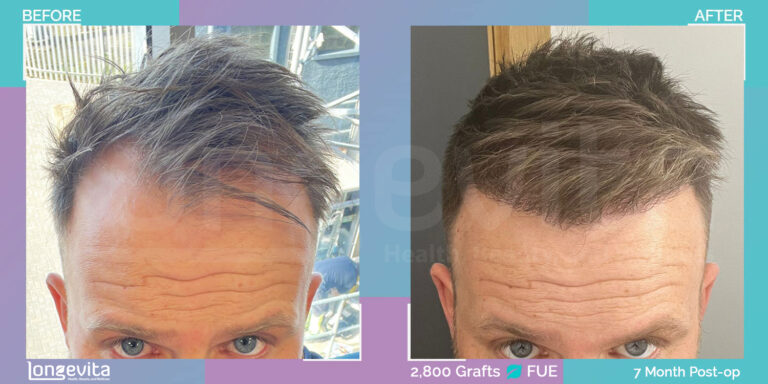
- Age: 38
- FUE
- 3,000 grafts
- 7 Months
DHI Hair Transplants Before-And-After Photos
Explore DHI (Direct Hair Implantation) before and after results to see how this advanced, pen-based technique delivers dense, precise, and natural-looking outcomes. Each case highlights a unique client journey, including graft numbers and recovery milestones, helping you visualise what to expect from your own treatment.
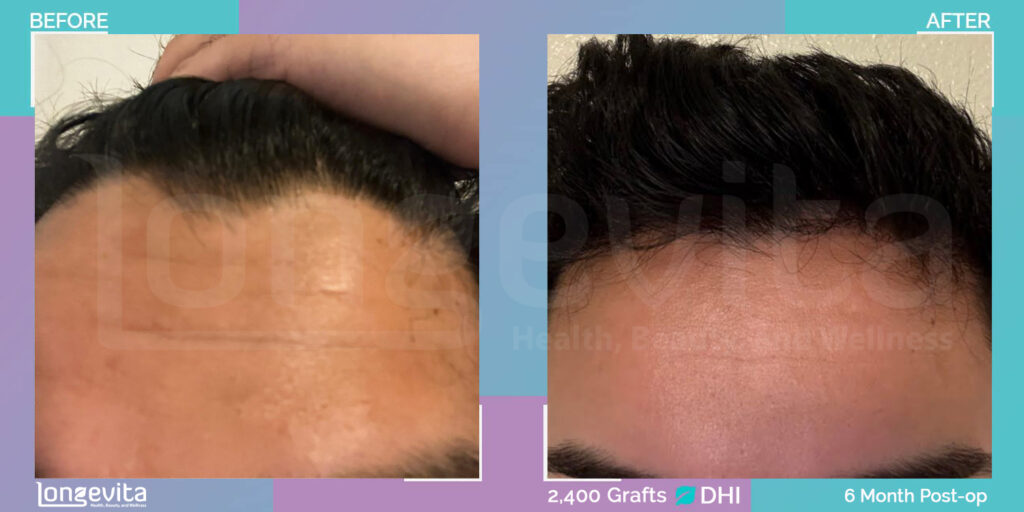
- Age: 22
- DHI
- 2,400 grafts
- 7 Months
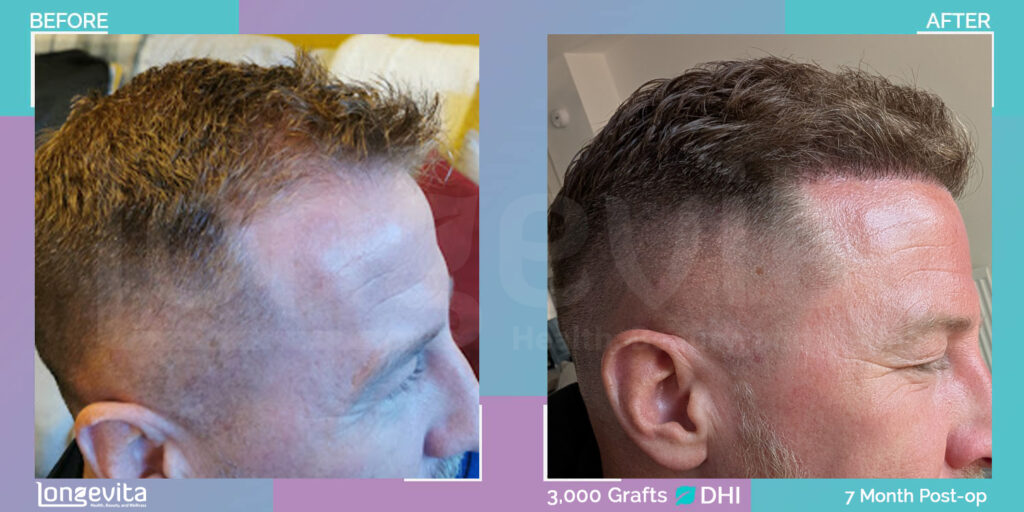
- Age: 36
- DHI
- 3,000 grafts
- 7 Months
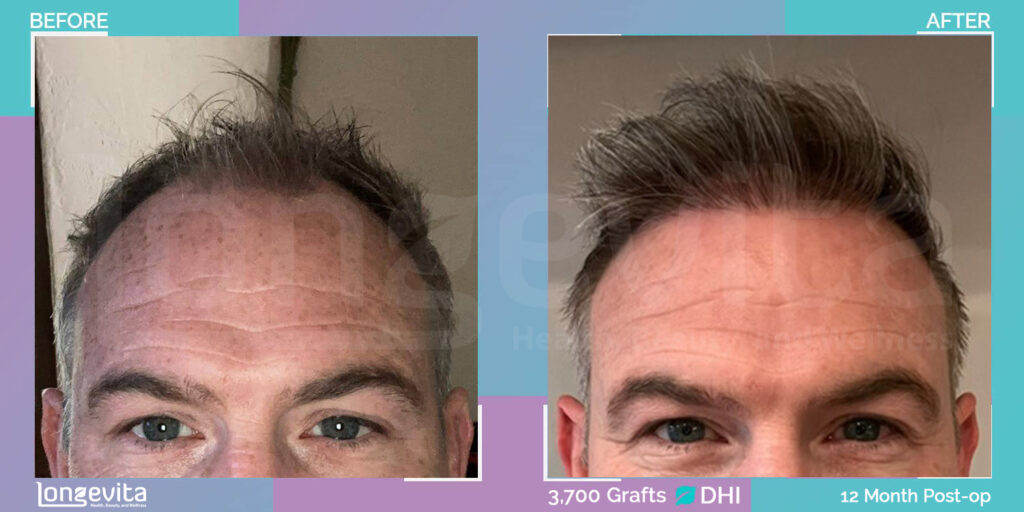
- Age: 40
- DHI
- 3,700 grafts
- 12 Months
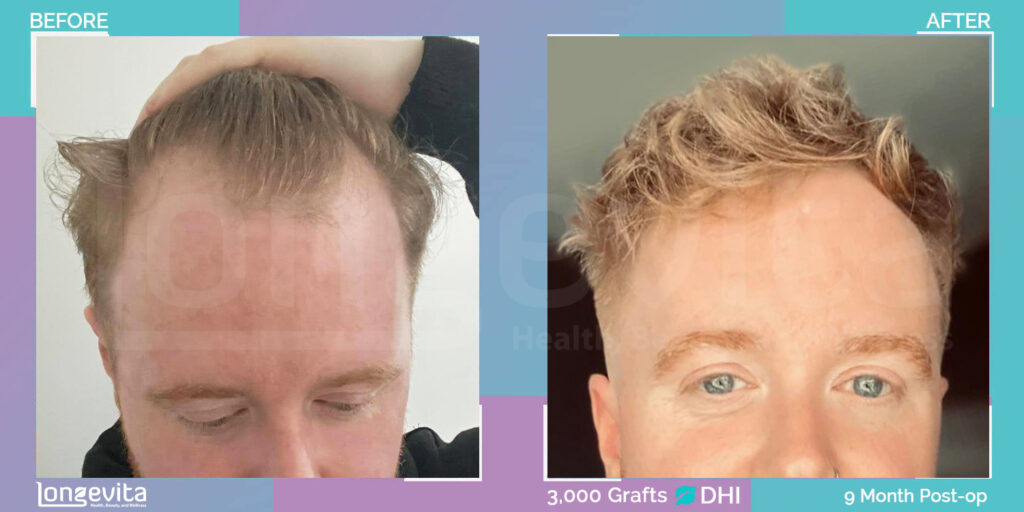
- Age: 33
- DHI
- 3,000 grafts
- 9 Months
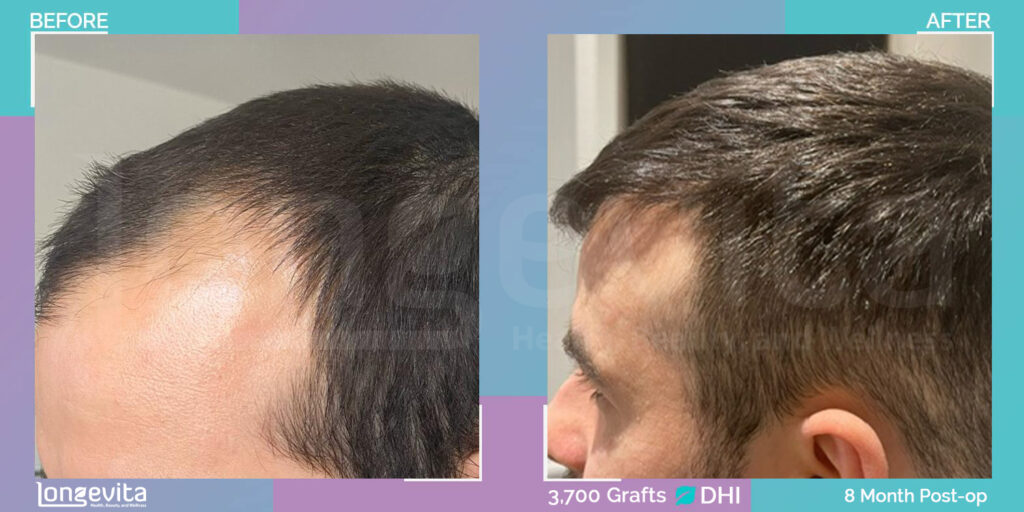
- Age: 32
- DHI
- 3,700 grafts
- 8 Months
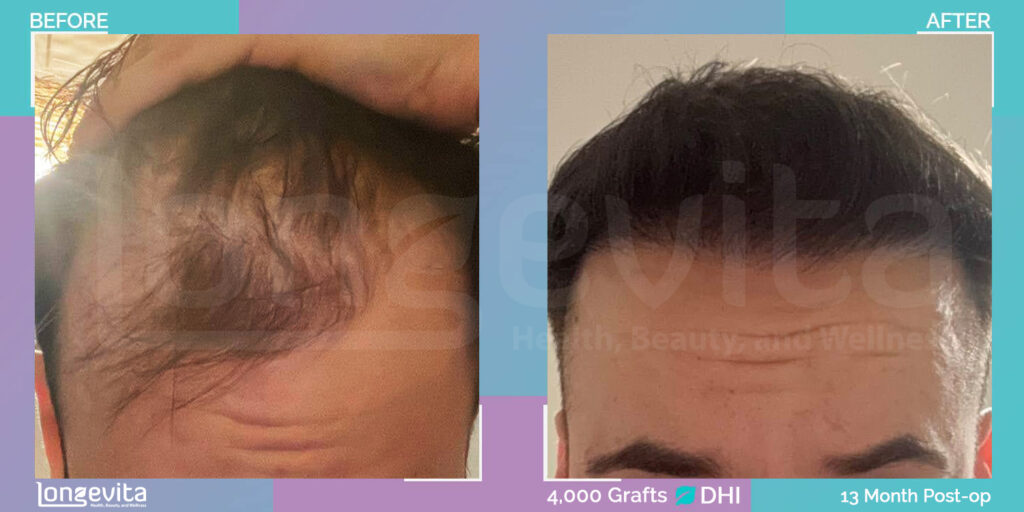
- Age: 24
- DHI
- 4,000 grafts
- 13 Months
Sapphire FUE Hair Transplant Before-And-After Photos
Discover the refined results of Sapphire FUE, a modern evolution of traditional FUE using sapphire-tipped blades for greater precision and faster healing. These before and after photos show the impressive density, natural hairlines, and recovery progress achieved by real people treated at the independent service providers we work with.
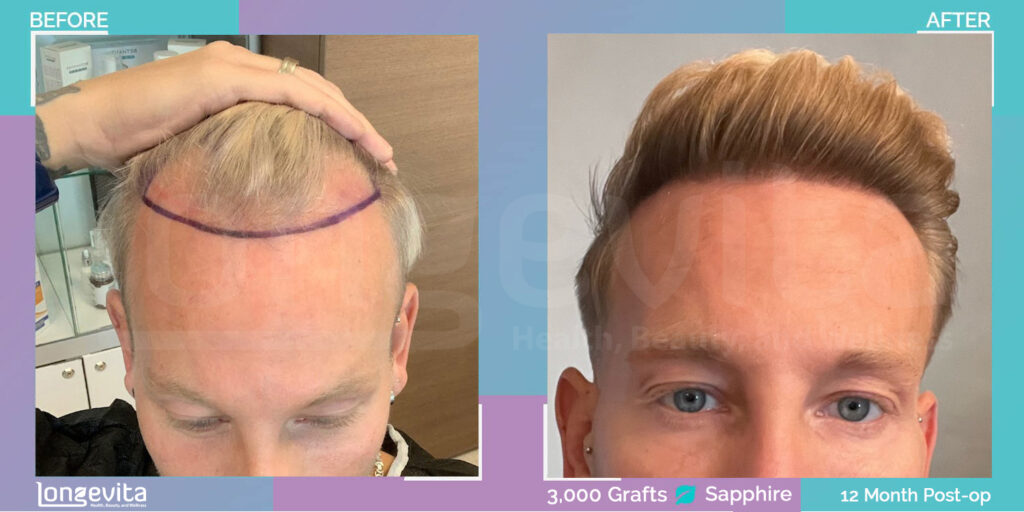
- Age: 37
- Sapphire FUE
- 3,000 grafts
- 4 Months
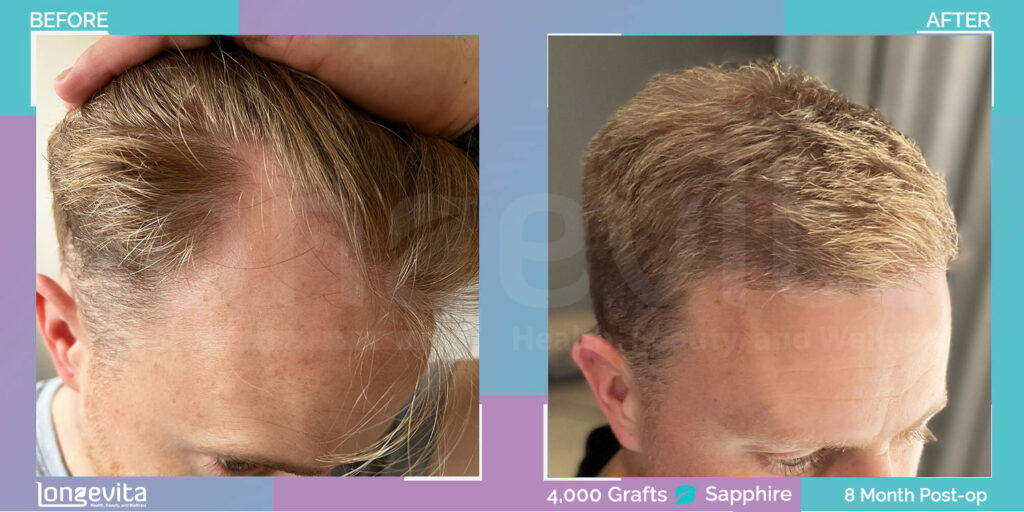
- Age: 32
- Sapphire FUE
- 4,000 grafts
- 8 Months
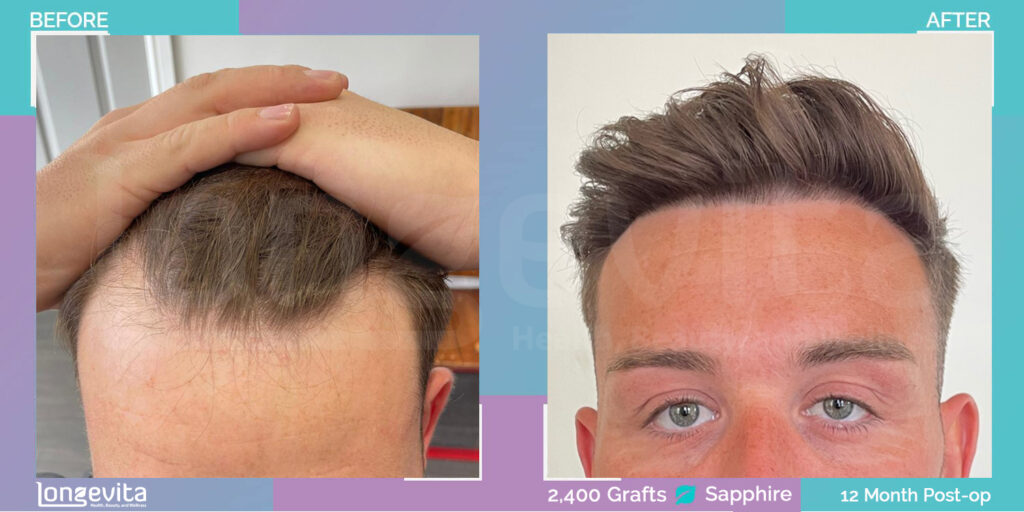
- Age: 30
- Sapphire FUE
- 2,400 grafts
- 12 Months
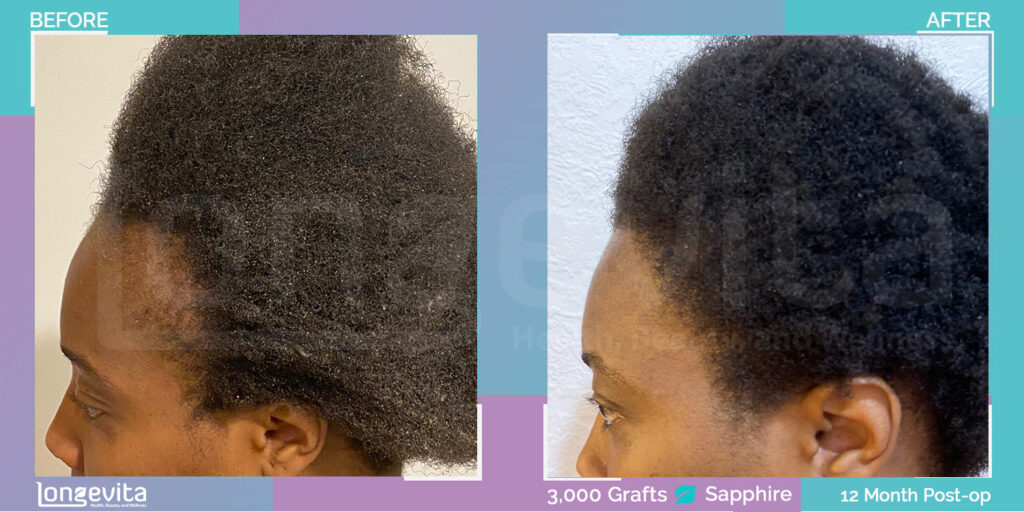
- Age: 32
- Sapphire FUE
- 3,000 grafts
- 12 Months
Afro Hair Transplant Before-and-After Photos
Browse through real Afro hair transplant transformations to see how clinicians skilled in working with curly and coily hair textures achieve natural coverage and growth. Each example details the person’s age, graft count, and recovery stage, demonstrating the versatility and success of this specialised procedure.
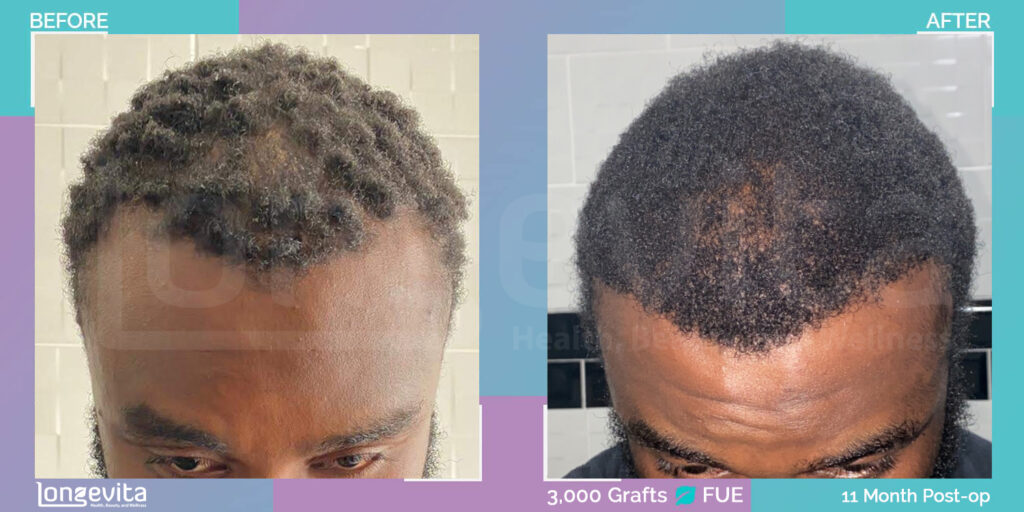
- Age: 31
- FUE
- 3,000 grafts
- 11 Months
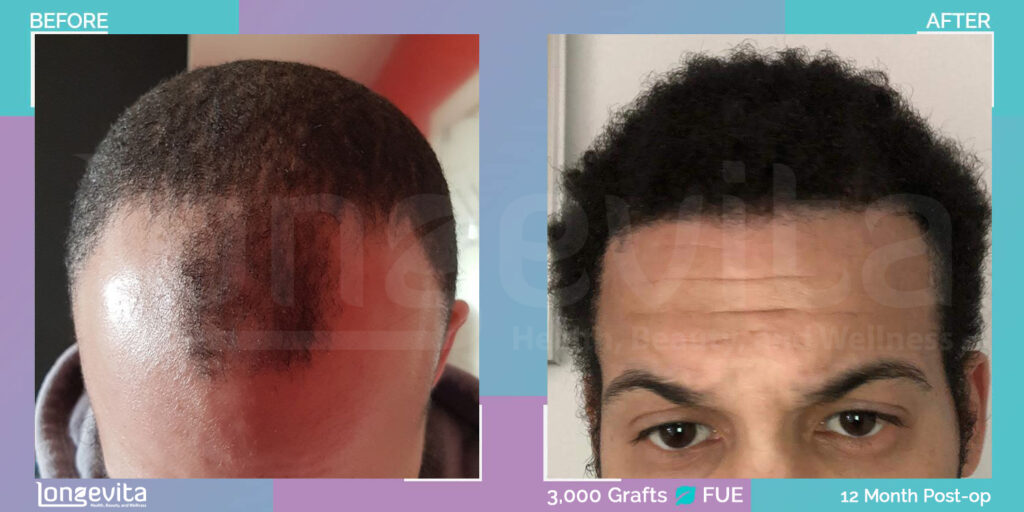
- Age: 31
- FUE
- 3,000 grafts
- 12 Months
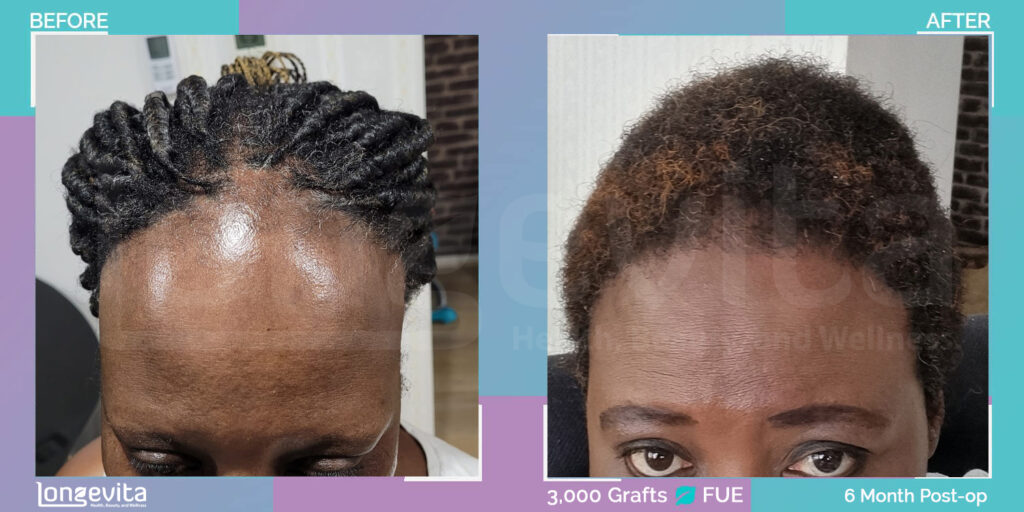
- Age: 45
- FUE
- 3,000 grafts
- 6 Months
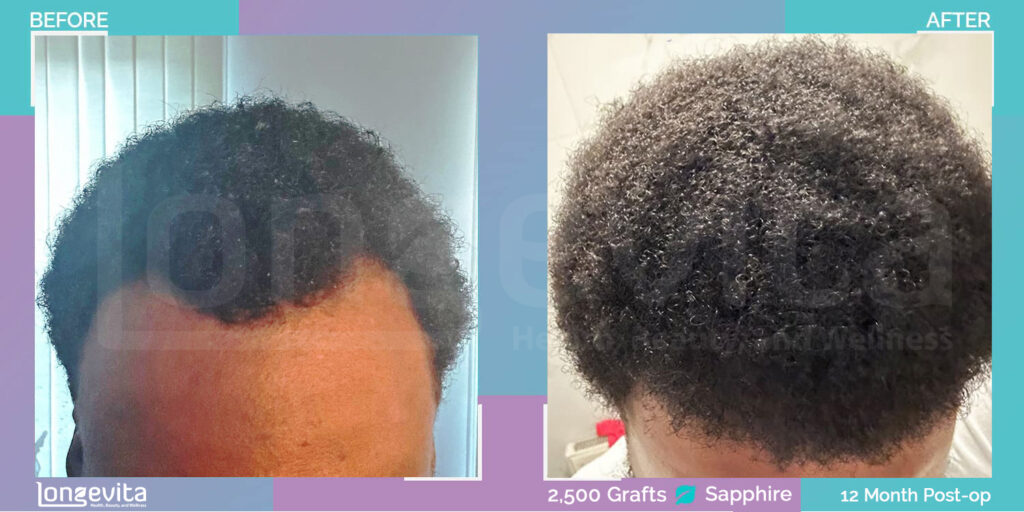
- Age: 27
- Sapphire FUE
- 2,500 grafts
- 12 Months
Beard Transplant Before-And-After Photos
See the difference a beard transplant can make – from patchy or sparse facial hair to a full, even, and well-defined beard. The before and after results highlight the artistry behind graft placement and shaping, along with recovery progress at various stages to help you understand what to expect.
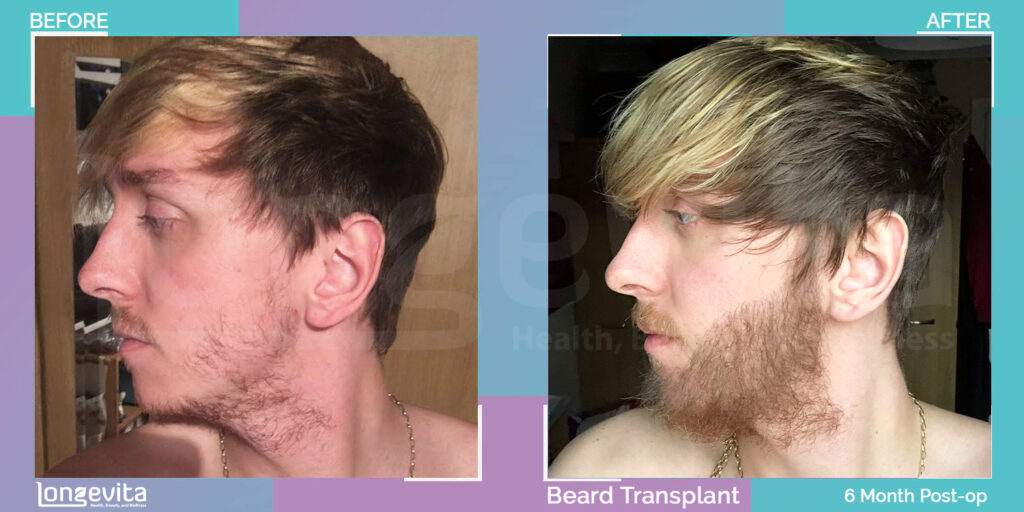
- Age: N/A
- Beard
- 3,000 grafts
- 6 Months
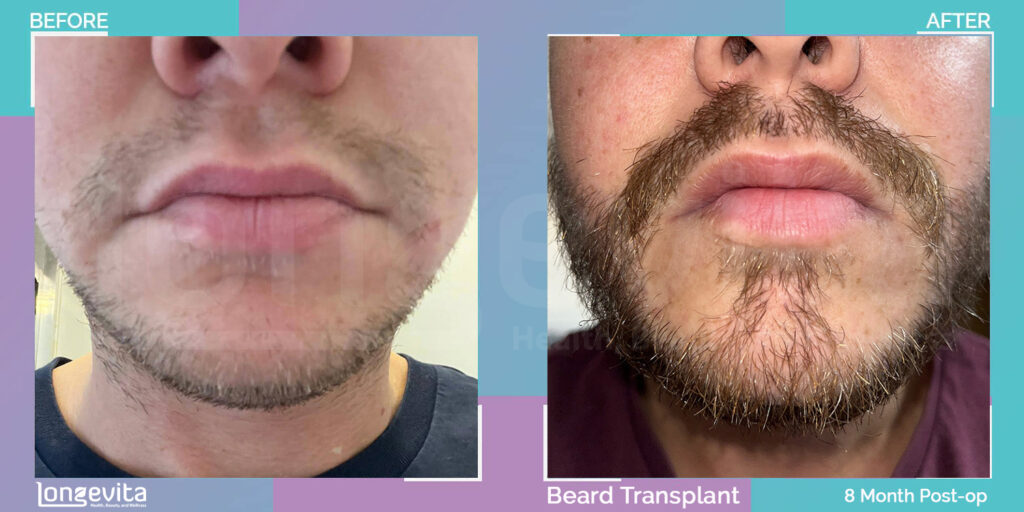
- Age: 35
- Beard
- 2,500 grafts
- 8 Months
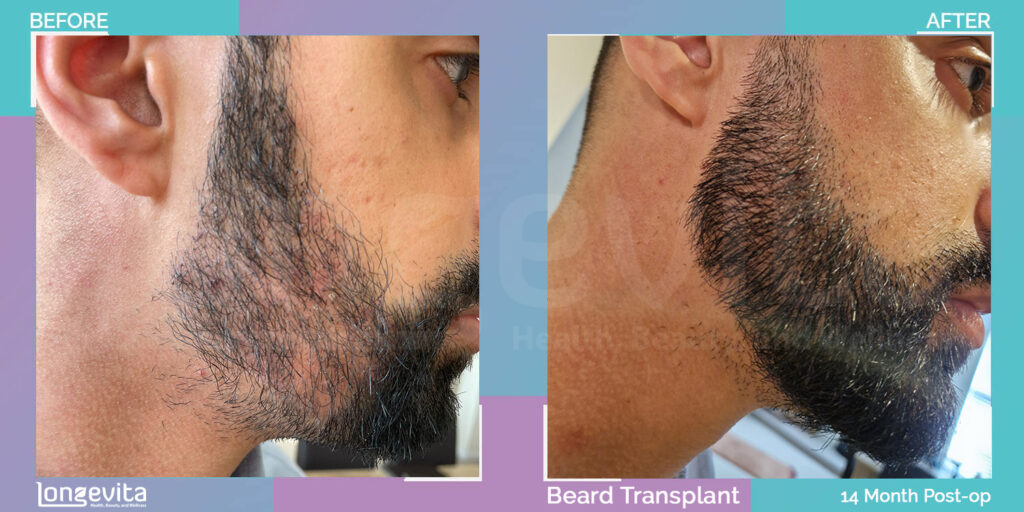
- Age: 31
- Beard
- 1,250 grafts
- 14 Months
Female Hair Transplant Before-And-After Photos
Explore female hair transplant before and after photos to see how women experiencing thinning or receding hairlines have achieved thicker, natural-looking coverage. Each transformation showcases individual graft counts and recovery timelines, illustrating how subtle yet impactful the results can be.
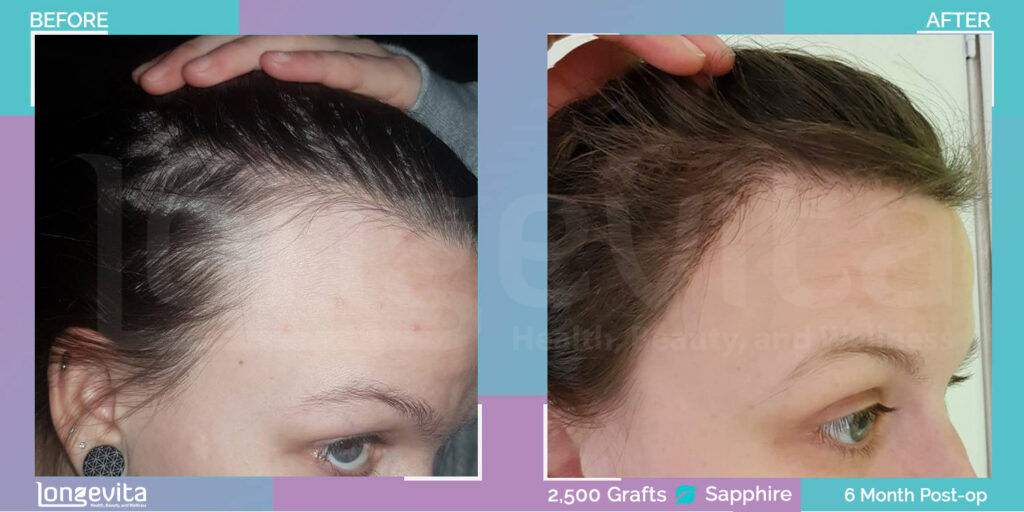
- Age: 24
- Sapphire FUE
- 2,500 grafts
- 6 Months
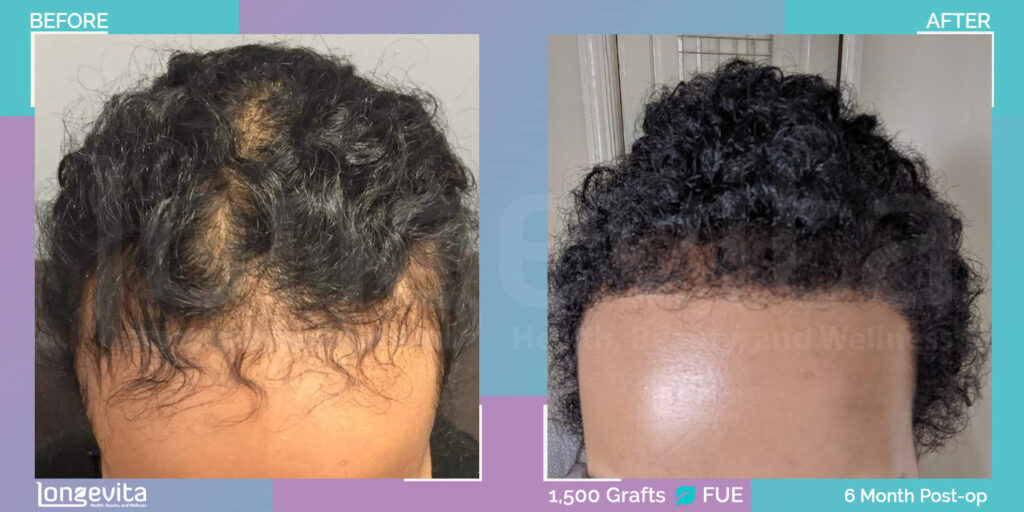
- Age: 24
- FUE
- 1,500 grafts
- 6 Months
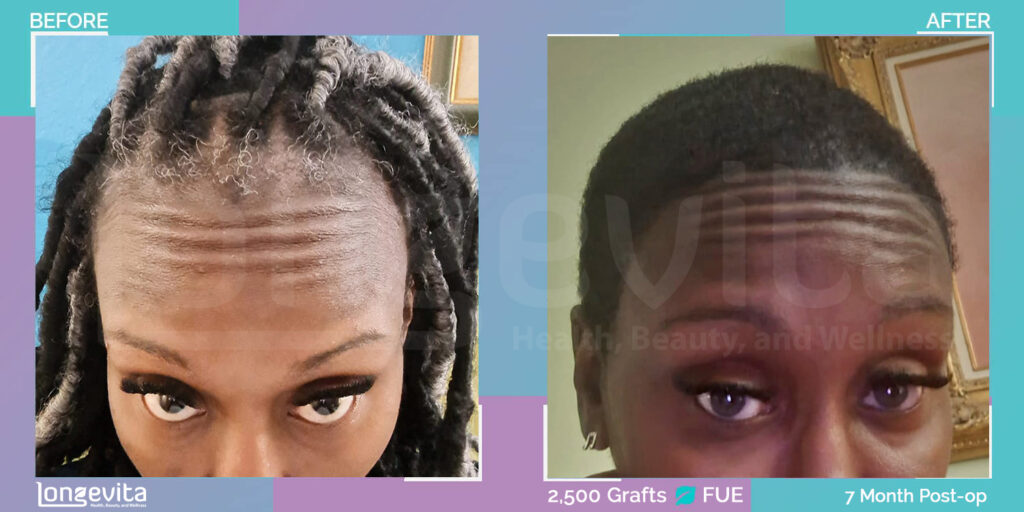
- Age: N/A
- FUE
- 2,500 grafts
- 7 Months
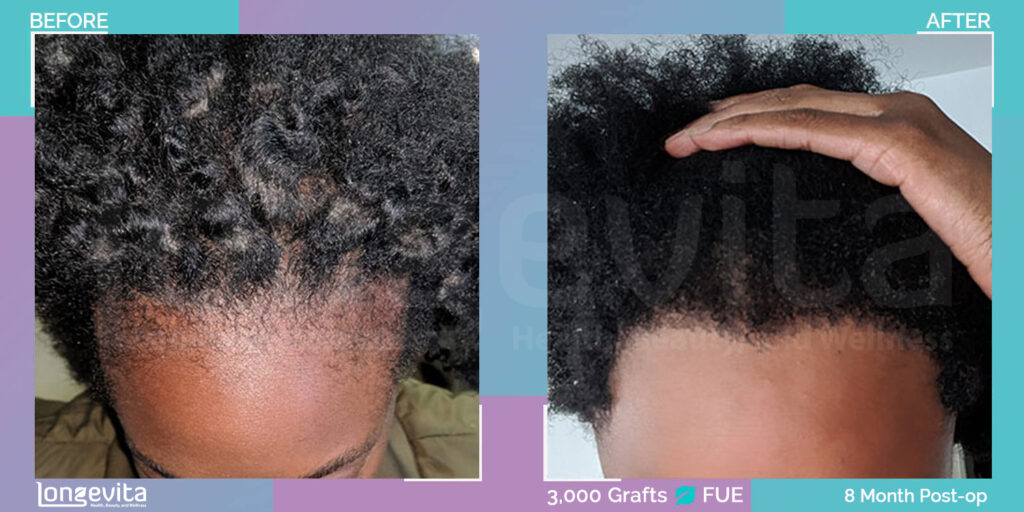
- Age: 34
- FUE
- 3,000 grafts
- 8 Months
Hair Transplant Before & After Photos: Why They’re Important
Hair transplant before and after photos are important to to get a sense of the potential outcome of your own surgery.
For this, specifically, check out photos of people whose cases appear similar to yours, in terms of extent of baldness, type and quality of hair, as well as donor density.
If you are looking to achieve a particular result from your hair transplant, you should also bring it as a reference picture for your clinician during your consultation. Showing hairline transplant before and after photos, for instance, will help your clinician better understand your aesthetic goals if you like a certain design. Although, keep in mind that results may vary from person to person.
What to look for in Hair Transplant Before and After Photos
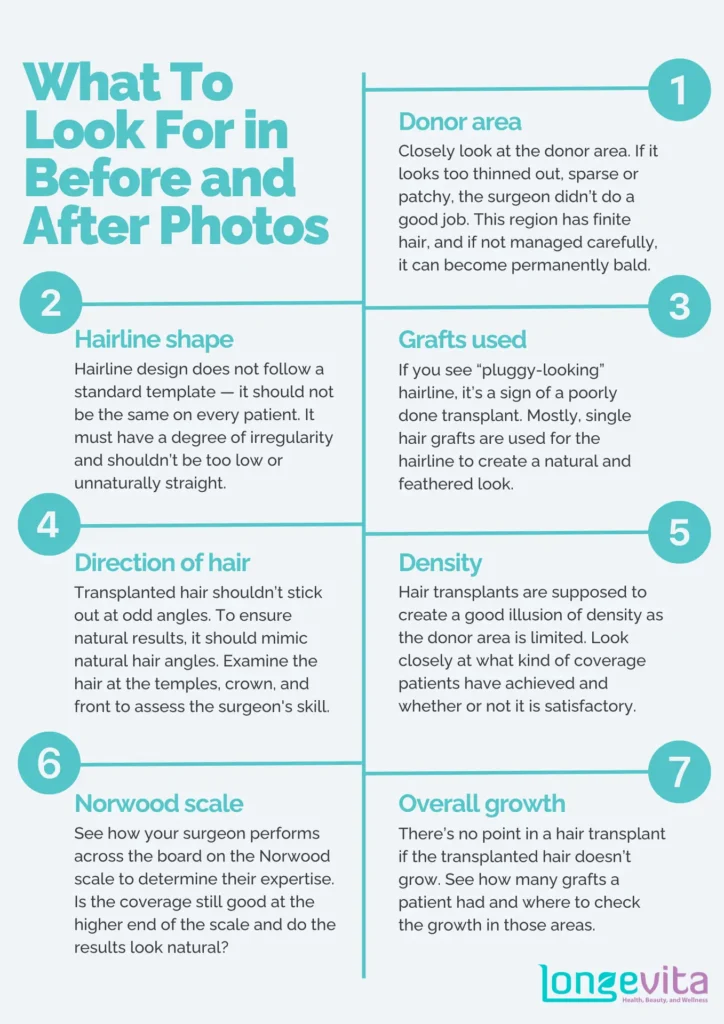
Donor Area
Closely look at the donor area. If it looks too thinned out, sparse or patchy, the clinician didn’t do a good job. This region has finite hair, and if not managed carefully, it can become permanently bald.
Hairline shape
Hairline design does not follow a standard template - it should not be the same on every person. It must have a degree of irregularity and shouldn’t be too low or unnaturally straight.
Grafts used
If you see "pluggy-looking" hairline, it’s a sign of a poorly done transplant. Mostly, single hair grafts are used for the hairline to create a natural and feathered look.
Direction of hair
Transplanted hair shouldn’t stick out at odd angles. To ensure natural results, it should mimic natural hair angles. Examine the hair at the temples, crown, and front to assess the clinician's skill.
Density
Hair transplants are supposed to create a good illusion of density as the donor area is limited. Look closely at what kind of coverage people have achieved and whether or not it is satisfactory.
Norwood scale
See how your clinician performs across the board on the Norwood scale to determine their expertise. Is the coverage still good at the higher end of the scale and do the results look natural?
Overall growth
There’s no point in a hair transplant if the transplanted hair doesn’t grow. See how many grafts a person had and where to check the growth in those areas.
What Factors Influence the Result of a Hair Transplant?
The result of a hair transplant surgery can be affected by the following:
Why Donor Area Strength Matters in Hair Transplants
A hair transplant is possible because of the donor area – permanent hair at the back and sides of your scalp. And having a high hair density in your donor area will result in better density and coverage in your balding area. Alternatively, if you have low density, it will affect the amount of coverage you can achieve in the final outcome.
The Role of Surgeon Skill in Hair Transplant Success
A surgeon’s skill is crucial to a successful hair transplant operation. How the grafts are extracted, handled, and implanted into the scalp is important because it can affect their survival rate. If, for instance, many of your hair grafts are damaged during the surgery, you will end up with poor hair growth and density.
While checking the hair implants before and after photos is a good place to start, you should also check the credentials of the independent clinician, such as their diploma, training, experience, and board certification. As well, the facility in which they perform the surgery is important. Hygiene and safety are vital for reducing the risk of certain postoperative complications, such as an infection.
Importance of Following Pre and Post-Operative Instructions
Your clinician will provide you with pre-and postoperative instructions to achieve the best possible results. And it’s your responsibility to strictly follow them.
For instance, before a hair transplant, people are advised to stop smoking to avoid the risk of excessive bleeding. However, smoking is also discouraged post-operatively as it can increase the risk of infection and cause more scabbing and scarring — all of which will affect the outcome of your procedure.
How Hair Type Affects Hair Transplant Results
When looking at the hair graft before and after pictures, notice the difference between the results of people with different hair types. If two people with Caucasian hair and Afro hair both receive 2,000 grafts, Afro hair will provide more coverage because of its unique curl. The coverage might not be as dense for someone with straighter, thinner hair.
The Impact of Health and Lifestyle on Hair Transplants
The results of a hair transplant are long-lasting. However, you can experience hair loss due to factors including ageing, genetics, certain medications (e.g., blood thinners or birth control), hormonal imbalances, dermatological problems, and even stress and smoking.
While they may be beyond your clinician’s control, you can still be careful about some of them (such as smoking) to ensure the health of your hair after surgery.
Setting Realistic Expectations for Hair Transplant Surgery
A hair transplant doesn’t reverse hair loss. It essentially redistributes the existing hair on your scalp in a way that your bald spots are successfully hidden, so there’s a limit to what can be achieved. An extremely high density of hair should not be expected after your surgery. It’s not feasible, and it will only lead to dissatisfaction with the final results.
Importantly, you also need to stay patient during the recovery process. The results of a hair transplant at 6 months vs 1 year will be vastly different because final results take at least 12 months.
How Much Does a Hair Transplant Cost?
The cost of a hair transplant can differ based on a number of factors, including the clinic’s location, the expertise of the medical team, and the technique chosen, such as FUE, Sapphire FUE, or DHI. Each approach is selected according to individual needs and the desired outcome.
Many people decide to undergo their hair transplant abroad, where treatment plans, especially in Turkey, can offer better overall value while meeting high medical standards. When carried out by experienced specialists, these procedures can produce natural, long-lasting results, as reflected in our before and after photos.
For more information on how hair transplant costs compare internationally, you can visit our Average Cost of Hair Transplant in Turkey and Hair Transplant Cost Comparison by Country pages.
Want a personalised Hair Transplant estimate?
Use our Price Calculator to get an estimate of how much your hair transplant, or any other treatments you’re interested in might cost. This quick tool helps you plan your treatment and budget with confidence before booking a consultation.
Select your treatment location
Select your treatment
Estimated Cost
All prices are estimates. Final cost may vary.
What’s included
DISCLAIMER
This is a price estimate only for budgeting purposes however it cannot be used as a substitute for a formal price quote that can only be given after a consultation with a qualified medical professional.
Optional additional treatments
Let's Turn Your Estimate Into a Plan
Complete the form and our team will reach out with everything you need to move forward.
Ready to start your Hair Transplant Journey?
Fill out the form to receive a callback and book a consultation to receive your Free, no-obligation hair transplant quotation tailored specifically for your hair loss requirements.
Frequently asked questions
It can take 12-18 months for you to see the final results of your hair transplant. In the crown area, hair typically grows more slowly due to the thicker skin and slower blood circulation.
The hair transplant uses your own natural hair, and even after it’s transplanted, it’ll continue to grow just as it did in the donor site.
Since hair transplant is an invasive procedure, it’s not “scarless,” however, you also shouldn’t expect any visible scarring with it. The small, circular wounds in the donor area, as well as the incisions in the recipient area, fade with time.
Hair transplant gives long-lasting results because the hair follicles taken from the donor area are genetically resistant to the hormone (DHT) that typically causes hair loss. In most cases, transplanted hair remains stable long-term — though individual outcomes can vary, and some natural thinning of non-transplanted hair may continue with age.
Hair grafting for women is not only possible, but it can also yield extremely good results in the hands of the right practitioner.