Dental Veneers In Turkey

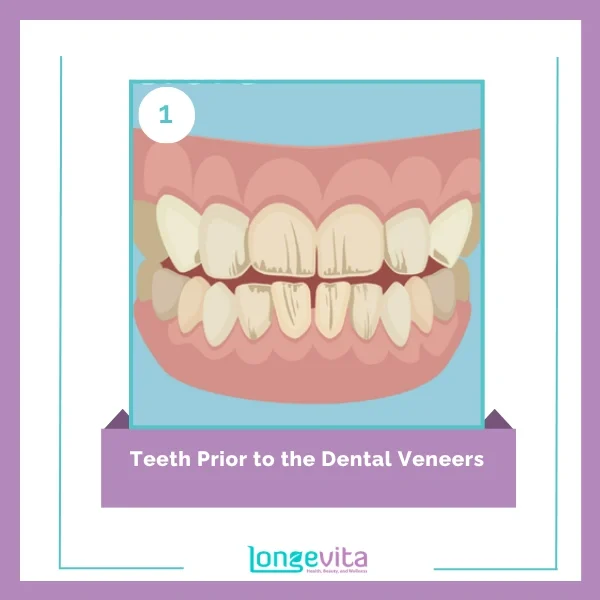
Many people are unsatisfied with the appearance of their teeth because of chips, cracks, gaps, and stains.

Dental veneers in Turkey can fix these problems by adjusting the colour, shape, length, and size of the teeth.

Cosmetic dentistry treatments, accessible through Longevita, offer instant results and a natural smile. If well taken care of, dental veneers can last for more than a decade.

What Are Dental Veneers?

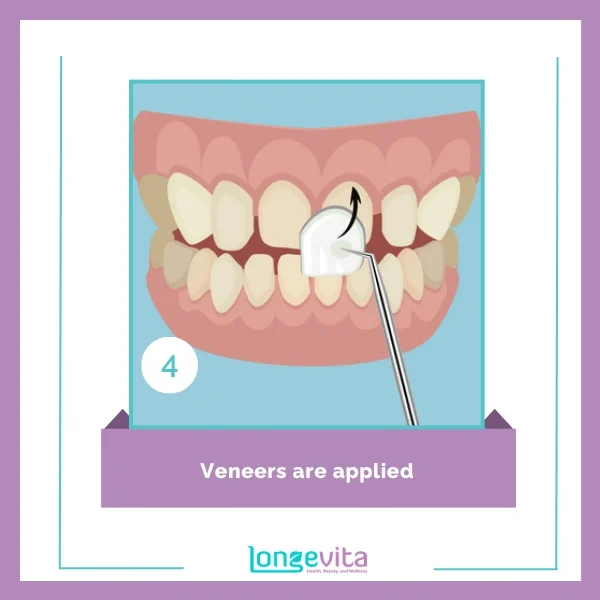
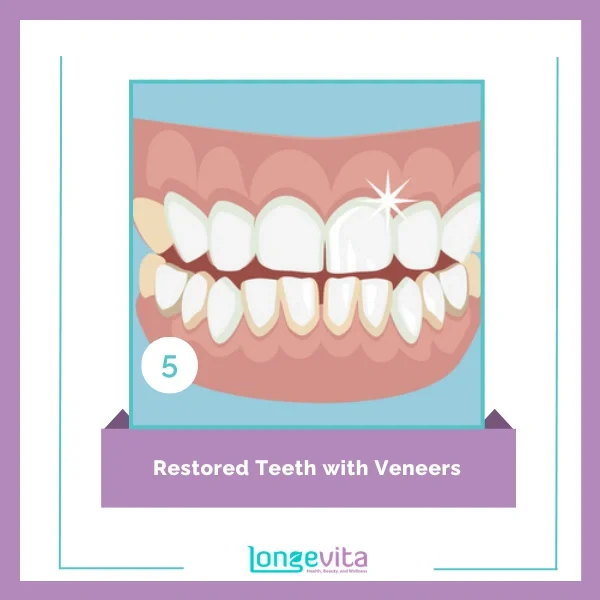
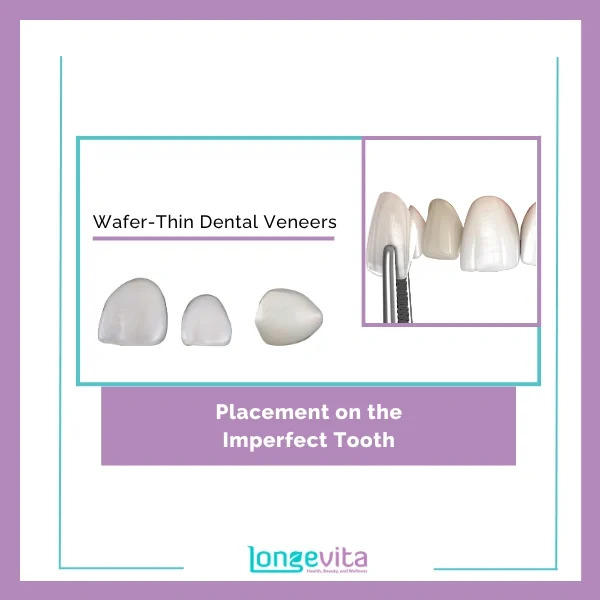
Dental veneers are wafer-thin shells, either made of porcelain, ceramic or composite materials, applied to the front surface of the natural teeth.

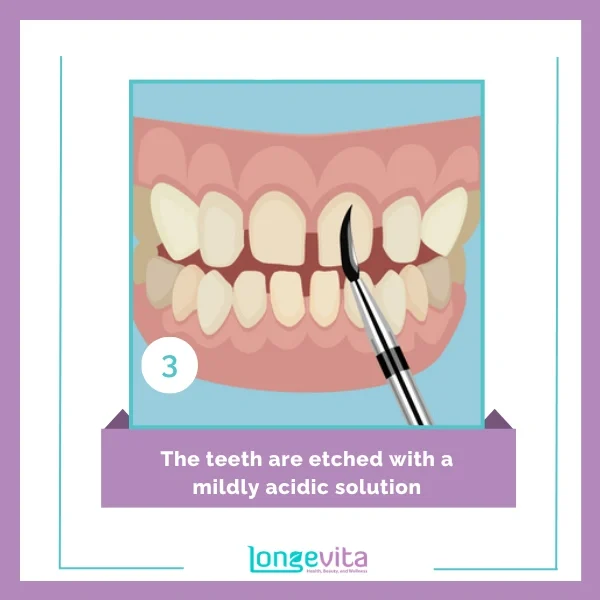
For placing the veneers on the teeth, the dentist applies composite resin cement on the veneers.

These shells are all custom-made according to the desired aesthetic goals of the patient.

Since this cosmetic dentistry treatment requires drilling of the natural tooth enamel, the procedure permanently alters tooth enamel and cannot be undone — discuss this with your clinician before proceeding.

Dental Veneers Cost In Turkey

Dental veneers cost around £200/tooth ($250) in Turkey. In contrast, dental veneers cost in the UK can be anywhere from £500 to £1,000.

Veneer prices are much lower in Turkey because of the low cost of living.

Also, many people choose dental tourism because the currency exchange allows them to buy more for a pound/Euro.

Keep in mind that veneers’ teeth price can vary depending on the amount of work you need and the material from which the veneers are made.

For instance, porcelain veneers cost is more than the composite veneers price. Still, porcelain will last longer and won’t require more replacements like composite veneers might. So, they can be the better option for you.

Teeth veneers cost can also depend on the smile line of the patient (the number of visible natural teeth when a person smiles). You can get full veneers, but, of course, that will cost you more.

Moreover, dental clinics offer additional services such as accommodation, airport transfers, translators, and aftercare. Even after factoring these in, the cost of dental veneers is lower in Turkey.

Who Can Have Dental Veneers & Why?

You are a good candidate for cosmetic veneers if you have:

People who have severe intrinsic teeth strains due to physical trauma, tooth decay or the use of excessive fluoride (dental fluorosis), or medications can get veneers.

They also work well for extrinsic stains that develop due to ingestion of teeth-staining foods like red wine, cola, coffee and black tea or consumption of tobacco products. Ageing also results in tooth discolouration.

It’s also worth stressing that whitening treatments don’t work on stains that result from traumatic injury and medications.

This procedure doesn’t respond well to intrinsic stains. Therefore, dentists may recommend veneers that can better camouflage the patient’s teeth, giving them a smile makeover instead.

If you have broken or chipped teeth due to teeth-grinding, a bad bite, tooth decay, or trauma, you can get a more even smile line through these permanent teeth.

You may end up needing just one or several veneers to achieve the desired aesthetics.

If you have noticeable gaps or spaces between the teeth due to genetics or other oral health issues, cosmetic dentists can close the gap using veneers.

Veneers for crooked teeth can also help straighten your smile. It can fix slight misalignment and unevenness. However, these are best for mild cases only.

Veneers can give you a perfect smile by increasing the length of your teeth.

It can give you a more uniform smile if some of your teeth are smaller or bigger than others.

Contraindications for Dental Veneers

You may not be a suitable candidate for this cosmetic solution in the following cases:

  • Enamel erosion – Teeth are excessively worn.
  • A large number of Dental Restorations – If you’re already wearing a lot of dental products (crowns, dental implants), you may not be suitable for veneers.

Are Veneers Covered By Dental Insurance?

Dental insurance usually doesn’t cover the cost of veneers if there’s no clinical need for them. 

That’s because it’s an elective cosmetic treatment. However, it can vary depending on your insurance provider, so make sure to ask them about it. 

Keep in mind that you can’t get cosmetic veneers on the NHS either. So, you’ll likely have to pay for it yourself. 

That is why you can consider medical tourism for getting cheap veneers.

Ready to Transform Your Smile in Turkey?

Fill out the form to receive a callback and book a consultation. Our team will arrange your free, no-obligation cosmetic dental treatment plan tailored specifically to your smile goals and requirements.

Can't wait? Chat to us now

What To Think About Before You Get Dental Veneers In Turkey?

When looking for a clinic for Turkish veneers, you need to ask the following questions:

  • What are the skills, qualifications, affiliations, registrations, and licensing of the dental surgeon?
  • For how many years has the surgeon been doing dental veneer treatments? Can I look at the surgeon’s portfolio?
  • Is there any other dental treatment that the surgeon recommends?
  • What are the success and complication rates of the surgeon?
  • Which dental veneer brands does the dentist use?

How Best To Prepare For Dental Veneers In Turkey?

When getting your dental veneers, you need to make the following preparations:

Do...

Don't...

What Is The Procedure For Getting Dental Veneers In Turkey?

When you arrive at the dental clinic for your veneers, the dentist will perform a physical exam. They can also ask for your medical history and X-rays to look for signs of any dental problems in the teeth, gum, and tissue.

Based on that, you may end up needing other dental treatments. Usually, there are three dental appointments. The treatment process is as follows:

First Dental Appointment

After the dentist explains the procedure to you, you will choose the colour of the veneers. Then comes preparation for the front teeth veneers when the enamel is drilled.

The extent of drilling depends on the aesthetic needs of the patient.

For instance, if a patient wants to increase the size of their teeth, they may not require as much preparation as someone who’s getting porcelain veneers for misalignment.

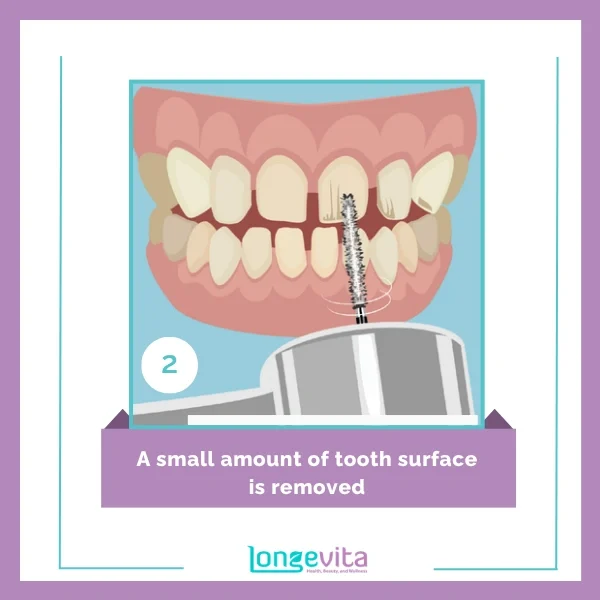
Using a dental drill, the dentist removes enamel equal in thickness to that of the veneers so that they don’t appear bulky and unnatural. After the teeth are prepared for veneers, they will take a mould of the teeth using dental putty.

This is sent to the laboratory for the preparation of the veneers. In the meanwhile, you can wear temporary veneers to avoid discomfort. Teeth shaving for veneers takes about 1-2 hours.

Second Dental Appointment

This appointment is held 2 days after the first one. In this, the dentist will remove the temporary teeth veneers and do a demo try-on session.

The veneers are placed on the surface of the patient’s teeth to see if they fit properly.

If the patient has any problems, they can let the dentist know so they can make adjustments before the next appointment.

Types of Dental Veneers

There are different several types of dental veneers, which are as follows: 

E-max Veneers

One type of porcelain veneer is known as E-max veneer.

It’s made from lithium disilicate glass-ceramic and is better at mimicking natural teeth than traditional pure porcelain veneers. Therefore, this material gives a natural look to veneers.

In addition, E-max veneers are thinner (require less enamel removal) and stronger (last for 5-10 years).

Porcelain-Fused Metal Crowns

In these, the porcelain is fused on the outer surface of the metal crown.

And this porcelain gives the appearance of natural enamel.

Metal crowns are a better choice when you’re getting dental implants. That’s because metal is more flexible and better covers the implant.

With this, you might have a dark gum line on top/bottom of the crowned tooth because of the metal.

Porcelain Crowns

A pure porcelain crown closely resembles a natural tooth, which is why it’s quite popular. 

Since it’s all-porcelain, it offers better aesthetics than a metal-fused crown.

However, without a metal base, it’s not as durable. Therefore, crown porcelain might be better for just the front teeth.

Porcelain Veneers

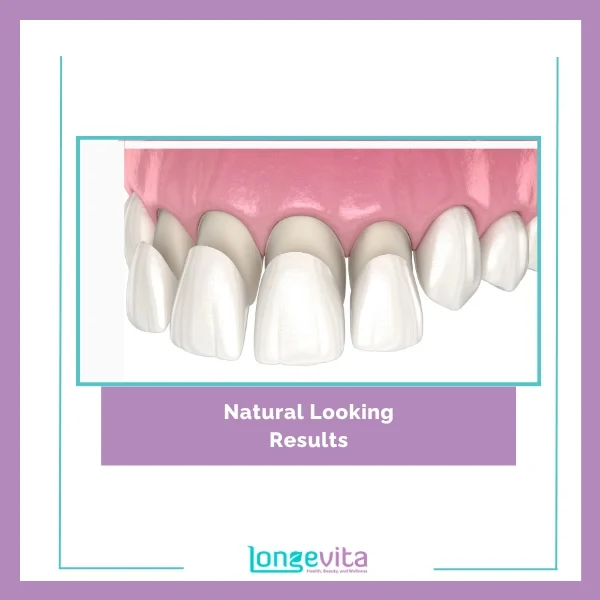
Porcelain veneers are durable and long-lasting. Moreover, they’re semi-translucent and light-reflective, which is why they’re also the most natural-looking veneers. 

Additionally, these restorations will also blend in with the colour of your surrounding teeth. 

Other than that, teeth porcelain veneers are stain-resistant, so they won’t change colour over the years.

Zirconium Veneers

Due to previous issues with zirconia ceramics’ durability, zirconium veneers have only recently been introduced. 

These are also translucent, allowing light to pass through so the veneers’ natural look is achieved. 

Despite their durability, these can have problems adhering to your teeth, so they may fall off.

Composite Veneers

These are the second-most common veneers.

Made from tooth-coloured composite resin, composite veneers can also be used to improve the overall aesthetics of your smile. 

There are two ways to place them on the teeth. The indirect method involves fitting lab-made veneers onto the teeth after they have been prepared. 

On the other hand, direct bonding is commonly done for composite bonding veneers. It essentially involves placing composite resin on the teeth and moulding it into shape.

Although composite veneers are cheaper than most, they are not as strong (last for 2-3 years) and stain more easily.

No-Prep Veneers

No-prep veneers cover unshaved enamel directly with ultra-thin shells of ceramic, porcelain, or composite. Although, sometimes, these also require minimal tooth prep. 

The three more popular brands of these veneers are Lumineers, Vivaneers and DURAthin. 

While they might not require much enamel reduction, durability is a big issue with them. Also, since they’re quite thin, they’re not suitable for moderate to significant cosmetic issues.

Book a free virtual call with one of our Case Managers – available from anywhere in the world, at a time that suits you.

Recovery & Results Of Dental Veneers

Getting veneers is an outpatient procedure, so you can return to your hotel soon after the appointments.

However, it’s important to note that the dentist will administer local anaesthesia in the first appointment.

Therefore, you should avoid eating anything until your mouth’s no longer numb.

After the anaesthesia wears off, you may experience tooth sensitivity.

That’s why it’s recommended that patients avoid foods that are too hot or cold.

The results of this cosmetic dentistry treatment are immediate.

The material of the dental veneers and how well you take care of them determine how long they will last. 

On average, it can be anywhere between 5-20 years.

Aftercare Of Dental Veneers

After getting a veneers dental treatment, you need to make sure that you do not bite on any hard objects like ice cubes, nails, pens, or pencils.

Also, do not try to open any packaging with your mouth. You need to avoid hard, sticky foods.

Other than that, although porcelain veneers are not stained easily, you should avoid beverages like coffee, black tea, and red wine to increase the longevity of your dental veneers.

You should take care of your teeth just like you normally would by brushing twice and flossing. Use a soft-bristled brush and low-fluoride toothpaste.

Regular dental checkups with the local dentist are also important. When playing contact sports, make sure to wear a mouthguard.

If you have teeth grinding disorder, it’s important that you wear a night guard because it can chip or break the veneer.

Also, when playing contact sports, make sure to wear a mouthguard.

Side Effects to Expect After Getting Dental Veneers

Veneers’ procedures can result in the following side effects:

  • Tooth sensitivity for a few days to a few weeks
  • Discomfort

What Could Go Wrong After Getting Veneers?

The veneers can become loose or fall off. In that case, make sure to keep the veneer safe. The dentist can re-apply it. Other than that, the teeth veneers can also fracture.

Its risk is higher if you do not follow the aftercare instructions, such as biting into hard foods.

What To Do If You Have Problems After Getting Veneers In Turkey?

If you end up experiencing any problems with your veneer teeth, you should get in touch with the Longevita Aftercare Support available online.

You can also call or email them. In addition, post-operative aftercare guides are available on the website for your help.

Alternatives to Teeth Veneers

If you can’t get dental veneers due to significant enamel erosion or tooth decay, you can get dental crowns or cap veneers instead. Although, they require more aggressive tooth shaving.

If you are missing many teeth, dental implants are also a suitable option.

However, if you only have mildly crooked, chipped, or misaligned teeth, you may benefit from composite bonding.

Dental Veneers In Turkey For UK Patients

By getting their dental veneers in Turkey, UK patients can save up to 50% on the total cost. That’s because dental veneers in the UK are 3-5 times more expensive. 

Longevita provides transparent, competitive pricing with no hidden fees. If you’re considering veneers abroad, Turkey offers high-quality treatment at competitive prices — contact us for a no-obligation quote.

If you like, we can also set up a payment plan so that you can pay in instalments for your dental work.

Other Procedures to Have with Veneers

You can get a teeth whitening treatment or even teeth-whitening bonding when getting dental veneers in Turkey.

If you’re only getting veneers on the upper jaw, a whitening procedure on the lower jaw can help match the colour of your existing teeth to your veneers.

Apart from that, the dentist may perform root canal treatments or filings to ensure your oral health.

Lastly, you can combine your dental veneers with cosmetic procedures. Many patients prefer undergoing hair transplant surgery or other plastic surgeries with dental treatments in Turkey.

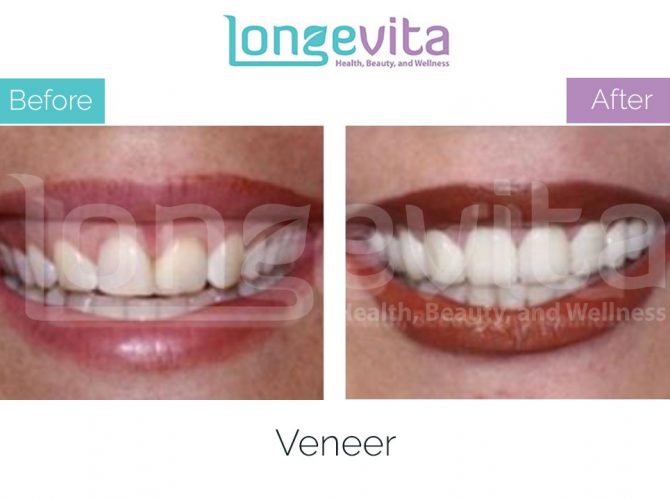
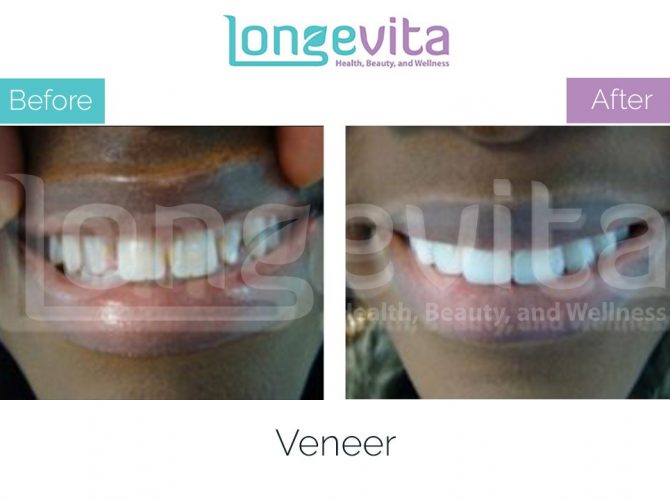
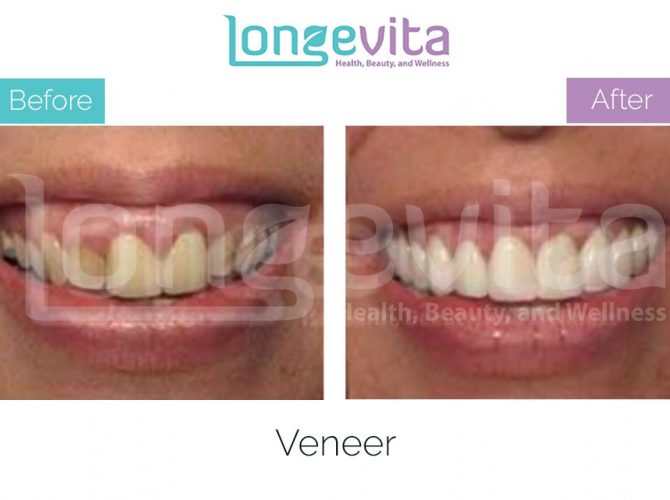
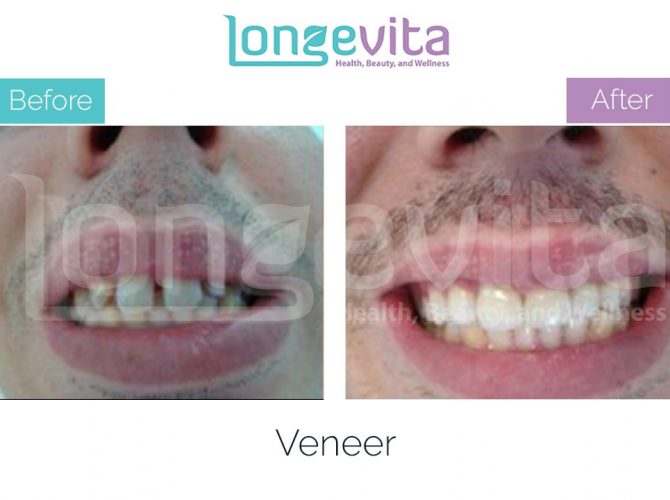
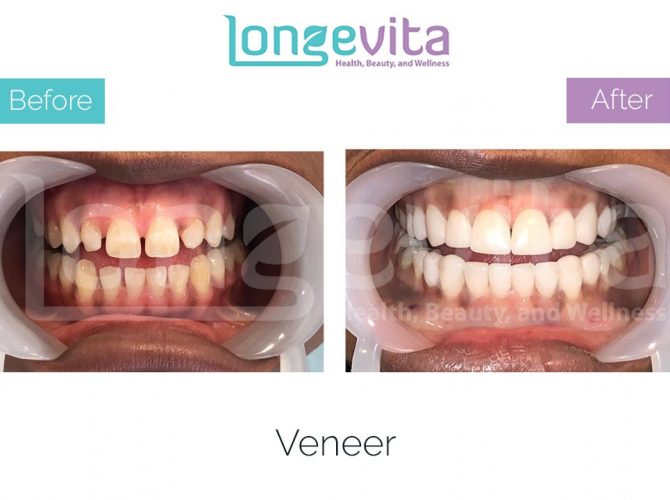
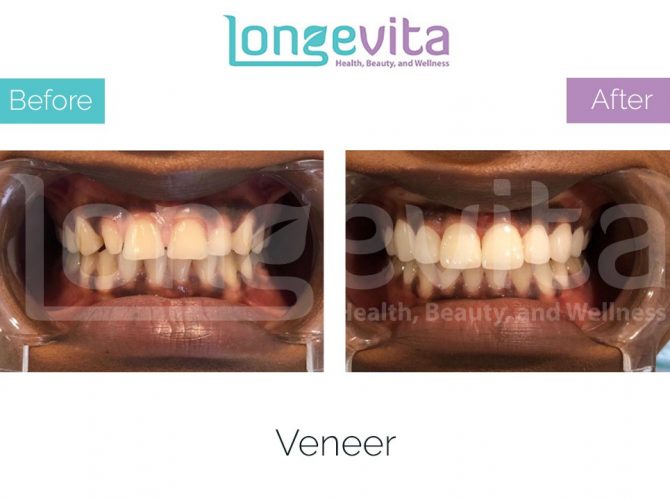
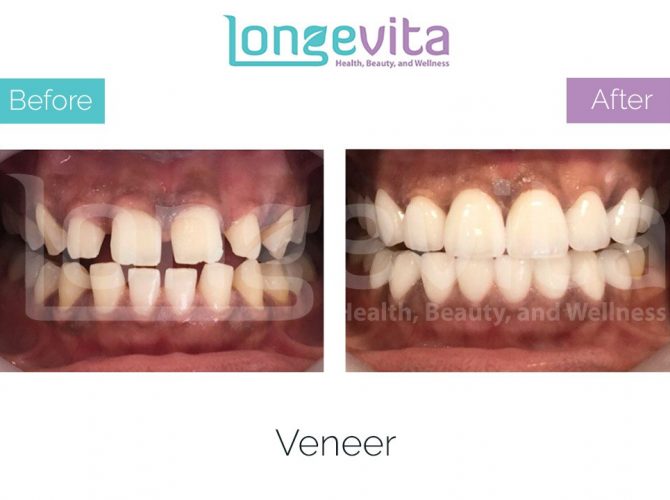
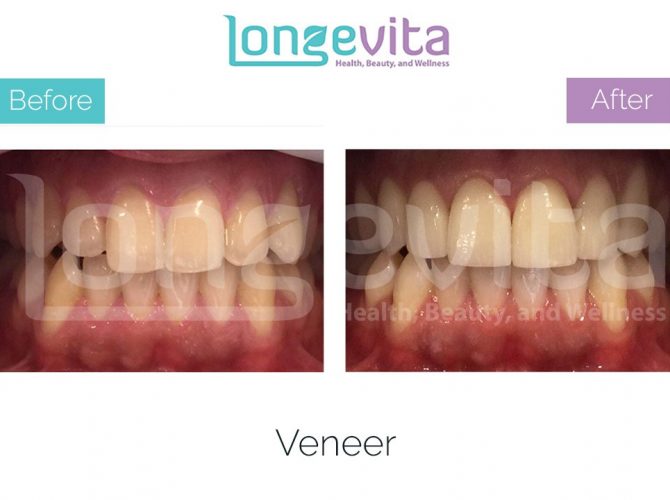
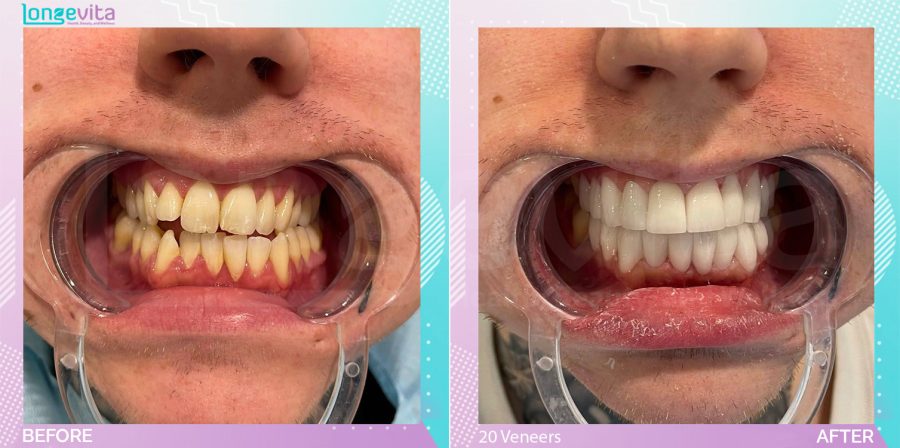
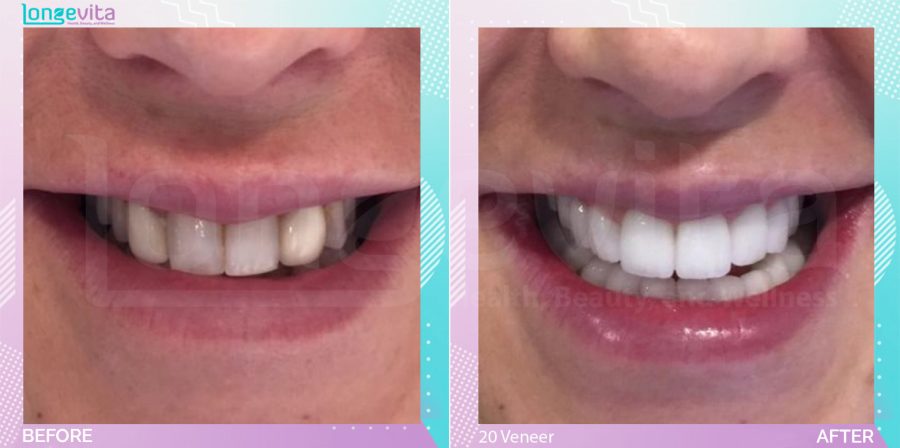
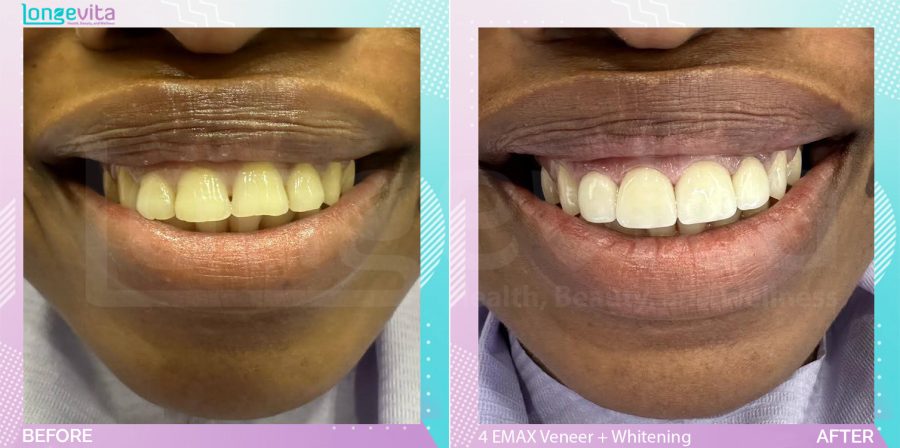
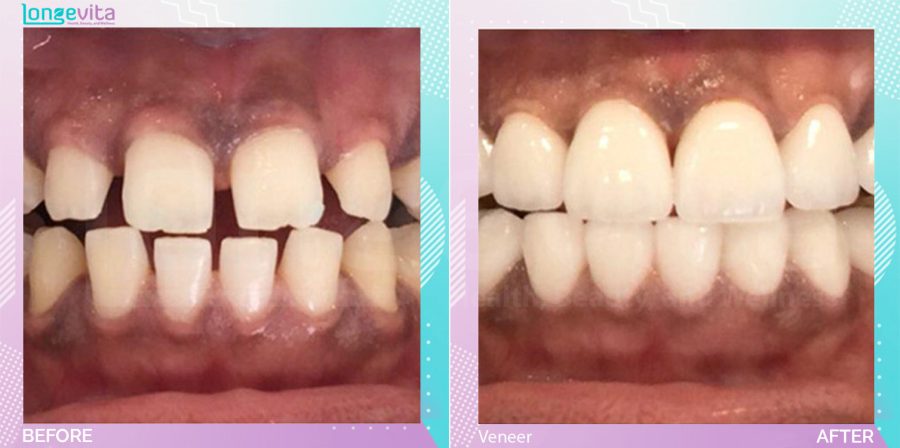
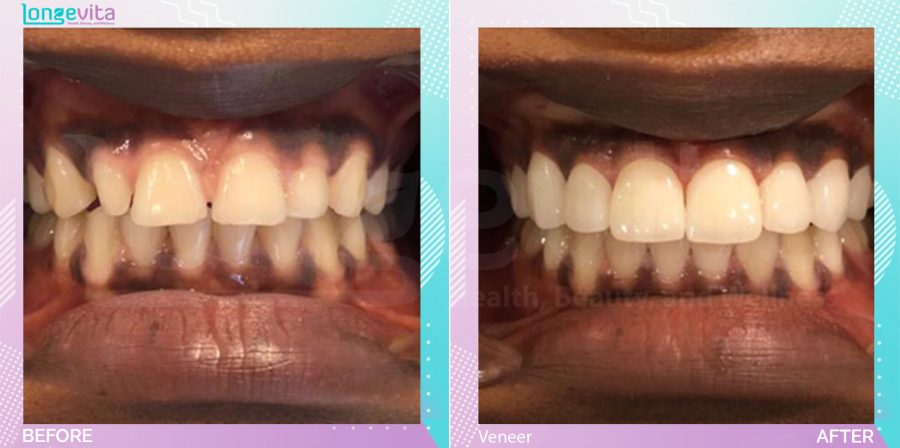
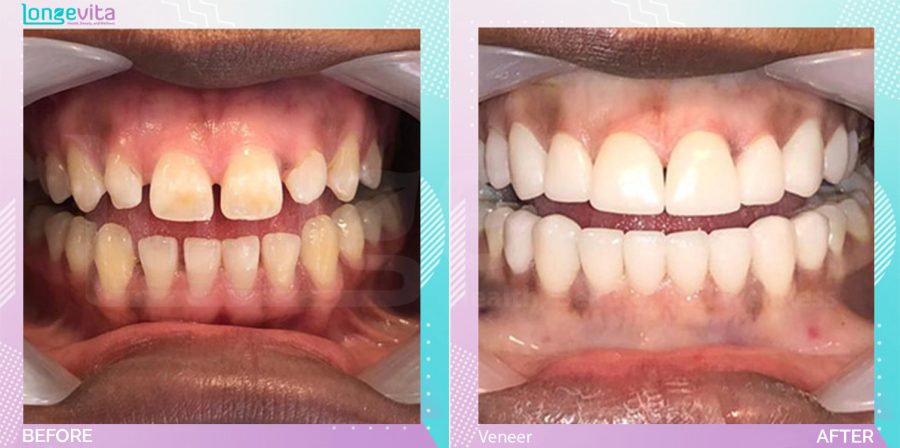
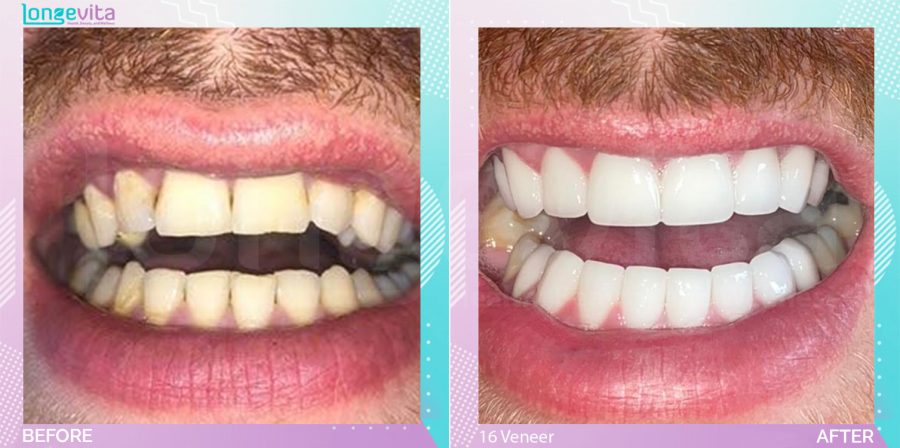
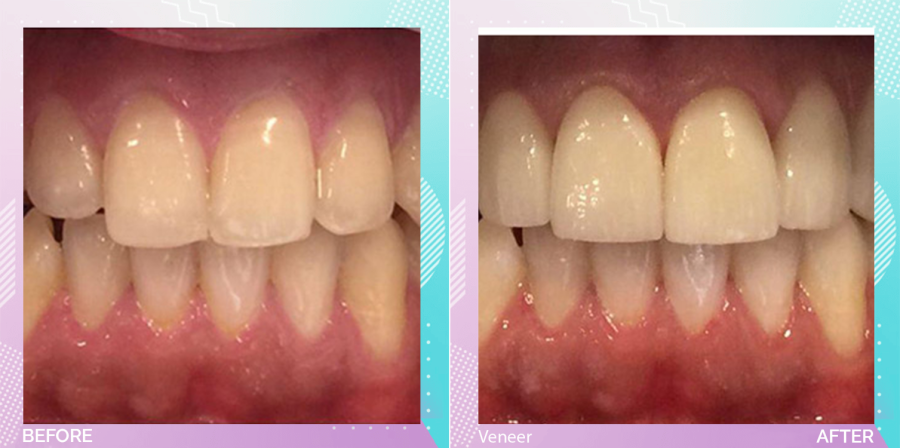
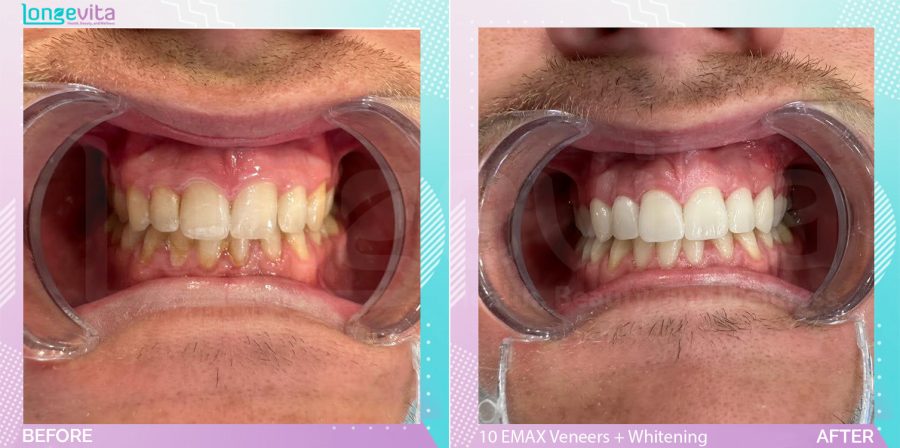
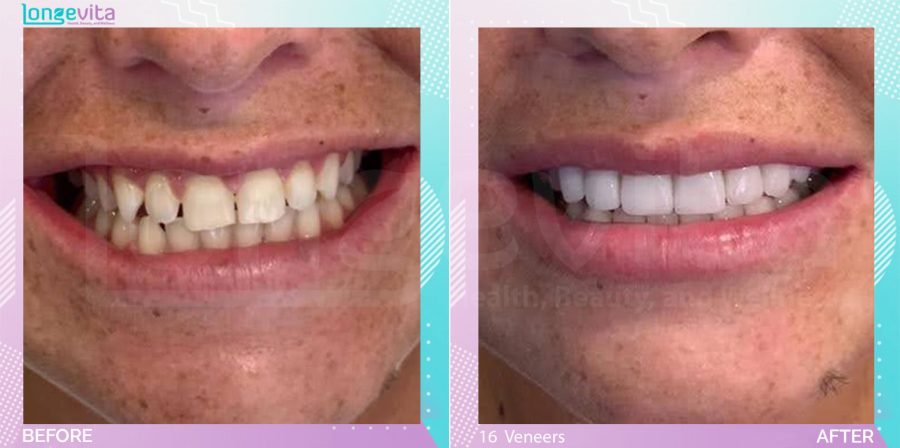
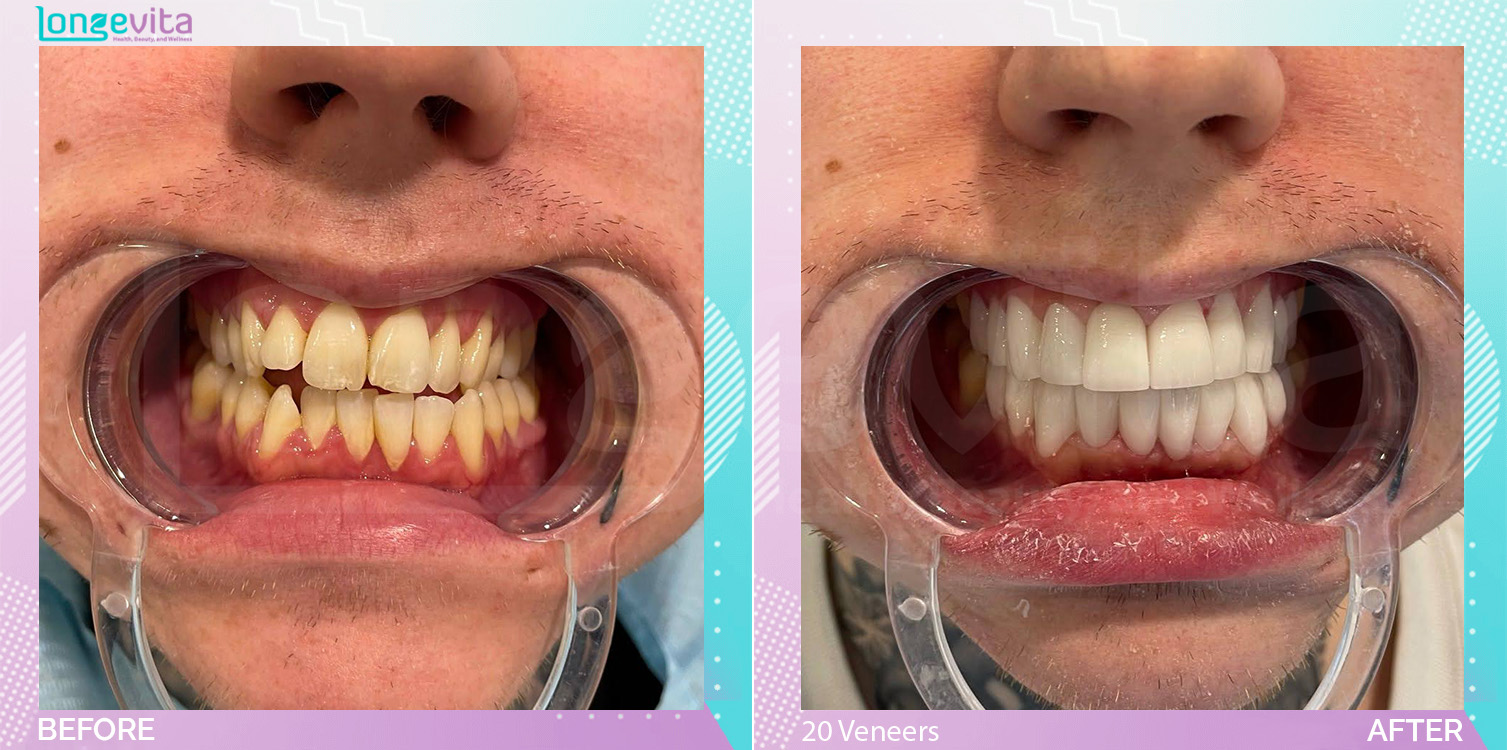
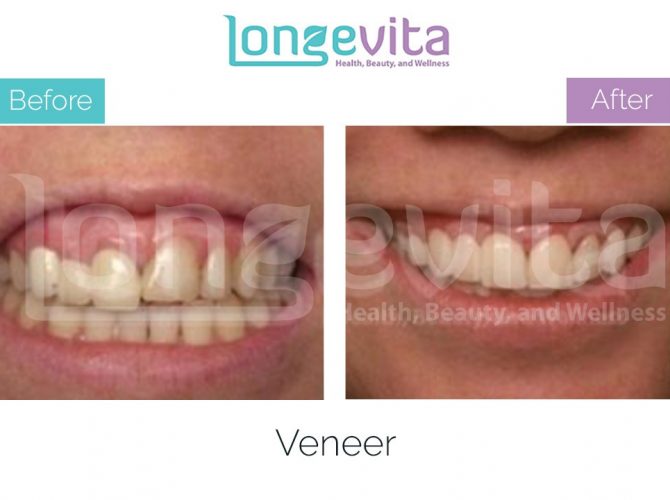
Dental Veneers in Turkey Before-and-After Photos

Whether it’s tooth cracks, chips, gaps, discolouration, or unevenness, dental veneers can help you achieve a dramatic smile transformation. Using veneers, you can even get bigger teeth if you’re not satisfied with the size of your existing gnashers. Check out these before and after pictures to see what dental veneers can do for you.

Frequently asked questions

Is it possible to have my teeth prepared and veneers fitted in one day?

E max crowns do not make use of metal, which is why they are best for those who have a metal allergy.

You might feel discomfort when getting local anaesthesia. However, with that, you won’t feel pain when the dentist’s preparing your teeth. The placement of teeth veneers itself is not painful.

All the dentists performing your cosmetic procedures will have insurance against malpractice.

Make sure that you get one of the open-mouth upper jaw and open-mouth lower jaw.

In addition, close your mouth and take a picture from the left and right sides so that the dentist can get an idea of your bite. Also, send front-side pictures so that the dentist can get an idea of your tooth shape.

The shade of the veneers is matched to the whites of the eyes and the skin tone.

For those with fair skin tones, brighter shades of white teeth veneers are used. Also, since younger people’s teeth are whiter, they get whiter veneers.

If you are having veneers applied to one or two teeth, choosing a less bright shade will help the veneers blend in with the surrounding teeth.