
As the EFL Cup quarter-finals bring some of English football’s biggest names back into focus, fans aren’t just watching performances on the pitch. They’re also noticing how certain players look compared to a few seasons ago. Hairlines, after all, tend to follow clear biological patterns over time.
Longevita, a UK-registered medical tourism facilitator, has created the English Hairline Championship, a tongue-in-cheek Best Line-up highlighting footballers whose hairlines appear to have improved gradually and consistently across multiple seasons.
Rather than speculating or naming procedures, the analysis is led by Dr Gizem Seymenoglu, hair loss specialist, who reviews players’ images over time and explains what these visible changes typically indicate from a medical hair-loss progression perspective.
The Line-up
The final line-up spans goalkeepers to forwards from elite English clubs, selected based on long-term visual consistency rather than dramatic change.
According to Dr Gizem, this pattern is key, “What’s most striking across these cases isn’t sudden transformation, but controlled, incremental improvement. Medically, this is what we usually see when hair loss is identified early and managed methodically over time.”
Why These Changes Matter
Dr Gizem says, “Male pattern hair loss is progressive. Once follicles miniaturise beyond recovery, treatment options become increasingly limited, and many men only seek advice once hair loss is already advanced.”
Also she adds, “These players illustrate the opposite approach, early awareness and timely management, which almost always leads to more natural, age-appropriate outcomes.”
While professional athletes have access to specialist care, the underlying biology remains universal.
“Hair loss doesn’t stop because someone is successful or confident,” Dr Gizem adds. “But with appropriate guidance, it can be stabilised and managed discreetly.”
As fans debate tactics and line-ups this cup season, the English Hairline Championship offers a lighter, but clinically grounded reminder that timing, consistency and expertise matter both on and off the pitch.
Player Commentary
Kyle Walker

Source: depositphotos.com
“Kyle Walker’s hairline shows minimal variation across years. Medically, this level of consistency often reflects proactive monitoring rather than reactive treatment once hair loss becomes obvious.”
John Stones
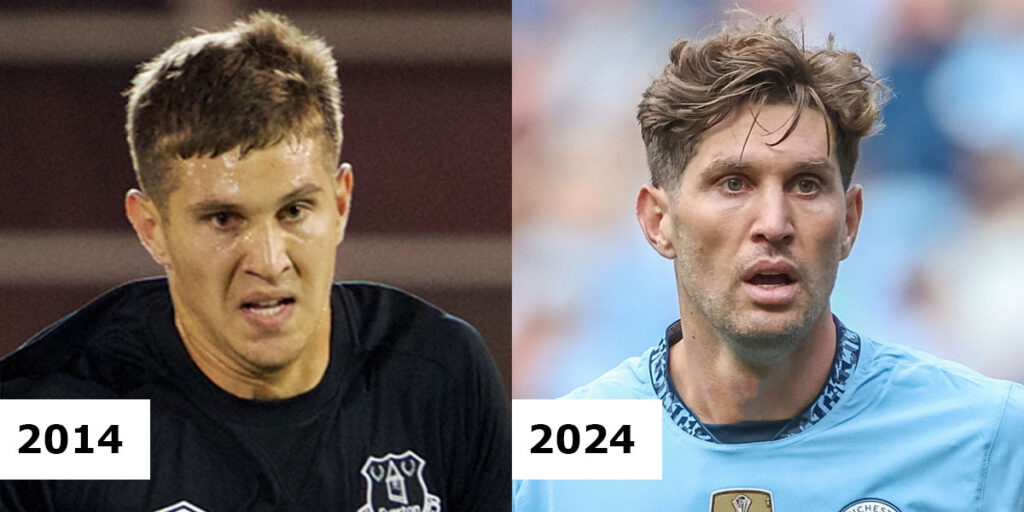
Source: depositphotos.com
“Earlier images show recession at the temples, while later images demonstrate improved framing around the face. This type of gradual change is typical of carefully planned, natural-looking hair management.”
Ben Chilwell
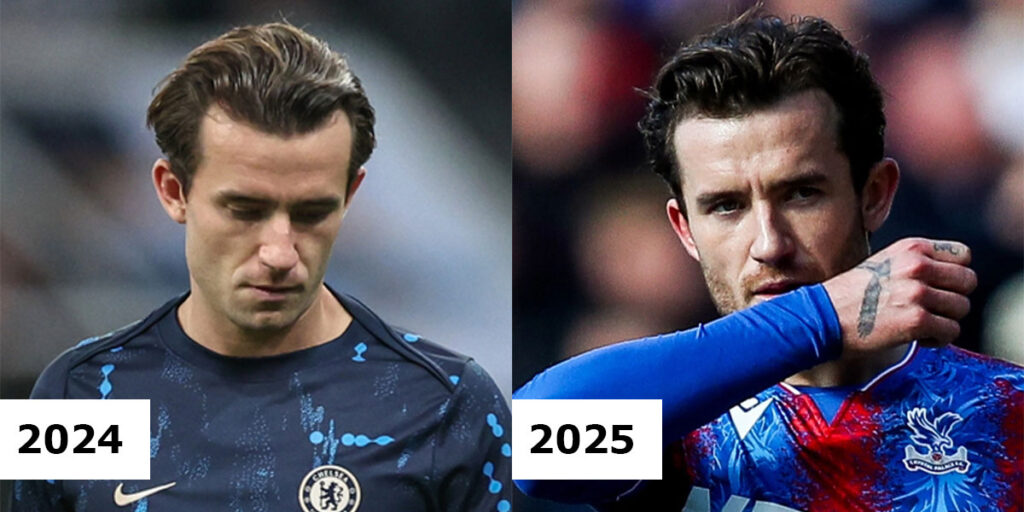
Source: depositphotos.com
“The earlier image shows mild frontal thinning, particularly around the hairline corners. In later images, the hairline appears stronger and more evenly distributed, suggesting intervention at an early stage rather than advanced correction.”
Declan Rice
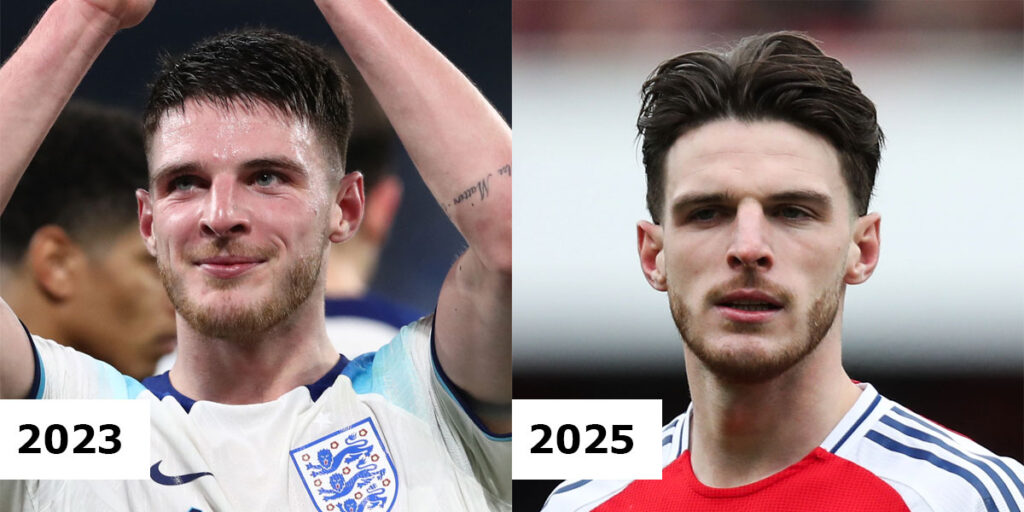
Source: depositphotos.com
“Earlier photographs suggest early-stage frontal recession, while later images show a more consolidated hairline with improved coverage. This pattern is typical when hair loss is identified and managed at the right time.”
James Maddison
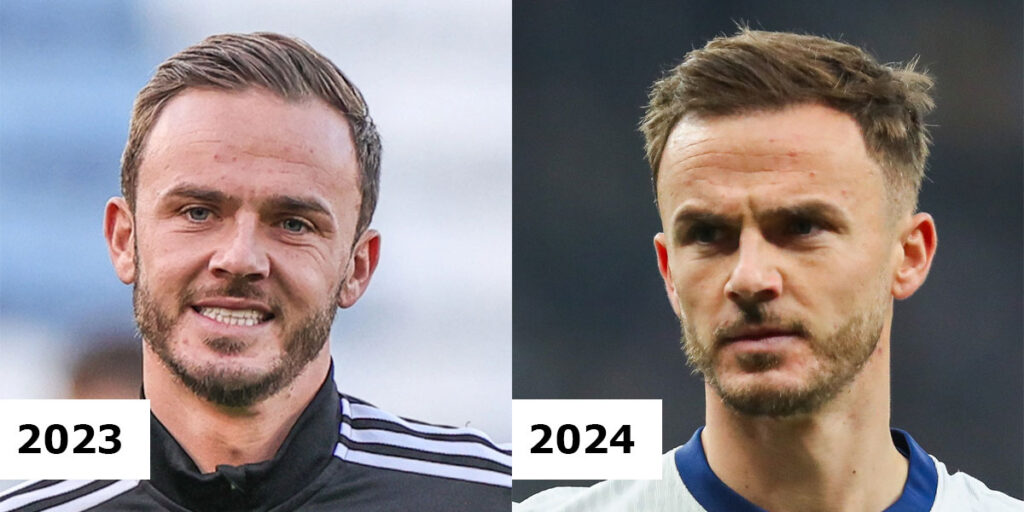
Source: depositphotos.com
“The change here is subtle but effective. Later images show refined hairline balance and improved density, demonstrating how small adjustments can have a significant impact without appearing artificial.”
Mohamed Salah
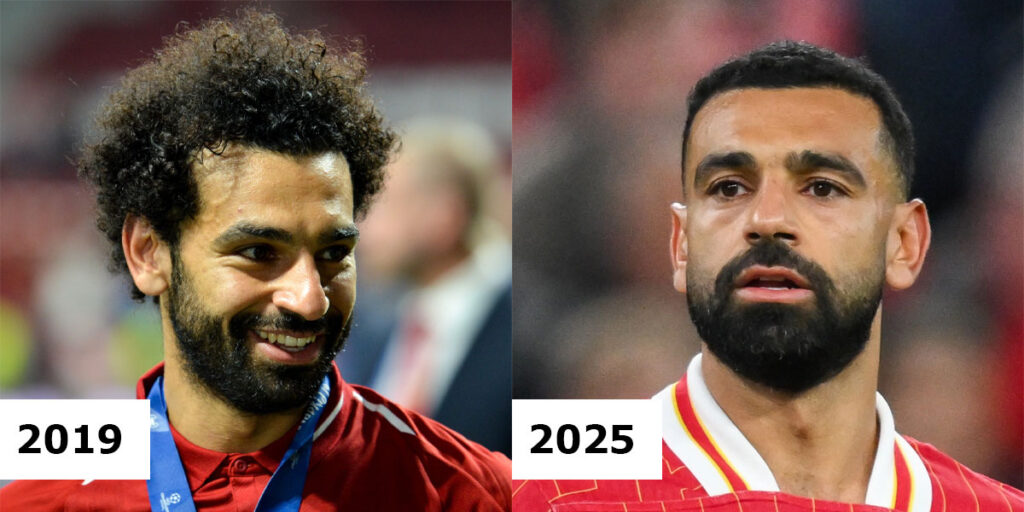
Source: depositphotos.com
“Comparing earlier images with more recent ones, there is a clear improvement in frontal density and overall hair volume. The hairline appears more defined and uniform, which is consistent with long-term stabilisation rather than temporary fluctuation.”
Bukayo Saka
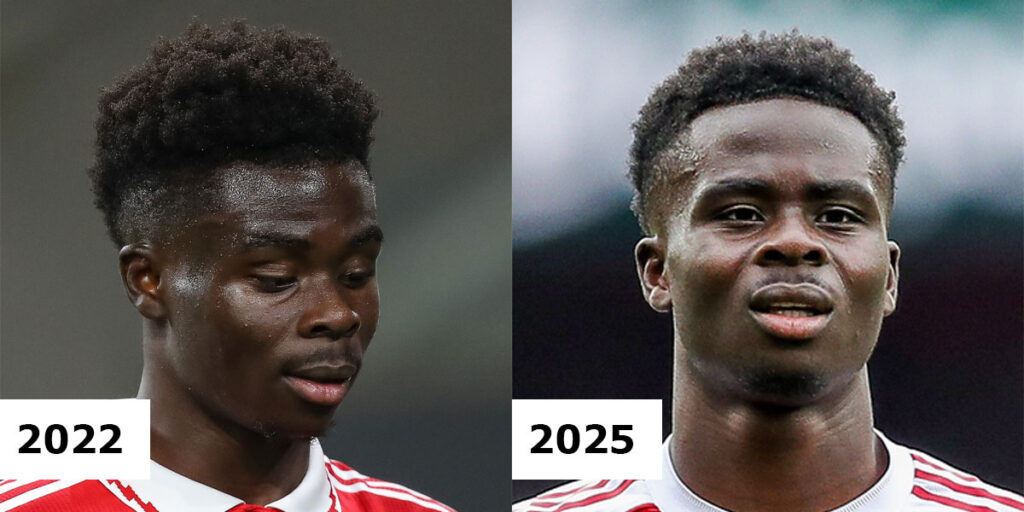
Source: depositphotos.com
“In earlier images, the hairline appears softer and less structured. More recent images show improved density and definition, particularly along the frontal line, achieved in a way that remains proportionate to age.”
Gabriel Jesus
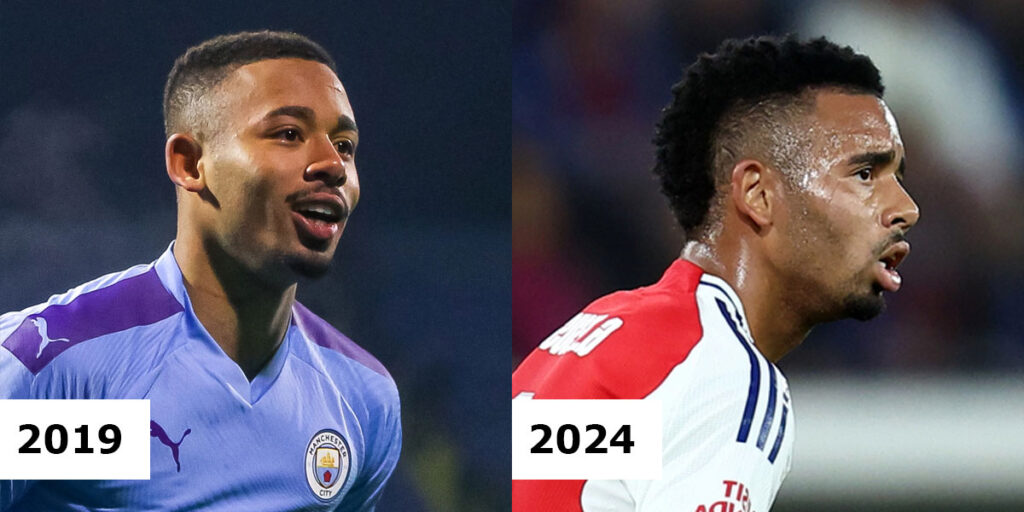
Source: depositphotos.com
“There is visible frontal thinning in earlier images, particularly at the hairline. In later images, the hairline appears more structured and balanced, which is consistent with early-stage correction rather than late intervention.”
Aaron Ramsdale
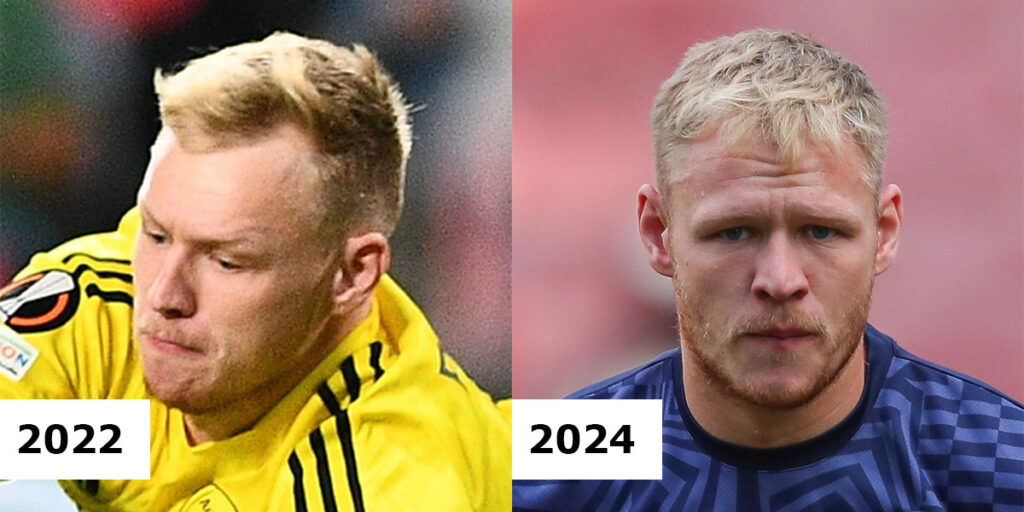
Source: depositphotos.com
“Earlier images show reduced density at the frontal hairline, while later images demonstrate improved thickness and balance. In goalkeepers, where hair is closely cropped, this kind of visible improvement typically reflects early and consistent management.”
Bernardo Silva
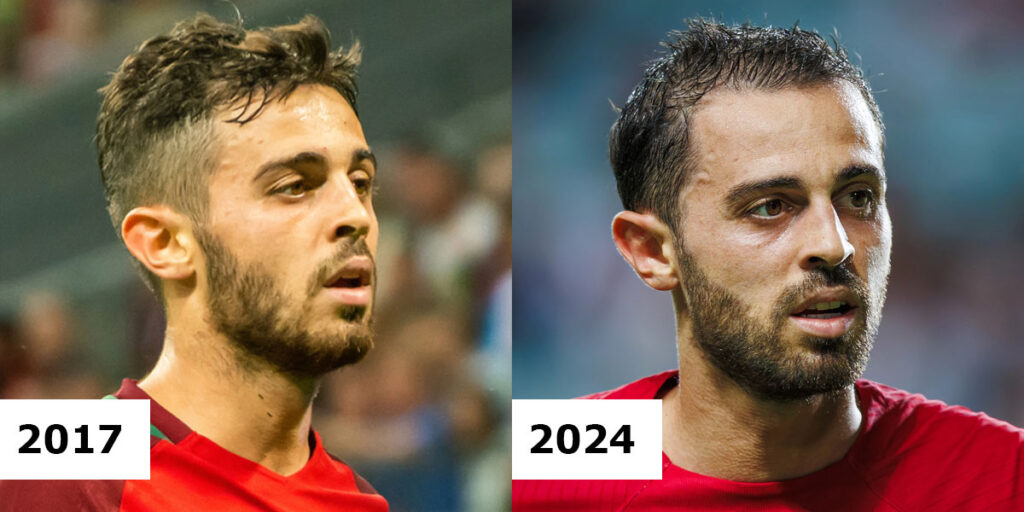
Source: depositphotos.com
“Earlier images show greater overall volume and thickness, particularly across the frontal and mid-scalp areas. In later images, the hair appears finer in texture, with reduced bulk but a more controlled hairline shape. This difference is likely influenced by styling, hair length, and natural changes in hair calibre over time rather than a simple increase in density.”
Raheem Sterling
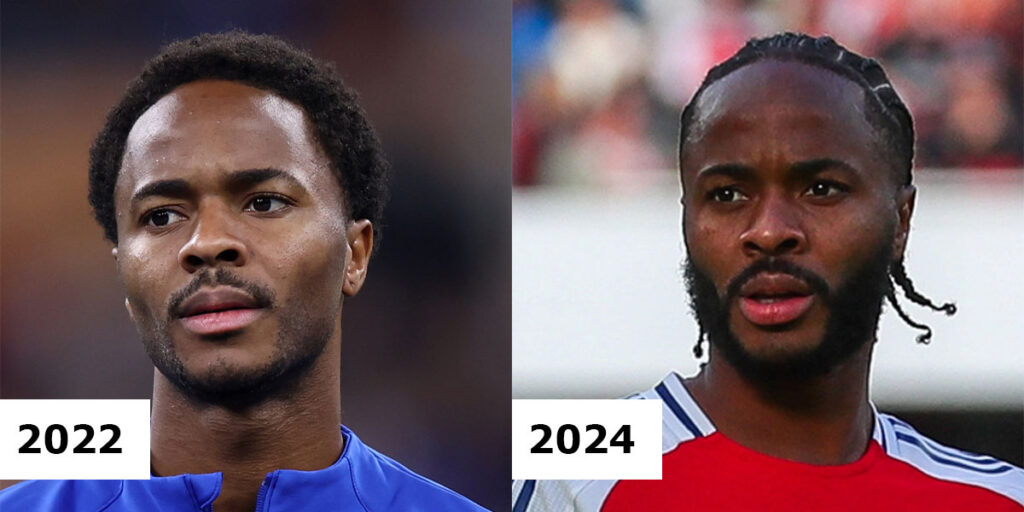
Source: depositphotos.com
“In the earlier image, the frontal hairline appears less defined, with reduced density along the leading edge. In the later image, the hairline looks more structured and uniform, with improved coverage at the front. This type of change is typically consistent with early-stage hairline stabilisation rather than advanced correction.”
Conclusion
Ultimately, the English Hairline Championship highlights a simple but often overlooked point: visible hair changes tend to be gradual, not sudden. Across this line-up, consistency and early awareness appear to play a greater role than dramatic intervention, a reminder that, in hair health as in football, timing and long-term strategy often matter most.