
Lipo cavitation is a non-surgical cosmetic procedure that aims to get rid of fat from the body through the use of ultrasound waves. However, not many people are sure of its effectiveness. There are certainly anecdotal reports that suggest that it’s not worth the money.
Still, this treatment continues to be of interest, primarily because it’s non-invasive, unlike a surgical liposuction and much cheaper (for those in the UK). Some even market it as an alternative to liposuction, even though it isn’t the case.
But, again, there’s some promising evidence that it might work. In this guide, you’ll learn more about what lipo cavitation is and whether or not it will be suitable for you.
What Is Lipo Cavitation?
Lipo cavitation, also known as ultrasonic/ultrasound cavitation, is a type of body contouring treatment that uses energy waves to break down fat cells within the body to be expelled. It can be used on different areas of the body, such as:
- Abdomen
- Upper arms
- Hips
- Face
- Neck
- Thighs
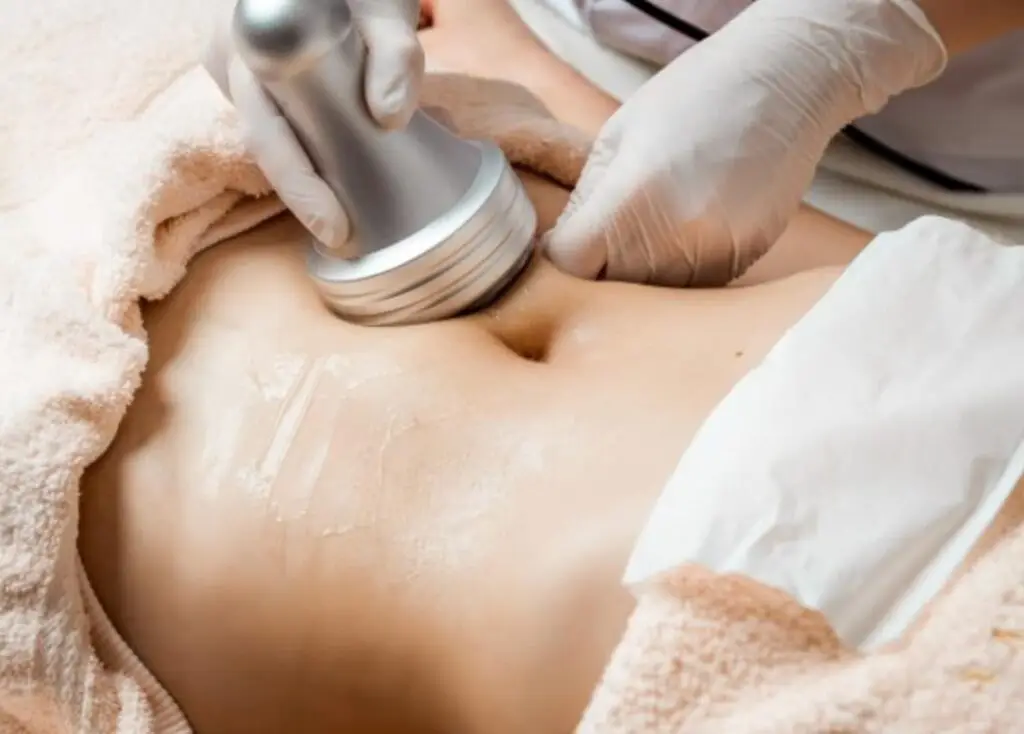
While this treatment helps in removing fat from different parts of the body, it should be noted that lipo cavitation does not help with weight loss. It’s not intended for it, either.
At best, it may remove stubborn pockets of fat that are resistant to diet and exercise. And because it’s a non-invasive treatment, you should expect the results to be more subtle rather than dramatic.
In any case, evidence suggests that it can be helpful. One study published in PloS One found that patients getting ultrasound cavitation with moderate aerobic exercise had better results than those who only did aerobic exercise in terms of the:
- Volume of fat just under the skin and deep within the abdomen
- Weight
- Body mass index (BMI)
- Waist circumference
But to reiterate, it’s not for weight loss. In fact, your doctor might consider you a suitable candidate for this treatment if you’re already close to your ideal weight.
Another important thing to note here is that these devices are available in spas/salons, and you can even buy them online for at-home use.
Safety can be a concern when such devices are being used, so it’s better if you consult a medical professional. Also, they can guide you on whether or not they’ll be effective in getting you your desired results.
How Does Lipo Cavitation Work?
Ultrasound cavitation works by creating holes or “cavities” in the membranes of fat cells, which ends up damaging them.
Essentially, ultrasound first forms bubbles within the fat in the target area and when these bubbles collapse, it causes changes in pressure and temperature, according to research published in Molecules. That might, in turn, damage the fat cells.

Triglycerides – the main type of fat – then come out of the destroyed cells and end up in a fluid that fills up the spaces between cells (interstitial fluid).
This then goes to the liver through the lymphatic system and is flushed out by the body, according to another study published in Nutrients.
Of course, none of this would be possible without the ultrasound that’s produced by the device being used by the practitioner.
But keep in mind that unlike high-intensity focused ultrasound (HIFU), lipo cavitation doesn’t use heat to destroy fat cells. Instead, it does so mechanically through changes in pressure.
While it may sound like lipo cavitation would give you immediate results, that’s definitely not the case.
It can take 1-3 months for your body to get rid of the fat cells, after which you might be able to see the results.
What’s The Procedure For Lipo Cavitation?
After you arrive at the clinic, your practitioner may begin by cleaning the target area(s). They may also apply a gel on your skin before using the device, as ultrasound waves cannot travel through the air.
Following that, the machine is used to direct waves to the target fat, and the entire session can take about an hour.
But it’s important to note that you need multiple sessions for lipo cavitation to work. It can be anywhere from 3 sessions to even 12; only your doctor can better guide you through your treatment plan.
You might be advised to drink a lot of water and stay hydrated to help flush out the fat from the body. Once the fat cells are removed from the body, they’re gone forever. So, the results of lipo cavitation are permanent, provided you maintain your body weight.
Lastly, you might have some bruising and redness after the treatment.
Does Lipo Cavitation Hurt?
Lipo cavitation should not cause you pain. That’s a reason why this treatment doesn’t require any kind of anaesthesia or the use of any numbing creams. However, if you’re experiencing pain during or after the treatment, make sure to ask your doctor about it.
Is Lipo Cavitation Effective?
Lipo cavitation can be effective in getting rid of stubborn fat cells from your body, but you should expect subtle results.
Research published in Nutrients investigated the effectiveness of ultrasound against radiofrequency and a combination of these treatments.
It found that all three helped in reducing BMI and weight (although the radiofrequency treatment did better on many other counts).
How Long Do Lipo Cavitation Results Last?
The results of lipo cavitation can last you a lifetime, but you need to maintain your body weight through a healthy diet and exercise.
The fat cells that are broken down by the ultrasound waves are flushed out of the body, so they’re not coming back. But this doesn’t guarantee that your results will remain the same even through weight fluctuations.
How Much Does Lipo Cavitation Cost?
In the UK, one session of lipo cavitation might cost you £150 on average. However, since you’ll need multiple sessions of this treatment, the cost can add up to around £2,000. It can vary depending on the location of the clinic, the experience of the practitioner, and the number of target areas.
A big reason why some people gravitate towards lipo cavitation is the low cost compared to surgical liposuction. This surgery can cost around £4,000-£5,000 in the UK, but because of currency and economic differences, it’s about £2,000 in Turkey (same as 12 sessions of lipo cavitation).
Is Lipo Cavitation Safe?
According to a study published in Plastic and Reconstructive Surgery – Global Open, ultrasound cavitation is safe for getting rid of “localised” pockets of fat.
Still, it doesn’t mean that the treatment is completely without risks. For instance, it may cause contour irregularities (dimples, bumps, etc.).
According to WebMD, it’s not suitable for those who have pacemaker/metal implants, blood-clotting issues, infection, cancer history, serious health problems, etc. But, of course, you must ask your doctor about these in detail.
Lipo Cavitation Vs. Liposuction: Which Is Better?
Between lipo cavitation and liposuction, the most appropriate treatment for you will depend on the amount of fat you need to be removed and your desired aesthetic goals.
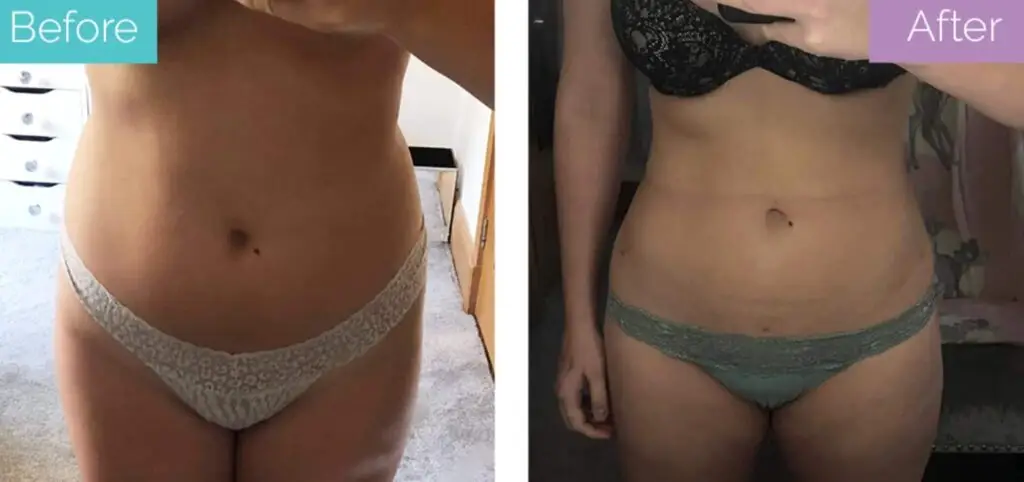
Being a non-surgical treatment, lipo cavitation has its limitations, whereas liposuction can give clearly noticeable results (even though it’s not for weight loss, either). To get a better understanding of the differences between the two, here’s a summary:
| Lipo Cavitation | Liposuction | |
| Procedure | An ultrasound waves-producing machine breaks down fat cells within the body, which are then flushed out by it. | Multiple small incisions are made in the target area to insert a cannula for breaking fat. It is then taken out with a vacuum (there are other techniques, such as VASER and laser liposuction). |
| Anaesthesia | Not required | General |
| Treatment time | 1 hour | 1-5 hours |
| Visible results | After 1-3 months | After 3-6 months (swelling has to subside) |
| Longevity | Permanent | Permanent |
| Number of sessions | 3-12 | One-time surgery |
| Side Effects | Usually, bruising and redness | Swelling, bruising, redness, numbness, bumps, etc. |
| Cost | £150/session (total can go up to £2,000) | UK: £4,000-£5,000 Turkey: £2,000 |
Conclusion
Lipo cavitation is a non-surgical treatment for removing fat from the body, and while it may effectively do so, you shouldn’t expect a dramatic transformation. A few people who’ve had this treatment even say that they didn’t notice any difference after getting it, so it might not be worth it.
But if you’re struggling with (small) stubborn pockets of fat, there are other options that you can consider, such as CoolSculpting. But depending on the amount of fat you have, you may be able to get better results with a surgical liposuction (which can remove up to 5 litres of fat from a target area).
In any case, make sure to discuss your cosmetic concerns and desired goals with a board-certified plastic surgeon so they can prepare your treatment plan accordingly.
FAQ
u003cstrongu003eCan you do lipo cavitation while pregnantu003c/strongu003e?
Lipo cavitation isn’t advised for women who are pregnant or even breast-feeding.
u003cstrongu003eCan lipo cavitation cause cancer? u003c/strongu003e
Lipo cavitation is generally considered a safe treatment. Although according to WebMD, this treatment is not suitable for those who have a history of cancer. To better understand the risks of this treatment, consult your doctor.
u003cstrongu003eCan you get lipo cavitation while on your period?u003c/strongu003e
Some facilities advise their patients against getting lipo cavitation before their menstrual cycle because it might affect the blood flow. However, you should further discuss it with your doctor.
u003cstrongu003eDoes lipo cavitation tighten skin? u003c/strongu003e
It’s unlikely that lipo cavitation will tighten your skin because it doesn’t create enough heat/temperature changes. If you believe that your skin needs tightening, you can consider other non-surgical (Morpheus8, Thermage, Ultherapy, etc.) or surgical (u003ca href=u0022https://www.longevita.co.uk/tummy-tuck-turkey/u0022 target=u0022_blanku0022 rel=u0022noreferrer noopeneru0022u003etummy tucku003c/au003e, u003ca href=u0022https://www.longevita.co.uk/guides/panniculectomy-surgery/u0022 target=u0022_blanku0022 rel=u0022noreferrer noopeneru0022u003epanniculectomyu003c/au003e, etc.) treatment options. u003cbru003e
u003cstrongu003eHow much weight can you lose with lipo cavitation? u003c/strongu003e
You might just lose less than a kg of your weight with lipo cavitation. This treatment is for body contouring, not weight loss.